Lee Hyunseo, a 27-year-old office worker, recently checked her New Year's fortune online for 990 won. Lee said, "To celebrate the New Year, I wanted to see how the year might unfold and reflect on the overall direction of my life, so I had my saju (fortune) read just for fun." She added, "It's hard to get a reservation at the places known to be accurate, so I decided to try a simple online reading first."
Na Mo, a 29-year-old job seeker, also plans to get her New Year's fortune told. Na said, "Every year at the beginning of January, I visit fortune-tellers as a New Year's tradition. They tell you about benefactors and possible mishaps for each month from January to December. I accept the good interpretations and let the bad ones go, thinking of them as a way to ward off bad luck." She added, "It seems to help me, especially during difficult and anxious times."

Checking one's saju or fortune at the start of the year has become a New Year's trend among Millennials & Gen Z. This is seen as one of the "misfortune-warding" cultural practices to ease anxiety and reassess one's direction in life as the new year begins.

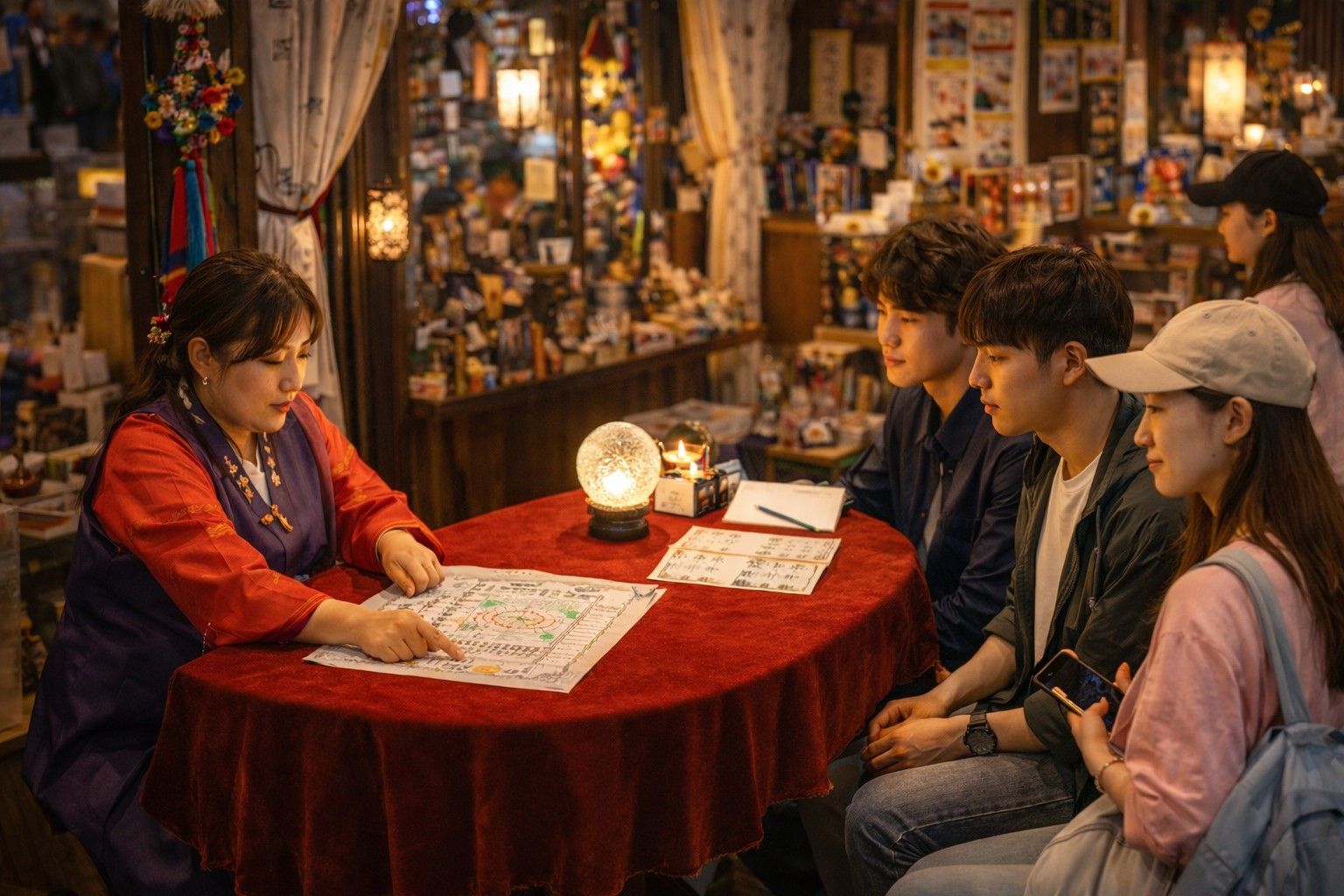
Fortune-telling shops have noticed a significant increase in young visitors. At shops known for accurate readings, waiting or making a reservation is a must. In front of one fortune-telling shop in Yongsan-gu, Seoul, people were already lining up at dawn on the 14th. The shop does not take reservations and only accepts about 10 groups of customers per day.
Compared to in-person fortune-telling shops, where the fee per person ranges from 50,000 to 100,000 won, phone or online fortune-telling services are popular for their affordability and instant results. Choi Mo, a 25-year-old university student, said, "This year is the Year of the Red Horse, so I checked my fortune for the year of Byeongo to make sure I can harness its strong energy. I simply checked my New Year's fortune on Naver."

Cultural critic Kim Heonsik commented, "Saju and fortune-telling have become a type of motivational content for self-comfort, helping people endure uncertain futures and economic difficulties." He added, "Because Korean society is less open to discussing personal worries or problems, people turn to fortune-telling as a source of comfort."
-
Reporter Lee Eunseo libro@asiae.co.kr
-
Edit Kim Yumi ymkim91@asiae.co.kr
© The Asia Business Daily. All rights reserved. Unauthorized AI training and use prohibited.