Louvre Non-European Ticket Price Increased by 45%
Admission Fee for Koreans 32 Euros
by Seo Jiyeong
by Kang Dongwon
Published 15 Jan.2026 15:07(KST)
Updated 15 Jan.2026 15:28(KST)

The French government has fully implemented a so-called "dual pricing system," charging higher admission fees to non-European tourists, which has sparked growing controversy over discrimination. Starting with the Louvre Museum in Paris, major cultural heritage sites such as the Palace of Versailles and the Opera Garnier have introduced differential pricing, leading to increasing criticism both within France and internationally.

According to AFP on January 14 (local time), the Louvre Museum began charging adult visitors from regions outside the European Union, Iceland, Liechtenstein, and Norway an admission fee of 32 euros (approximately 55,000 won) starting that day-a 45% increase from the previous 22 euros. Non-European tourists, including Koreans, will now pay about 17,000 won more per person.
This measure is the result of a differentiated pricing policy promoted by the French Ministry of Culture. In an interview with Le Figaro in January last year, Minister of Culture Rachida Dati stated, "We want non-European visitors to pay higher admission fees, and for this additional funding to be used for the restoration of national cultural heritage. The French should not be solely responsible for all the costs." She described this as a "genuine shift" in pricing policy.
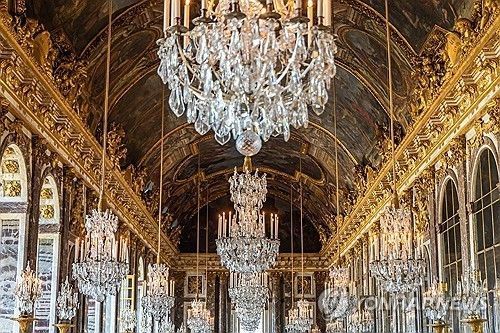
Following the Ministry of Culture's policy, the system is rapidly spreading to other cultural sites. At the Palace of Versailles, non-European visitors are charged 35 euros for admission during the peak season (April 1 to October 30) and 25 euros during the off-season, which is 3 euros more than what Europeans pay in each case.
The Opera Garnier in Paris, Sainte-Chapelle, and Ch?teau de Chambord in the Loire Valley have also introduced differential pricing based on visitors' places of origin. The French government expects this policy to generate an additional 20 million to 30 million euros in annual revenue.

However, there has been strong backlash. The Louvre Museum labor union described the policy as "shocking from philosophical, social, and humanitarian perspectives," and has even raised the possibility of a strike. They argue that since the museum's collection of over 500,000 items-including artifacts from Egypt, the Middle East, and Africa-holds universal value for humanity, price differences based on nationality are fundamentally discriminatory. The union also expressed concerns about the practical burden on staff, who must check each visitor's identification individually.
Academics have also voiced their concerns. French geographer Patrick Poncet wrote in a Le Monde op-ed that "requiring foreigners to pay more runs counter to the universality of culture," criticizing it as a "return to nationalism" similar to the recent increase in national park admission fees for foreign tourists in the United States.

Seo Jiyeong zo2zo2zo2@asiae.co.kr
Kang Dongwon kangdw76@asiae.co.kr
© The Asia Business Daily. All rights reserved. Unauthorized AI training and use prohibited.