"Impressive"

Elon Musk, CEO of Tesla, shared a video of a robot flawlessly performing somersaults and other challenging moves on stage at a Chinese singer's concert, remarking that it was "impressive."

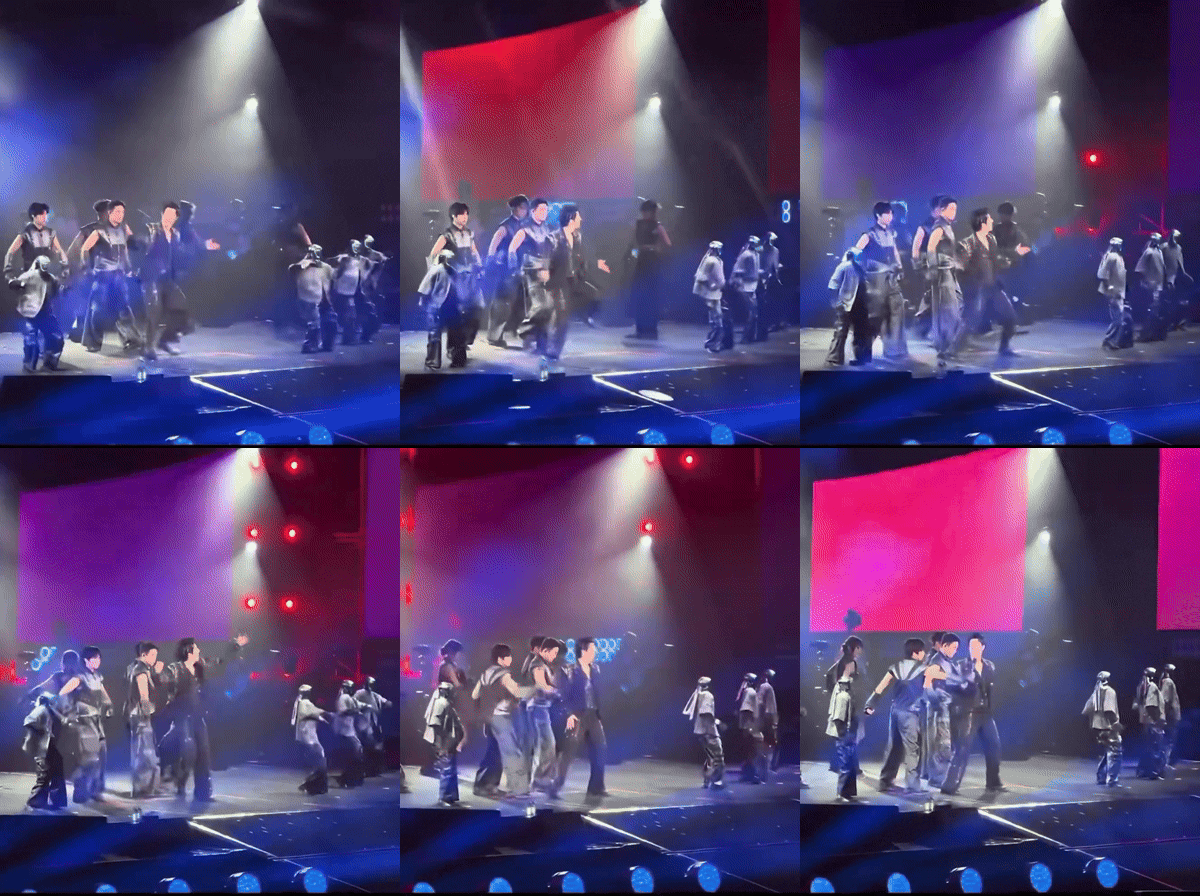
On December 20, Musk posted on his social media account a video of robots performing a perfectly synchronized group dance alongside dancers on the stage of Chinese singer Wang Lihong. In the video, the robots wore silver costumes and moved with human-like flexibility. At the end of the performance, they even succeeded in executing a somersault called the "Webster flip," drawing loud cheers from the audience.
"Who is human and who is a robot?"

A humanoid robot appeared as a backup dancer on the concert stage of Chinese singer Wang Lihong, performing various group dances including somersaults. X
원본보기 아이콘
The video posted on social media shows the robots performing dance moves that go beyond simple repetitive motions, blending naturally with the music. This led to comments that "there was hardly any difference from human backup dancers." Musk expressed his admiration for the performance, saying, "Chinese robots are now dancing like professionals on stage." Tesla is also developing its own humanoid robot, Optimus. Online users responded with comments such as, "At first, I didn't realize they were robots," and "Their movements were so refined."
China's Boston Dynamics: Unitree

The robots are products of Unitree, one of China's leading companies driving the commercialization of robotics and often referred to as the "Boston Dynamics of China." Recently, the company has been expanding its reach by pursuing collaboration with Nvidia and preparing for a public listing.
Meanwhile, China has established itself as the world's largest robot market. On December 21, the South China Morning Post (SCMP) cited Morgan Stanley's latest robotics yearbook report, which stated that China is far ahead in the humanoid development race and has filed five times as many related patents as the United States over the past five years. Specifically, China filed 7,705 humanoid-related patents in the past five years, far exceeding the United States' 1,561. Japan followed with 1,102, and the World Intellectual Property Organization (WIPO) ranked fourth with 1,100 patents.

The robots in the video wore silver costumes and performed flexible movements similar to humans. Global Times
원본보기 아이콘As of 2024, the number of industrial robots installed in China stands at about 2 million, accounting for more than half of global demand, with annual installations reaching approximately 300,000 units. Furthermore, the size of China's robot market is expected to more than double from about $47 billion (approximately 60 trillion won) in 2024 to about $108 billion (approximately 138 trillion won) in 2028. This growth is the result of several factors: the Chinese government's focus on robot and smart manufacturing policies, the expanded adoption of AI technologies, and increased demand for industrial automation. In particular, this concert stage is being seen as evidence that robot technology is spreading beyond manufacturing into the cultural and entertainment industries.
-

Reporter Bang Jeil zeilism@asiae.co.kr
-
Edit Lee Seonju sjlee109@asiae.co.kr
© The Asia Business Daily. All rights reserved. Unauthorized AI training and use prohibited.