


Not only mackerel and squid have become more expensive. Major fish species such as pollock and croaker have also shown rising prices.
These days, when shopping for groceries, you may find yourself surprised by the prices of mackerel and squid.
These were once fish you could easily put in your basket without a second thought, but recently, you might wonder, "Why has it become so expensive?"
In fact, as the production of major seafood has dropped significantly, concerns about so-called "fishflation" (seafood + inflation) are spreading.
Mackerel Production Drops to Nearly Half the Average Level
According to the Fisheries Outlook Center at the Korea Maritime Institute, mackerel production last month was 6,993 tons.
This represents a decrease of 61.5% compared to the same month last year, and a 45.3% drop compared to the average year.
Why has production dropped so much?
The number of fishing days was significantly reduced due to the Chuseok holiday and adverse weather conditions, and the high sea temperatures caused by global warming further compounded the situation.
These factors led to an overall decrease in catch volume.
In particular, medium and large mackerel, which are preferred by many consumers, have become even scarcer.
The cumulative catch ratio for medium and large mackerel from January to October this year was 4.6%, only about one-third of last year's 12.9%.
Compared to the average of 20.5%, the gap is even wider.
As a result, last month the consumer price of mackerel (fresh, refrigerated) was 12,131 won per kilogram.
This is an increase of 10.5% from a year ago and 16.8% higher than the average year.
Squid Faces a Similar Situation... Prices Have Risen Even More
Squid production is also continuing to decline.
Last month, coastal squid production was 926 tons, a decrease of 21.8% compared to the previous year.
Prices have also surged. The price for fresh, refrigerated squid reached 23,187 won per kilogram, a sharp increase of 19.8%.
With coastal production falling and even the volume of imported oceanic squid decreasing, the supply shortage has become more severe.
Double Trouble: Import Dependence and High Exchange Rates

The consumer price of mackerel (fresh refrigerated) surged by more than 10%. The consumer price of squid (fresh refrigerated) also rose by 19.8% over the past year, reaching 23,187 KRW per kilogram.
원본보기 아이콘Mackerel and squid are seafood items with a high proportion of imports.
According to the Korea Maritime Institute, as of 2022, the import dependence for mackerel and squid was 46.3% and 63%, respectively.
For this reason, the current high exchange rate is another factor driving up seafood prices.
Additionally, Norway's introduction of a fishing quota system for mackerel has reduced the volume of Norwegian imports, further fueling price increases.
Pollock and Croaker Prices Also Up... The Upward Trend Spreads Across Seafood
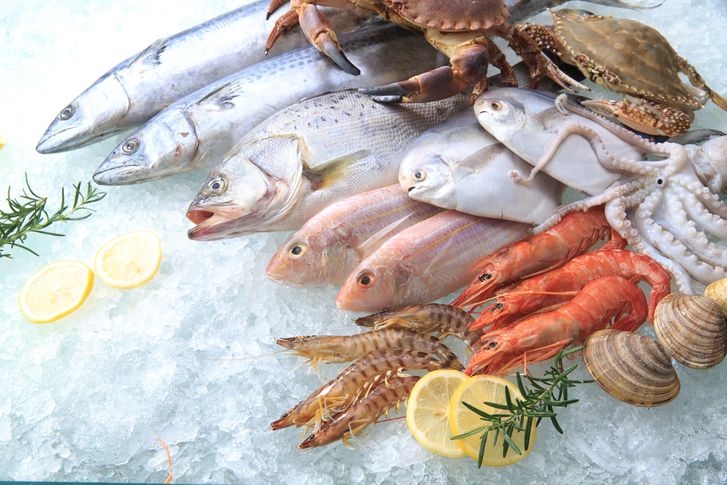
As of the end of last month, the price of frozen pollock was 4,217 won per fish, up 9% compared to the average year, and the price of frozen croaker was 1,421 won per fish, up 13.5% compared to the average year.
Overall, seafood prices are generally rising. According to the consumer price trend survey by the National Data Office, the seafood price index in October rose 5.9% year-on-year. This is the highest increase for the same month in three years since October 2022.
Among the 15 major items surveyed by Statistics Korea, prices of 11 items increased. Croaker (16.9%), mackerel (11%), shrimp (9.8%), and squid (7.4%) are among the commonly encountered fish in daily life that have seen price increases.
-

Reporter Koo Nari forsythia26@asiae.co.kr
-
Edit Kong Sumin hyunhj@asiae.co.kr
© The Asia Business Daily. All rights reserved. Unauthorized AI training and use prohibited.







