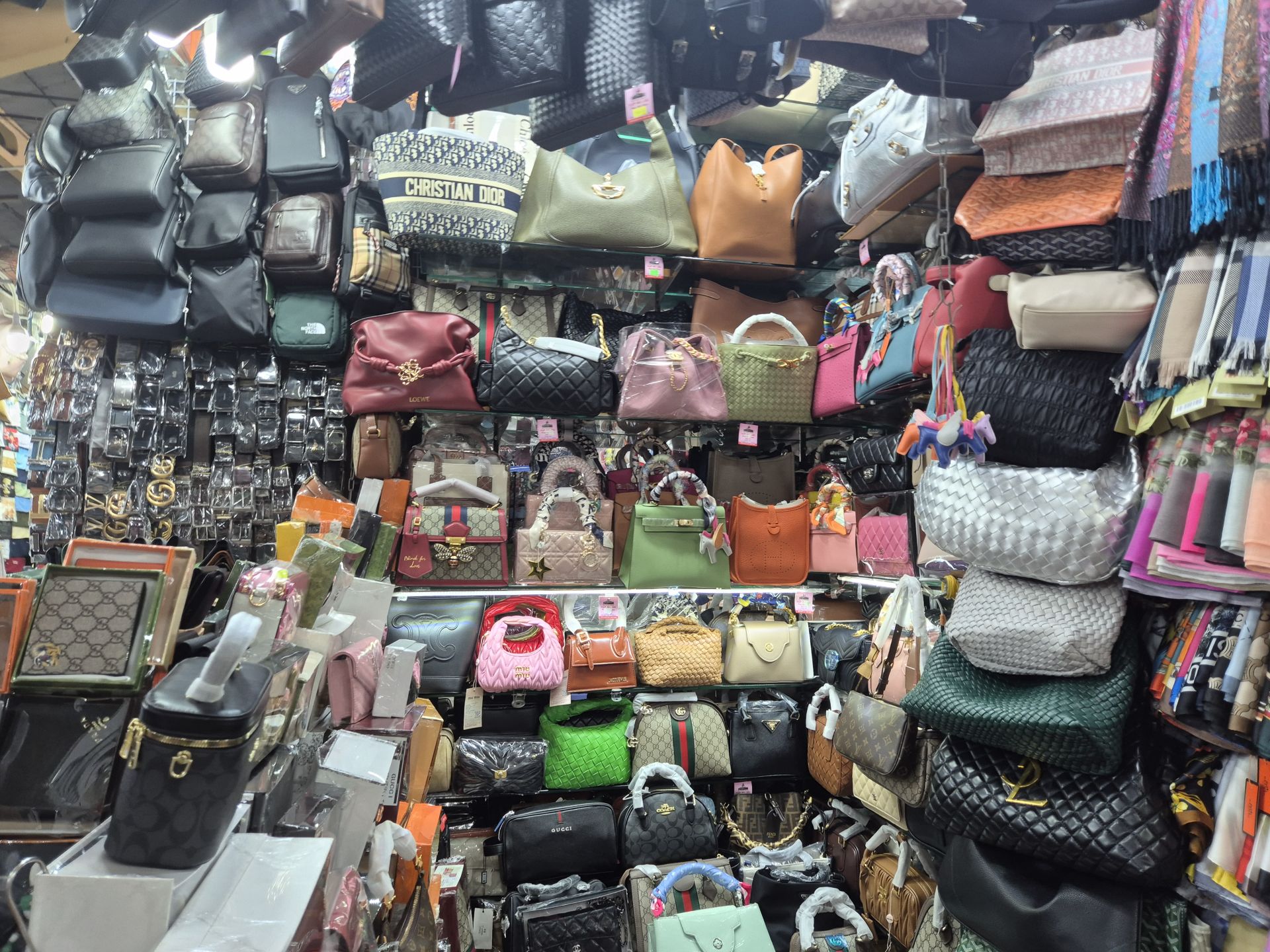
"Sister, sister, do you want Dior? Do you want Gucci? We have all the bags."
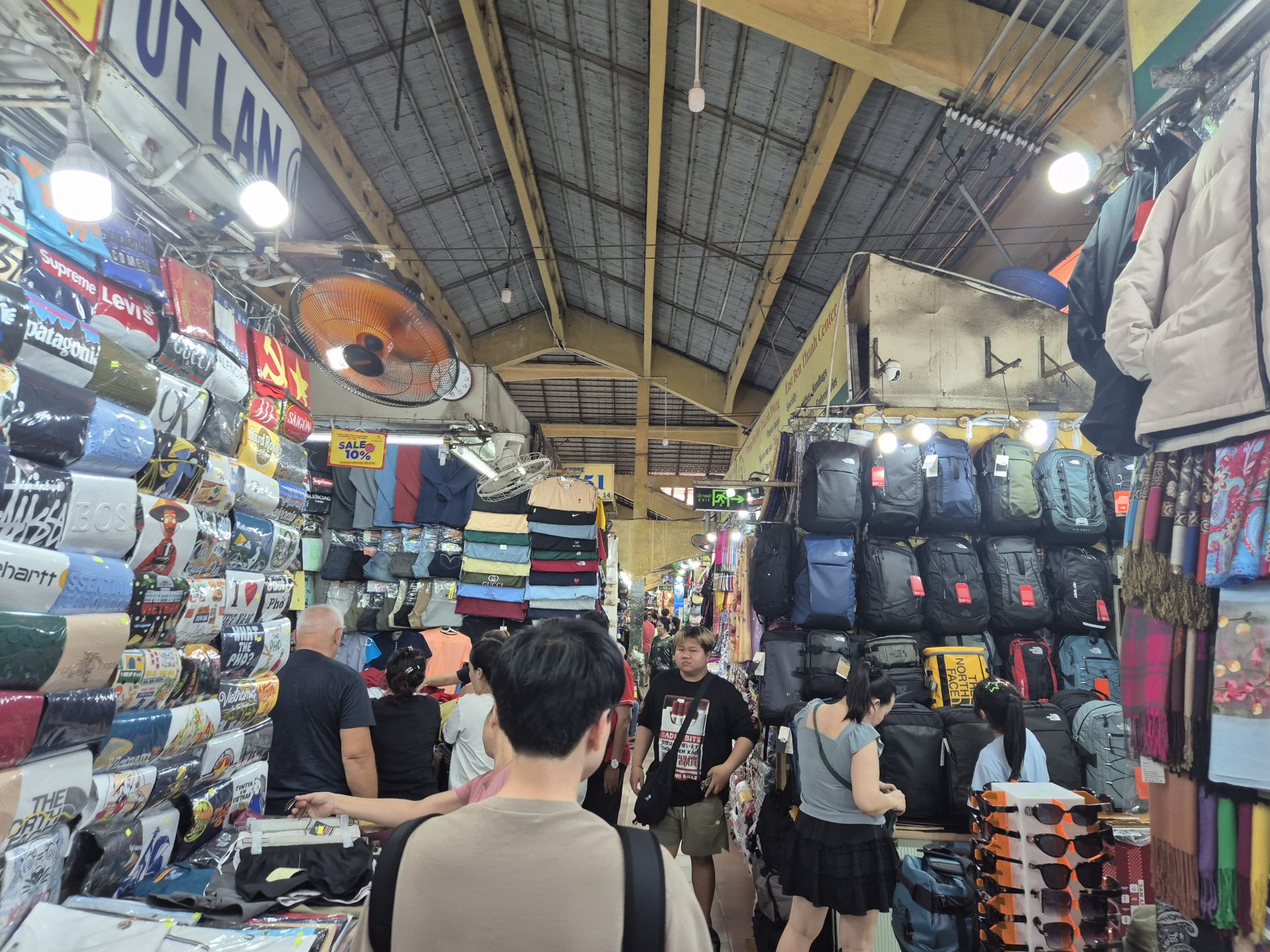
Last month at Ben Thanh Market in Ho Chi Minh City, Vietnam. As soon as I passed the entrance, I heard the voices of local Vietnamese people speaking in Korean. The market is a maze of dozens of narrow alleys, with shops just about one pyeong in size crammed side by side on both sides. On the small stalls, hundreds of counterfeit luxury bags and wallets were hung in layers. In front of the stores, vendors wearing T-shirts and belts with luxury logos aggressively pushed their products to passing tourists, competing for their attention. The alleys were so crowded with foreign tourists, including many Koreans, that it was hard to move. Ho Chi Minh City's largest "counterfeit market" was bustling with activity once again.
'Counterfeit Paradise' Ben Thanh Market in Ho Chi Minh City Market that declined under Trump's pressure Vietnamese government enforcement loosens 'Fake goods' rampant again within months
From luxury to outdoor gear Selling while soliciting in Korean
Factories in Hanoi, Bac Giang, Phu Tho, etc. Emerging new counterfeit production sites
Inside Ben Thanh Market, narrow alleys barely wide enough for one person separate densely packed shops about one pyeong in size. Photo by Minji Lee
US Slaps 46% Tariff for Intellectual Property Infringement... Crackdown Intensifies in Tourist Cities
Ben Thanh Market, a shopping hotspot in Ho Chi Minh City, Vietnam's largest economic center, was, along with Saigon Square, a central hub for Vietnam's counterfeit goods industry. However, earlier this year, the Donald Trump administration in the United States designated Vietnam as a "center for intellectual property infringement" and announced a 46% reciprocal tariff on Vietnamese imports, effectively bringing the market to a standstill.
As the Vietnamese government launched a large-scale crackdown on counterfeit goods, most stores closed down, and a heavy silence fell over the market instead of aggressive sales pitches. Major tourist cities like Hanoi, Da Nang, and Nha Trang also saw concentrated crackdowns on counterfeit goods. According to the Vietnamese government, a month-long nationwide crackdown on counterfeit goods resulted in inspections of 3,891 locations, with violations found at 3,114 of them. The total value of the enforcement reached 630 billion dong (approximately 34.6 billion won), and the amount recovered to the national treasury was 360 billion dong (about 19.8 billion won).
However, as the Vietnamese government's enforcement efforts have eased, major counterfeit markets are once again thriving. A Korean resident living in Vietnam said, "Just a few months ago, everything here was dead because of Trump, and there was nothing to buy. (Looking at it now) it's not fully recovered yet, but there are definitely more sellers and tourists than back then."
Vietnam's Counterfeit Markets Return as a Must-Visit for Package Tours
Indeed, on this day, Ben Thanh Market was a must-visit stop for foreign package tours. Everything from luxury brands like Christian Dior, Gucci, Louis Vuitton, and Rolex to outdoor brands like Nike, Adidas, Polo, New Balance, and The North Face was openly sold. The market vendors, targeting Korean tour groups, fluently pitched counterfeit luxury brand bags in Korean, saying, "Sister, it looks exactly the same." At first glance, the bags looked quite convincing,but upon closer inspection, loose threads and rough seams were visible.
When I asked, "Don't you have anything better?" the vendor pulled out a new bag from deep inside the display. She gave a detailed introduction of the bag's interior, repeatedly emphasizing, "It's exactly like the real one." The price was 600,000 dong (about 30,000 won). When I exclaimed, "Dat qua! (It's expensive!)" and put the bag down, the vendor quickly pulled out a calculator and handed it to me. When I entered 500,000 dong, she shook her head and said, "No, no!" repeatedly, countering with 550,000 dong.
When one of my companions said, "That place over there is cheaper. Let's go," the vendor, noticing this, quickly grabbed my arm and said, "I'll give you a better price." The negotiation quickly dropped to 400,000 dong, and the vendor explained that payment could be made by cash, card, or QR code.
Luxury T-shirts from Stussy, Celine, and Gucci are displayed on the racks.
In particular, Ben Thanh Market was overflowing with clothing from global brands, including outdoor wear from Nike and Adidas. The vendors trying to attract customers insisted, "It's not fake." They claimed these were "lost products" (excess, defective, or surplus items unintentionally produced during the manufacturing process at the brand's factory). Since Vietnam is home to many of the world's OEM clothing factories, vendors leveraged the fact that employees are frequently caught diverting genuine products for unauthorized sale.
However, unlike in the past when Chinese-made counterfeits were brought in and sold at tourist destinations, Vietnam has recently emerged as a production site for counterfeit goods. According to the Vietnamese online media outlet Vietnam Net, there have been a series of cases where factories in areas such as Hanoi, Bac Giang, and Phu Tho were caught mass-producing daily necessities and medical products like cosmetics, health supplements, cooking oil, and pharmaceuticals. During the crackdowns, authorities seized tens of tons of counterfeit food and supplements, discovered records of over 100,000 online orders, and found infant formula and pharmaceuticals imitating hundreds of brands.