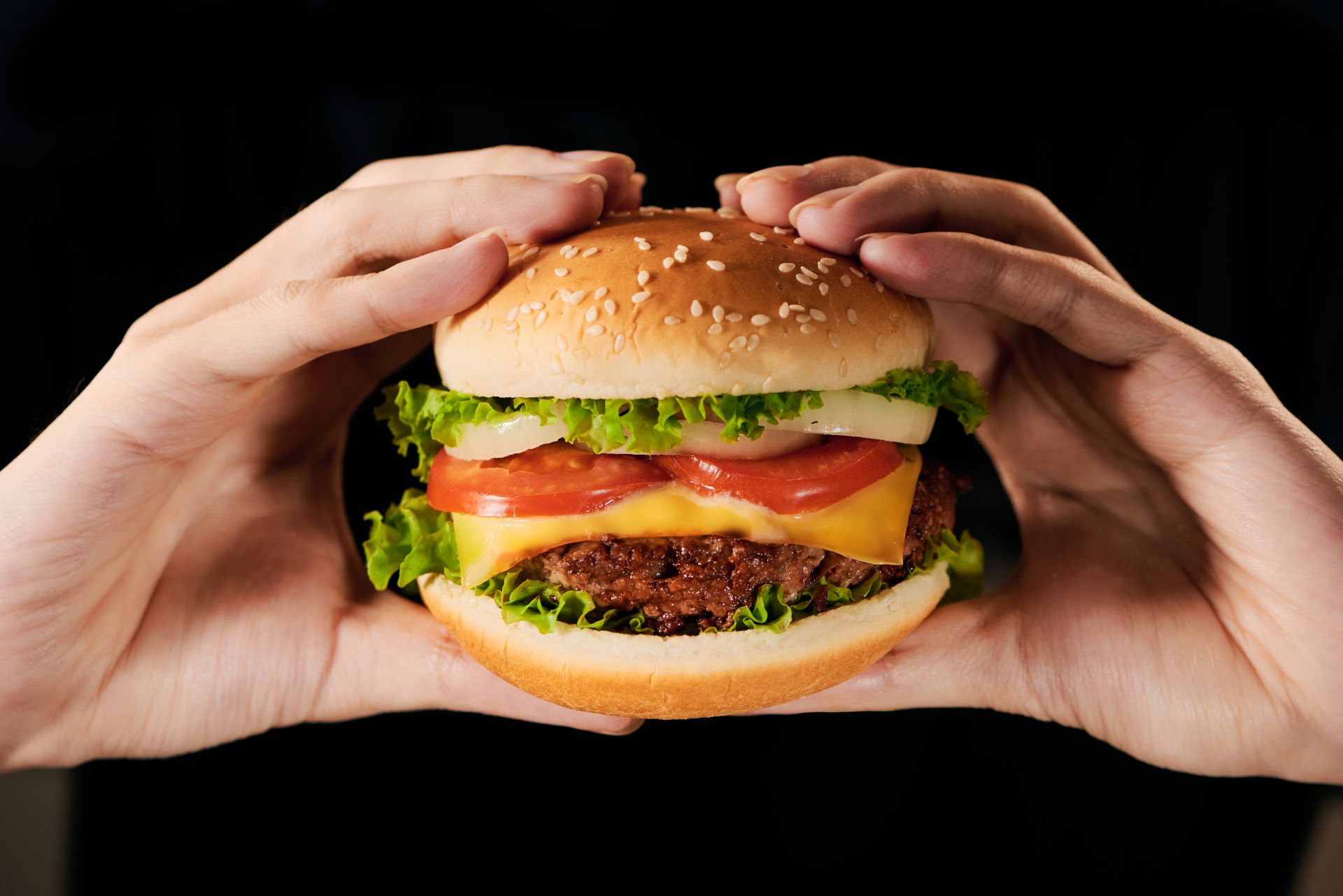
As the prices of major dining-out options such as naengmyeon and bibimbap have soared well past 10,000 won, office workers are rapidly reconsidering their lunch choices. While dining-out prices have surged, hamburgers-whose prices have remained relatively stable-are regaining attention as the "best value-for-money lunch." With a meal available for 5,000 to 7,000 won and the expansion of premium menus, the domestic hamburger market is expected to surpass 5 trillion won for the first time this year.
Domestic Hamburger Market Expected to Surpass 5 Trillion Won for the First Time

According to global market research firm Euromonitor on the 24th, the domestic hamburger market has nearly doubled in size over the past ten years, growing from 2.1 trillion won in 2014 to 4.2 trillion won in 2024. This year, it is highly likely to exceed 5 trillion won. Major brands such as Lotteria, Burger King, McDonald's, and Mom's Touch are maintaining price competitiveness while strengthening their "dining-out alternative" strategies with new menu items featuring handmade burgers, premium cheeses, and local specialties.
Lotteria, operated by Lotte GRS, is on the verge of returning to the "1 trillion won sales club" for the first time in eight years since 2017. Last year, it recorded sales of 995.4 billion won, and the company stated, "We expect to surpass 1 trillion won in sales by next month."
Rising Dining-Out Costs Drive Shift to Convenience and Low-Priced Menus

Experts interpret the growth of the hamburger market not as a simple trend, but as a result of changing consumption patterns. Lee Chaerin, Senior Economist at the Economic Research Team of the Bank of Korea, stated in the report "Changes in the Profit Structure of the Restaurant Industry and Implications" that "since the COVID-19 pandemic, consumer culture has shifted from group and event-driven consumption to individual preference-centered consumption," and "as the burden of dining-out costs grows, more consumers are replacing meals with convenience and low-priced menu items."
The burden of dining-out costs is also having a direct impact on the structure of the restaurant industry. According to OpenUp, the commercial district big data platform of fintech company Finda, 176,258 out of 818,867 restaurant businesses in Korea closed last year. This represents a closure rate of 21.52%, meaning one out of every five restaurant businesses shut down. The number of closures last year increased by 82% compared to 2020 (96,530 businesses), when the impact of COVID-19 was significant.
It is interpreted that the simultaneous rise in ingredient costs, labor costs, and rent has pushed small business owners to the limit. In addition, with growing economic uncertainty, consumers are reducing the frequency of dining out, and when they do, they increasingly focus on "satisfaction relative to price."
Dining-Out Prices Continue to Rise... Hamburgers Remain in the 4,000~9,000 Won Range

On the 23rd, a menu board was installed in front of a Kalguksu restaurant in Jung-gu, Seoul. According to the Korea Consumer Agency's price information portal "Chamgagyeok," the average price of eight consumer-preferred dining menus in Seoul last month increased by 3.44% compared to December of last year. In particular, the price of Kalguksu rose from 9,385 won to 9,846 won during the same period, an increase of 4.91%, marking the largest rise. Yonhap News
원본보기 아이콘The upward trend in dining-out prices has continued. According to data from the Ministry of the Interior and Safety, as of October, the average prices were 12,423 won for naengmyeon, 11,577 won for bibimbap, 20,673 won for samgyeopsal, and 18,000 won for samgyetang, with most items increasing by 4 to 6% over the past year. Even so-called "affordable menus" such as gimbap (3,646 won), kalguksu (9,846 won), and kimchi stew set meal (8,577 won) are no exception. In snack restaurants in Gangnam, Seoul, a single roll of gimbap now costs between 7,000 and 10,000 won.
At famous restaurants, the prices of Pyongyang naengmyeon and kongguksu have both risen to 16,000 won, and at a restaurant in Jongno, Seoul, samgyetang is now priced at 20,000 won. In contrast, hamburgers are generally priced between 4,000 and 9,000 won, and during lunch discount hours, a set of hamburger, fries, and drink can be had for 5,000 to 6,000 won.
An industry insider said, "Hamburgers offer a wide range of price options, including single items, sets, and coupons, which help reduce the burden on consumers," adding, "Among office workers, hamburgers have established themselves as a rational lunch alternative that is both quick and filling."
Top 6 Burger Brands See 7% Increase in Customers

Industry analysis shows that the number of customers at burger brands continues to rise. In the third quarter, the top six burger franchises-Lotteria, Burger King, McDonald's, KFC, Mom's Touch, and Subway-saw a 7% increase in customer numbers compared to the same period last year. During the same period, chicken franchises experienced a 5% decline. Consumers in their 20s and 30s account for more than 60% of burger buyers.
Average sales per 3.3 square meters have also increased. Burger King's average franchise sales per unit area reached 16.11 million won last year, up from 15.99 million won the previous year. Mom's Touch also saw an 8% increase, from 17.92 million won to 19.49 million won.
A hamburger industry representative said, "The number of consumers choosing hamburgers as a meal replacement continues to grow," adding, "The emergence of premium brands is not cannibalizing the existing market, but rather expanding the overall market size." The representative continued, "With the expansion of premium strategies such as collaborations with famous chefs and the introduction of premium ingredients, hamburgers are being reevaluated as a dining-out alternative, beyond just simple fast food."