The moment you pick up your chopsticks at a restaurant and say, "Korean kimchi is the best,"
that kimchi might actually be from China.
This year, kimchi imports have reached an all-time high,
with 99% of those imports coming from China.
Meanwhile, exports have stagnated.
The kimchi trade deficit has continued for three consecutive years.
▼
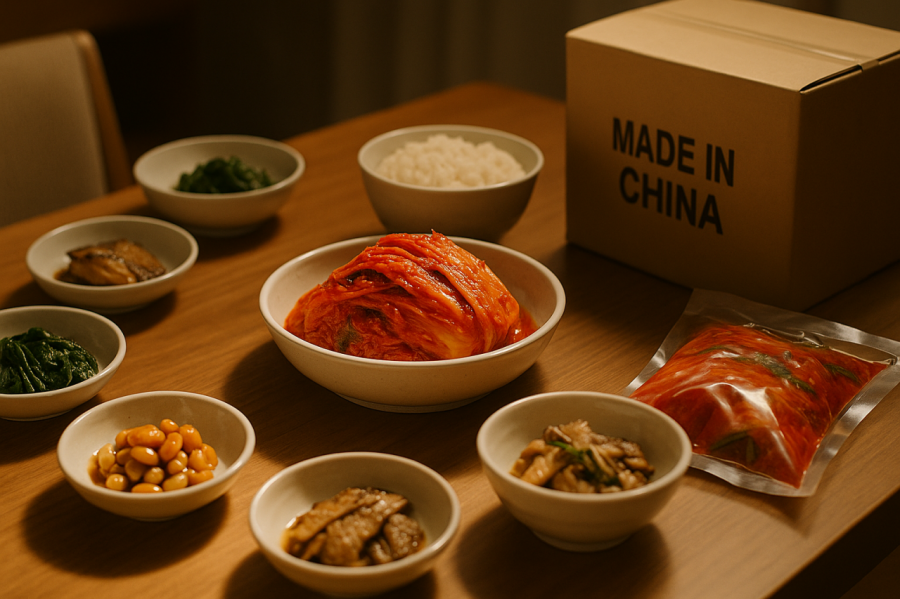
'Chinese Kimchi' Takes Over Korean Tables
ChatGPT Generated Image
원본보기 아이콘
According to the Korea Customs Service, from January to September this year, 249,000 tons of kimchi were imported.
This is a 12% increase compared to last year.
At this rate, annual imports are expected to reach 350,000 tons.
Most imported kimchi is from China,
and now, kimchi is closer to being a 'representative import item'
rather than a 'leading export product.'
Imports are seven times higher than exports,
and in terms of value, Koreans are consuming more imported kimchi than they export.
▼
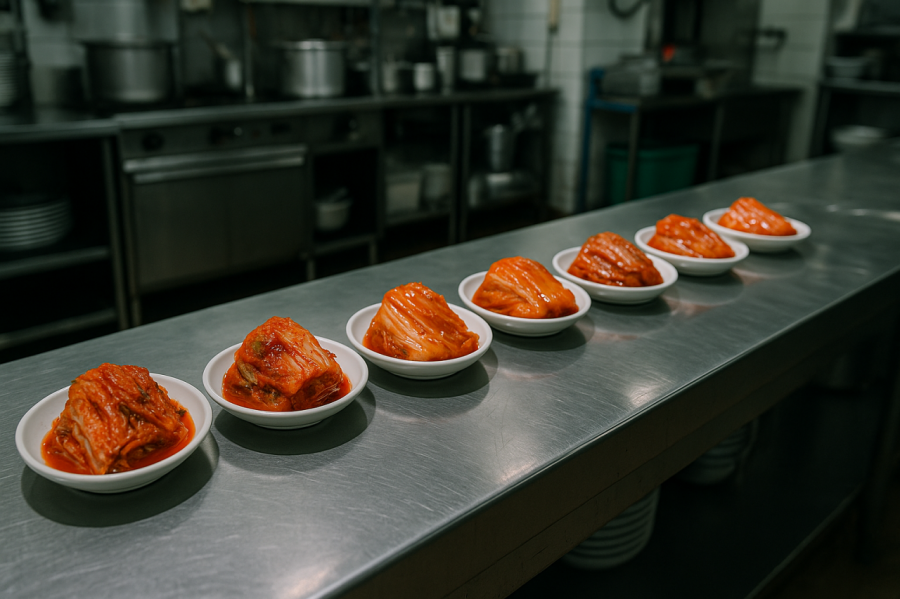
Half of Restaurants Use Chinese Kimchi
ChatGPT Generated Image
원본보기 아이콘
The domestic kimchi industry is worth 2.2 trillion won,
but exports account for only 7%.
Meanwhile, more than half of the restaurant and food service market
is already dominated by imported kimchi.
According to a survey by the Korea Agro-Fisheries & Food Trade Corporation (aT),
37% of restaurants use imported kimchi as a side dish,
and 55% use imported kimchi for cooking.
In other words, one out of every two restaurants is already serving 'Chinese kimchi.'
▼
Domestic Kimchi Struggles to Survive
ChatGPT Generated Image
원본보기 아이콘
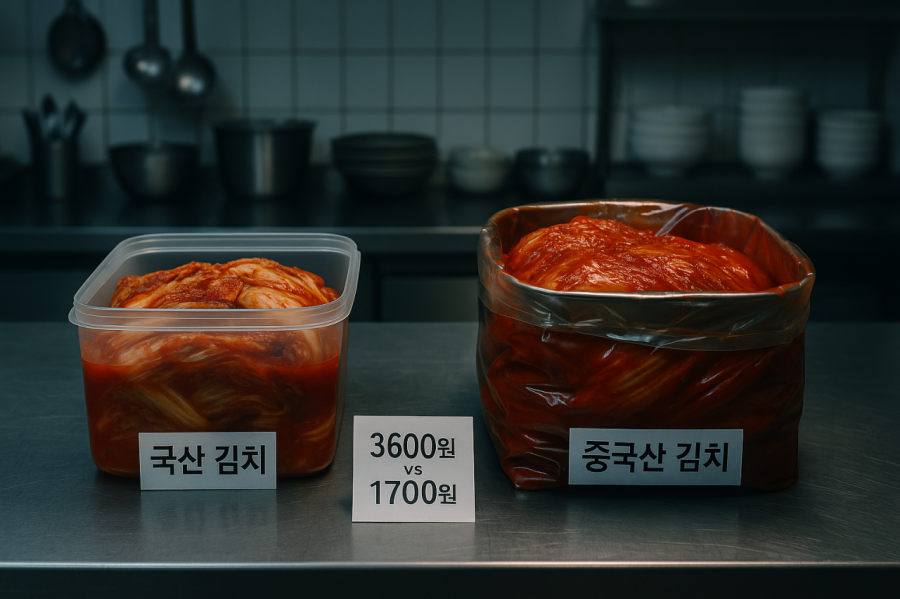
The price gap is stark.
Domestic napa cabbage kimchi costs 3,600 won per kilogram, while Chinese kimchi is about 1,700 won.
With prices less than half,
restaurants have little choice.
As domestic labor and ingredient costs rise,
the use of 'semi-processed kimchi'-Chinese salted cabbage seasoned with domestic spices-
is rapidly increasing.
In the end, while 'kimchi is a Korean food,'
its ingredients are crossing borders.
▼
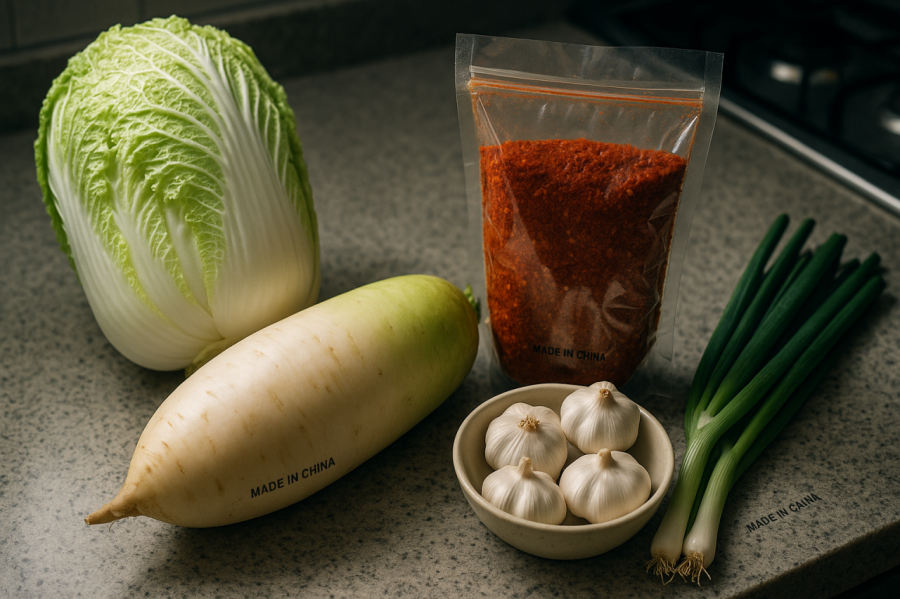
Even the Raw Ingredients Depend on China
ChatGPT Generated Image
원본보기 아이콘
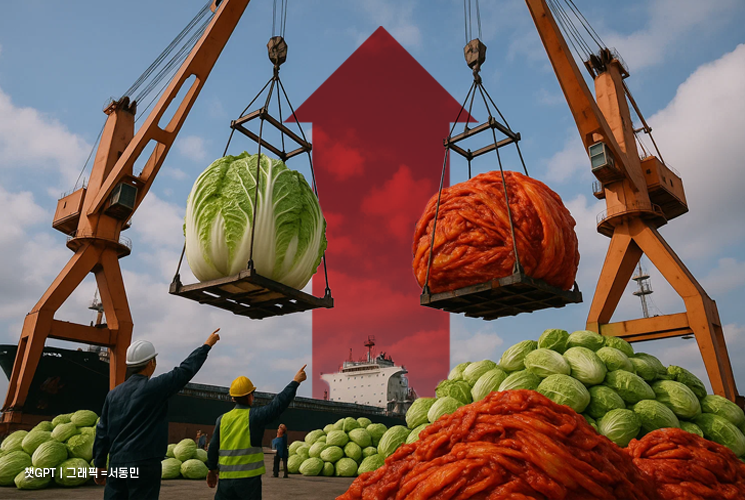
The issue goes beyond finished products.
Imports of kimchi's key ingredients-napa cabbage, radish, chili powder, and even garlic-
have all surged.
Cabbage imports have increased 38-fold in four years, radish imports sixfold,
and chili powder imports have already surpassed last year's volume.
The structure of relying on China even for the ingredients that create kimchi's flavor
is becoming entrenched.
▼
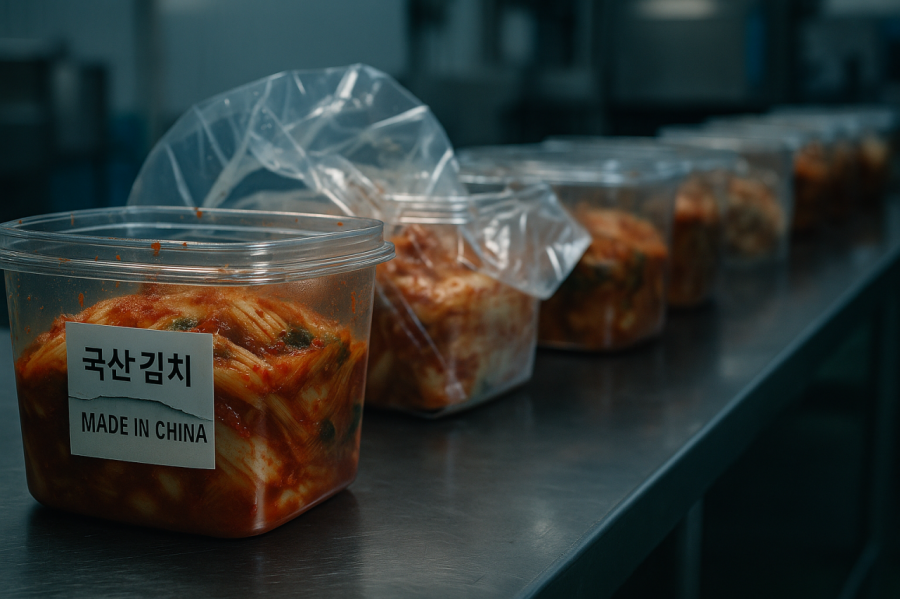
Chinese Products Disguised as 'Domestic Kimchi'
ChatGPT Generated Image
원본보기 아이콘
A bigger problem is that this imported kimchi
is being disguised as 'domestic.'
Six out of ten kimchi manufacturers
process Chinese salted cabbage or finished products
and sell them as domestic kimchi.
Violations of country-of-origin labeling are ongoing.
This year alone,
447 cases were caught for false or missing labeling.
The moment consumers believe they are eating 'domestic kimchi,'
they may already have been deceived.
Efforts to protect domestically produced kimchi continue,
but its place is gradually shrinking amid the logic of price and efficiency.
Kimchi is definitely a Korean food,
but now its roots are shaking.
-
Reporter
Lim Hyeseon lhsro@asiae.co.kr
-
Edit
Hur Eunmi eungmimon@asiae.co.kr
© The Asia Business Daily(www.asiae.co.kr). All rights reserved.





![[Digging Travel] Cheongnamdae Opened by the Monorail, Provincial Government Building Unlocked by Picture Books](https://cwcontent.asiae.co.kr/asiaresize/304/2026061415375498751_1781419075.jpg)