Seoul Expands Housing Cost Support... 'Excessive Housing Cost Burden' Eases
"Housing Cost Support Program for Households Without Homes That Have a Child"
Analysis of 417 Households Supported in 2025
93.9% of Respondents Said, "It Eased the Burden of Housing Costs"
The Seoul Metropolitan Government provided KRW 4.1 billion in support to 2,004 households without homes that had a child between last year and November this year. As a result, the number of households spending more than 30% of their monthly income on housing costs fell by 40%.
On November 29, the Seoul Metropolitan Government released the results of an analysis of 417 households selected last year for its Housing Cost Support Program for Households Without Homes That Have a Child, for which monthly income and housing costs could be compared.

The survey was conducted from August 12 to 31 this year among the 654 households selected last year. A total of 594 households responded, for a response rate of 90.8%. Most respondents were in their 30s (72.9%), and most households had one child (77.9%). Of these, 417 households with comparable monthly income and housing cost data were included in the analysis of housing cost burdens.
The ratio of rent to monthly income is also used by the Ministry of Land, Infrastructure and Transport and the Seoul Metropolitan Government in their housing surveys as an indicator of the housing cost burden on renter households. For this analysis, housing costs were calculated based on monthly rent and interest on loans for rental deposits, both of which are covered by the program. Using the U.S. Department of Housing and Urban Development (HUD) criteria for determining housing cost burdens, households spending more than 30% of their monthly income on housing costs were classified as “cost-burdened,” and those spending more than 50% as “severely cost-burdened.” For example, a household with a monthly income of KRW 3 million that spends more than KRW 900,000 on rent and loan interest is considered cost-burdened.
The support also covered a substantial share of actual housing costs. According to the survey, the average monthly housing cost before receiving support, including rent and loan interest, was KRW 848,000 (414 respondents). Households selected last year received an average of about KRW 290,000 per month, equivalent to more than one-third of their average monthly housing costs.
Recipients also reported a strong perceived impact. Before being selected, 93.4% of respondents said housing costs were a burden, while 93.9% said the Seoul Metropolitan Government’s support had helped ease that burden. In addition, 92.5% said they were satisfied with the program overall, including 76.9% who said they were very satisfied.
The survey also found positive signs for housing stability and plans to have children. Some 83.1% said the housing cost support would help them continue living in Seoul, while 71.5% said it had a positive effect on their plans to have another child. Respondents also said the support helped with raising children by easing the burden of child-rearing costs (69.4%) and improving the child-rearing environment (70.4%).
The Housing Cost Support Program for Households Without Homes That Have a Child is a low-birthrate policy focused on housing stability. To help households with a new child remain in Seoul despite high housing costs, the program provides up to KRW 300,000 per month for two years to cover actual interest on loans for rental deposits and monthly rent. In cases of multiple births or an additional birth, support can be extended by one to two years beyond the initial two-year period, for a maximum of four years.
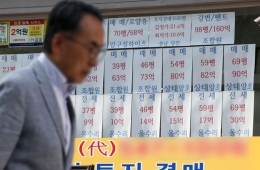
Of the 2,011 households selected last year and this year, 1,404 (69.8%) lived in monthly-rent or semi-jeonse homes and paid rent each month. Among households in the monthly-rent category, 76.7% paid at least KRW 600,000 in monthly rent. The share paying at least KRW 1 million a month nearly doubled, rising from 17.3% (75 households) last year to 34.0% (240 households) in the first half of this year.
The Seoul Metropolitan Government is also analyzing the results of a survey of 1,357 households selected in the first half of this year. Based on the findings, it plans to assess the impact of the housing cost support and improve the program to reflect recipients’ feedback and the housing realities facing households with children.
Hot Picks Today
 "Two Spend 500,000 Won in a Flash, Yet Wait Two Hours?" ... 'Dreamland' Shunned by Kids and Foreign Tourists
- The Era of Getting 200 Million Won After 30 Years Is Over... A Japanese Bank's "Perpetual Department Head" Who Just Clocked In Cries Out
- Spain Hit by Its Worst Tragedy... Lee Kangin, Moreno and Real Madrid Join Soccer World in Mourning
- They Said, “Make It Your Home for Life” - Then Suddenly Kicked 200 Passengers Off... What Happened to the Around-the-World Cruise?
- "130 Rice Bowls Sold Out in a Day"... 'Unfiltered Face' Adds 8 Million Won to Night Market Sales: China's Bungeunwoo
Ma Chaesuk, head of the Seoul Metropolitan Government’s Women and Family Office, said, “The survey results show that the city’s housing cost support is helping ease the actual housing cost burden on households with a new child. Even as the burden of monthly rent and jeonse costs grows, we will continue to listen to residents and improve the program to reflect the housing realities of households with children, so they can raise their children in Seoul with greater stability.”
© The Asia Business Daily. All rights reserved. Unauthorized AI training and use prohibited.