Seoul Home Prices, Lending Rules Push Buyers to Gyeonggi... "Leaving Seoul" Purchases Hit 4-Year High
Seoul Residents Account for 6.5% of Apartment Purchases in Other Regions
Share of Purchases in Gyeonggi Reaches 15.5%; Guri Hits 39%
Apartment Purchases in Seoul by Non-Seoul Residents Hit 9-Year Low

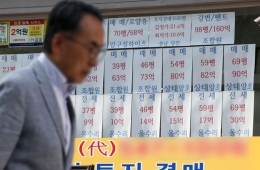
Since the October 15 real estate measures introduced last year, fewer people from outside Seoul have been buying apartments in the capital, while more people have been leaving Seoul to buy homes in Gyeonggi Province and other regions. The trend is seen as a shift in buying demand toward the relatively more affordable metropolitan area, as tighter lending restrictions coincided with rising home prices in Seoul.
According to apartment transaction data released by the Korea Real Estate Board on November 29, Seoul residents bought 38,612 apartments in other regions during the 12 months from October 2025 through September 2026, accounting for 6.5% of the 590,774 apartment transactions nationwide. That was up 1.3 percentage points from 5.2% in the preceding 12-month period and the highest level for the same period in four years.
In particular, the share of apartment purchases in Gyeonggi Province made by Seoul residents rose to 15.5%, up 2.7 percentage points from 12.8% in the preceding 12-month period. Buying demand was especially pronounced in areas adjacent to Seoul.
In Guri, the share of purchases by Seoul residents more than doubled, from 19.0% to 39.0%. It surged to 56.1% in September 2026, with Seoul residents buying more than half of the apartments sold. The share also rose in Gwangmyeong, from 30.6% to 35.8%, as well as in Hanam (27.3% to 33.9%), Gwacheon (18.6% to 26.5%) and Namyangju (20.9% to 25.8%).
Conversely, buyers from outside Seoul have become less prominent in the capital's apartment market. During the same period, the share of Seoul apartment purchases made by residents of other regions fell to 18.73%, down 4.3 percentage points from 23.03% in the preceding 12-month period. It was the lowest level for the same period in nine years, since October 2016 to September 2017.
By district, the share of purchases by non-Seoul residents fell sharply in Seongdong-gu, from 24.6% to 14.0%. The share also declined in Mapo-gu, from 27.1% to 18.8%; Gwangjin-gu, from 22.2% to 16.4%; and Seongbuk-gu, from 23.3% to 16.2%.
The changes are attributed to the October 15 measures, which designated all of Seoul as a land transaction permit zone. The measures tightened owner-occupancy requirements, making it more difficult to buy a home with a tenant in place, a practice known as "gap investment." They also lowered mortgage limits, raising the barrier to buying an apartment in Seoul.
Hot Picks Today
 "Two Spend 500,000 Won in a Flash, Yet Wait Two Hours?" ... 'Dreamland' Shunned by Kids and Foreign Tourists
- The Era of Getting 200 Million Won After 30 Years Is Over... A Japanese Bank's "Perpetual Department Head" Who Just Clocked In Cries Out
- Spain Hit by Its Worst Tragedy... Lee Kangin, Moreno and Real Madrid Join Soccer World in Mourning
- They Said, “Make It Your Home for Life” - Then Suddenly Kicked 200 Passengers Off... What Happened to the Around-the-World Cruise?
- "130 Rice Bowls Sold Out in a Day"... 'Unfiltered Face' Adds 8 Million Won to Night Market Sales: China's Bungeunwoo
Real estate industry officials say the trend of end-user buyers, burdened by rising home prices and rent in Seoul, turning to Gyeonggi Province could continue for the time being. Some also expect demand from buyers outside Seoul to return if apartment prices in the capital fall and more properties are offered at discounted prices.
© The Asia Business Daily. All rights reserved. Unauthorized AI training and use prohibited.