More Women Faculty at National Universities, but Their Share of Key Positions Stays in the Teens
Ministry of Education Announces National Universities' Gender Equality Progress
Women Make Up 30.2% of Newly Appointed Professors...Up 3.8 Percentage Points
5.8% of 586 Departments and Faculties with No Gender Diversity Move Out of That Category
The share of female faculty members at national universities has steadily increased, but women still account for only around 10% of professors holding key administrative positions. The share of women among newly appointed professors fell from the previous year at smaller national universities with fewer than 500 full-time faculty members, as well as at universities of education and teacher-training universities.
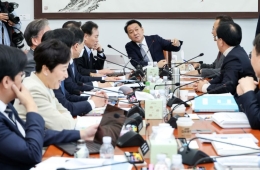
On November 27, the Ministry of Education and the Korean Women's Development Institute held a meeting at EL Tower in Seoul to share progress on promoting gender equality at national universities. The ministry announced the results of its assessment of the implementation of gender-equality action plans at 39 national universities and national university corporations. Since 2004, the ministry has assessed national universities' progress in promoting gender equality each year to increase gender diversity in faculty appointments and university decision-making.

Proportion of Female Professors by Type of Establishment (2000-2025). Korean Women's Development Institute
View original imageThe assessment classified institutions according to the number of full-time faculty members: General Universities I (500 or more), General Universities II (fewer than 500), and universities of education and teacher-training universities. It covered four areas: efforts to improve gender diversity among newly appointed professors; gender diversity among full-time professors; gender diversity in decision-making bodies; and efforts to foster a culture of gender equality on campus.
Women Make Up 23.2% of Full-Time Professors...Only Around 10% Hold Key Positions
General Universities I scored 64 points, General Universities II scored 54.6 points, and universities of education and teacher-training universities scored 67.4 points. The gap between General Universities I and II narrowed slightly from the previous year, but disparities in gender diversity by university size remained pronounced.
Women accounted for 31.9% of newly appointed professors at General Universities I, 22.3% at General Universities II, and 37.2% at universities of education and teacher-training universities, for an overall average of 30.2%. The share at General Universities I rose by 3.8 percentage points from the previous year, while the shares at General Universities II and universities of education and teacher-training universities fell by 0.9 and 17.0 percentage points, respectively.
Of the 586 departments and faculties with zero gender diversity, only 34 (5.8%) moved out of that category through new appointments. A department or faculty is considered to have zero gender diversity if it has at least four full-time faculty members and its faculty consists entirely of one gender.
Women accounted for 23.0% of full-time professors at General Universities II, 20.1% at General Universities II, and 36.5% at universities of education and teacher-training universities, for an overall average of 23.2%. This exceeded the Ministry of Education's 2026 target of 22.2%. The ministry is working to raise the share of women among full-time professors to 25% by 2030.
However, gender diversity remained low in decision-making bodies that determine universities' policies and operational direction. Women accounted for 17.2% of professors holding key administrative positions at General Universities I, 13.4% at General Universities II, and 18. 6% at universities of education and teacher-training universities, for an average of just 16.2%. Among professors serving on major committees, the share of women was highest at universities of education and teacher-training universities, at 33.5%, followed by 23.0% at General Universities I and 19.8% at General Universities II.
In the assessment of efforts to foster a culture of gender equality on campus, General Universities I ranked highest at 78.5%, followed by General Universities II at 66.5% and universities of education and teacher-training universities at 66.0%.
Choi Yoonjung, a research fellow at the Korean Women's Development Institute, said, "The shares of women among newly appointed and full-time professors are steadily rising, but there are still seven universities with no women in key administrative positions." She added, "We plan to strengthen tailored consulting, focusing on those universities and on General Universities II, which received low assessment scores."
She continued, "There is a need to expand support for the next generation of scholars, including female graduate students in science and engineering and early-career researchers, to build a sustainable base of female research talent."

Share of female professors by academic rank at national and private four-year universities (as of October 1, 2025). Korea Women's Development Institute
View original imageSupporting the Development of Female Engineering Professors to Ease Gender Imbalances
Gyeongkuk National University, selected as an outstanding institution in the assessment after the merger of National Andong University and Gyeongbuk Provincial University, hired five women among the 20 professors it newly appointed last year. Its Department of Ethics Education and School of Nursing also moved out of the zero-gender-diversity category, and in March this year, the School of Electrical and Advanced Materials Engineering appointed its first female professor.
The share of women in key administrative positions at the university rose from 6.7% to 23.5%. Women accounted for two of the five office and bureau heads, or 40%. The university also received positive assessments for offering courses related to gender equality and operating an on-campus childcare center for employees.
Changwon National University stood out for drawing up a long-term gender-equality plan that reflected the views of its community. Last September, the university surveyed 597 faculty members, staff, teaching assistants, and students on their perceptions of gender equality and policy needs.
The survey found that support systems enabling female faculty to balance research and caregiving needed to be made more effective. It also identified calls for policies to be implemented fairly, regardless of gender. In response, the university decided to strengthen safeguards against career interruptions and support women researchers in promising future technology fields through research assistance at every career stage and close mentoring.
Han Eunmi, a professor in the Department of Chemical Engineering at Chonnam National University, emphasized the need for "pipeline management" to systematically oversee the career paths of female researchers. "The share of women professors in engineering cannot be improved through short-term efforts alone," she said. "If women leave the field while pursuing graduate studies, earning doctoral degrees, or working as early-career researchers, the pool of candidates for full-time faculty positions will inevitably shrink."
She added, "It is also not uncommon for female faculty members to be excluded from key administrative positions or major committees, or to be left with merely symbolic roles. They must be guaranteed meaningful authority and opportunities to participate."
Seol Sehun, Director General for Planning and Coordination at the Ministry of Education, said, "We must create an inclusive community in which all members of the university can grow together by fostering an educational and research environment where everyone can fully demonstrate their abilities, regardless of gender."
Hot Picks Today
 "Two Spend 500,000 Won in a Flash, Yet Wait Two Hours?" ... 'Dreamland' Shunned by Kids and Foreign Tourists
- The Era of Getting 200 Million Won After 30 Years Is Over... A Japanese Bank's "Perpetual Department Head" Who Just Clocked In Cries Out
- Spain Hit by Its Worst Tragedy... Lee Kangin, Moreno and Real Madrid Join Soccer World in Mourning
- They Said, “Make It Your Home for Life” - Then Suddenly Kicked 200 Passengers Off... What Happened to the Around-the-World Cruise?
- "130 Rice Bowls Sold Out in a Day"... 'Unfiltered Face' Adds 8 Million Won to Night Market Sales: China's Bungeunwoo
He said, "In such an environment, universities will become even stronger, and students will receive a more balanced education. Gender equality is part of the process of realizing the fundamental value of education."
© The Asia Business Daily. All rights reserved. Unauthorized AI training and use prohibited.