Budget Deadline D-4... Ruling and Opposition Parties at a "Deadlock" Over Future Response Fund
Ruling Party: "A Seawall to Safeguard Public Finances"
Opposition: "Not Rational Fiscal Management"
With four days remaining until the legally mandated deadline for passing next year’s budget bill, the ruling and opposition parties remain at odds over the Future Response Fund, a key point of contention, and continue to trade arguments.
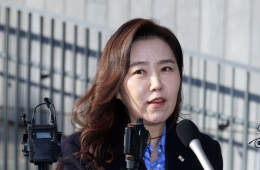
Jeon Eunsu, floor spokesperson for the Democratic Party of Korea, said in a written briefing on Nov. 28, “The Future Response Fund is not debt; it is a seawall to prepare for the waves ahead,” adding that it is “a seawall to safeguard medium- and long-term fiscal stability and a catalyst for strengthening the foundations for growth.” She stressed the need to establish the fund.

The Democratic Party of Korea said the Future Response Fund would be a financial asset held by the state to prepare for uncertainties in the future, while the People Power Party called it a transfer of burdens to future generations and urged a full review.
In a written briefing, Jeon Eunsu, the Democratic Party’s floor spokesperson, stressed, “The Future Response Fund is not debt; it is a seawall to prepare for the waves ahead,” adding that it is “a seawall to safeguard medium- and long-term fiscal stability and a catalyst for further strengthening the foundations for growth.”
Jeon criticized the People Power Party and some others for labeling the 2027 government budget bill and the establishment of the Future Response Fund as “fiscal addiction” and “debt addiction,” calling it “a political attack that ignores the truth.”
She added, “The 104 trillion won accumulated in the Future Response Fund is not money that will disappear. It is a financial asset held by the state to prepare for uncertainties in the future.”
In a statement, Park Seonghun, chief spokesperson for the People Power Party, countered, “A semiconductor boom lasts only for a time, but national debt is passed down through generations,” adding, “It defies common sense to issue 100 trillion won in deficit bonds while setting aside 104.4 trillion won in excess tax revenue in a separate fund.”
Park added, “It is hard to believe that this is a fiscal management plan put forward by a government responsible for the nation’s finances. How can a system that incurs costs of hundreds of billions of won on the spot be called rational fiscal management when it is supposed to prepare for the future?”
He also claimed, “Despite the situation, the government and ruling party have not abandoned their intention to pursue a special measure that would allow them to change the amounts allocated to major spending items by up to 30% without National Assembly approval,” calling it “a declaration that they will treat taxpayers’ money as the government’s private slush fund.”
Hot Picks Today
 "Two Spend 500,000 Won in a Flash, Yet Wait Two Hours?" ... 'Dreamland' Shunned by Kids and Foreign Tourists
- The Era of Getting 200 Million Won After 30 Years Is Over... A Japanese Bank's "Perpetual Department Head" Who Just Clocked In Cries Out
- Spain Hit by Its Worst Tragedy... Lee Kangin, Moreno and Real Madrid Join Soccer World in Mourning
- They Said, “Make It Your Home for Life” - Then Suddenly Kicked 200 Passengers Off... What Happened to the Around-the-World Cruise?
- "130 Rice Bowls Sold Out in a Day"... 'Unfiltered Face' Adds 8 Million Won to Night Market Sales: China's Bungeunwoo
Earlier, the Budget and Accounts Subcommittee of the National Assembly’s Special Committee on Budget and Accounts concluded its 12-day review the previous day without voting on the Future Response Fund program. The committee plans to continue discussions through a smaller subcommittee attended by only some of the ruling and opposition parties’ floor leaders. The smaller subcommittee is an informal consultative body that works to reconcile budget items on which the main subcommittee has not reached agreement.
© The Asia Business Daily. All rights reserved. Unauthorized AI training and use prohibited.