Park Byeongsu: "Spending KRW 5 Billion a Year, Yet 'In the Dark'..." Calls for Audit of Wando Marine Healing Management Corporation
Admits inadequate self-supervision... Calls for comprehensive audit of accounting and employee conduct
Criticizes return of DMO funds; proposes special plans for Slow City's 20th anniversary
Wando County Council member Park Byeongsu strongly called for a comprehensive audit of the Marine Healing Management Corporation, which receives more than KRW 5 billion in county funding each year, and for mid- to long-term measures to boost tourism ahead of the 20th anniversary next year of Cheongsando's designation as a Slow City.
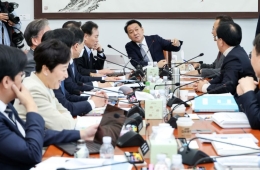
At the Wando County Council's third administrative audit session for 2026, held on November 27, Park asked, "The Marine Healing Management Corporation faces several challenges, including improving its operating balance and managing its organization. Has the Tourism Division, the department responsible for the corporation, ever conducted its own checks of accounting, budget execution, or employee conduct?" He urged the county to "coordinate with the audit department to conduct a comprehensive audit of the corporation's overall operations, including employee conduct, accounting, contracts, and budget execution, since guidance and supervision by the responsible department alone have their limits, and report the findings to the council."

Park Byeongsu (right), a member of the Wando County Council, called for a comprehensive audit of the Marine Healing Management Corporation. Reporter Lee Jungyeong
View original imageTourism Division Chief Jeon Munhee replied, "We conducted our own checks on the status of specific projects, but did not separately provide guidance or supervision regarding the corporation's overall work. We will work with the audit department to conduct an audit."
Park also criticized the county's tourism statistics and its Regional Tourism Organization (DMO) project. When he asked about the status of statistics on the number of overnight visitors, length of stay, and spending, as well as the reasons for the decline in visitors to island attractions such as the Yun Seondo Historic Site on Bogildo, Jeon said, "To address the limitations of the Korea Tourism Organization's Data Lab, we will include measures to improve statistics in a survey and in next year's tourism master plan study." She added, "There were some errors in the statistics for the Yun Seondo Historic Site, and both the extreme heat and the economic downturn appear to have contributed to the decline."
Park also showed a photograph of the deteriorated Pasi Street in Dochung-ri, Cheongsando, and called for urgent repairs before the festival next April. Jeon responded, "A full-scale renovation is difficult due to budget limitations, but we will make improvements in stages by coordinating environmental improvements during the festival with the K-Slow City branding project, which includes Slow Trail No. 11."
Hot Picks Today
 "Two Spend 500,000 Won in a Flash, Yet Wait Two Hours?" ... 'Dreamland' Shunned by Kids and Foreign Tourists
- The Era of Getting 200 Million Won After 30 Years Is Over... A Japanese Bank's "Perpetual Department Head" Who Just Clocked In Cries Out
- Spain Hit by Its Worst Tragedy... Lee Kangin, Moreno and Real Madrid Join Soccer World in Mourning
- They Said, “Make It Your Home for Life” - Then Suddenly Kicked 200 Passengers Off... What Happened to the Around-the-World Cruise?
- "130 Rice Bowls Sold Out in a Day"... 'Unfiltered Face' Adds 8 Million Won to Night Market Sales: China's Bungeunwoo
Park also raised concerns about Cheongsando's tourism strategy as it marks the 20th anniversary of becoming Asia's first designated Slow City and being selected as a "must-visit island," as well as Cheongsan Nonghyup's failure to apply for project funding. He also proposed elevating representative festivals in the eastern region, centered on Yaksan, and the southwestern region, including the abalone festivals on Nohwa, Bogil, and Soan, to county-level events.
© The Asia Business Daily. All rights reserved. Unauthorized AI training and use prohibited.