"K-Rice Belt: Productivity of Local African Farmers More Than Doubles"
Korea Rural Community Corporation Holds 2026 K-Rice Belt Results-Sharing Event
The average productivity of local farmers has more than doubled through the K-Rice Belt Project, launched in 2023 to help major rice-consuming countries in Africa improve their self-sufficiency.
The Korea Rural Community Corporation said it had held the K-Rice Belt Results-Sharing Event at the President Hotel in Seoul on the 27th, together with the Ministry of Agriculture, Food and Rural Affairs and the Rural Development Administration.

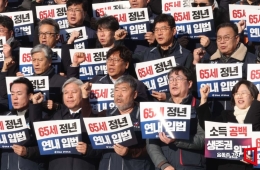
Participants at the K-Ricebelt performance-sharing event held at the President Hotel in Seoul on the 27th pose for a commemorative photo. Korea Rural Community Corporation
View original imageThe event was a side event of Development Cooperation Week 2026, organized by the Office for Government Policy Coordination and running from November 24 to 27. It was organized to share the results of the K-Rice Belt Project, launched in 2023 to help major rice-consuming countries in Africa improve their self-sufficiency, and to discuss ways to develop the project through an expert panel discussion.
The K-Rice Belt Project is a Korean-style agricultural official development assistance (ODA) initiative that supports food security in African countries by producing and distributing high-quality, high-yield rice seeds suited to each country and helping establish a stable production base. It has been carried out in eight African countries: Ghana, beginning in 2023; Gambia, Guinea, Senegal, Uganda, Cameroon and Kenya in 2024; and Sierra Leone in 2026. The Ministry of Agriculture, Food and Rural Affairs is responsible for formulating and overseeing policy, the Rural Development Administration for producing high-quality seeds and transferring technology, and the Korea Rural Community Corporation for developing seed production infrastructure.
One hundred people attended the event, representing a range of sectors and showing strong interest in the project. They included embassy officials representing the participating African countries; officials from relevant ministries and agencies involved in ODA, including the Office for Government Policy Coordination, the Ministry of Foreign Affairs and the Korea International Cooperation Agency (KOICA); international organizations such as the Food and Agriculture Organization (FAO), the World Food Programme (WFP), the International Fund for Agricultural Development (IFAD) and the African Development Bank (AfDB); as well as private-sector experts, organizations, businesses and members of the media.
In his opening remarks, Rural Development Administration Administrator Lee Seungdon said, "Since the project began, average productivity among local farmers has more than doubled to 4.6 tons. In Uganda in particular, local farmers have produced as much as 9.6 tons through autonomous production led by regional farmers' cooperatives." In his welcoming remarks, Park Sangho, the Ministry of Agriculture, Food and Rural Affairs' director general for international agricultural and food cooperation, said, "Stable seed production is expected to become a reality starting next year, as seed production complexes are completed in stages, beginning in Ghana. We also plan to strengthen cooperation not only with the governments of partner countries but also with the private sector and international organizations."
During the policy presentations and discussion session, the Ministry of Agriculture, Food and Rural Affairs, the Rural Development Administration and the Korea Rural Community Corporation each presented updates on the project's progress and future plans, along with successful field cases, including Kenya's rice seed production system and the development of a rice seed production complex in Senegal.
In a discussion chaired by Lee Myeongsu, former vice minister of agriculture, food and rural affairs, five private-sector experts shared the view that the project should establish itself as the Republic of Korea's flagship agricultural ODA initiative supporting efforts to increase rice production in Africa.
In addition to ongoing efforts to develop varieties, transfer cultivation techniques and establish a stable seed production base, the experts identified partnerships with nongovernmental organizations (NGOs), businesses and international organizations; the participation of young farmers in local communities; and the strengthening of market- and consumer-oriented value chains as key priorities for expanding and developing the project.
Hot Picks Today
 "Two Spend 500,000 Won in a Flash, Yet Wait Two Hours?" ... 'Dreamland' Shunned by Kids and Foreign Tourists
- The Era of Getting 200 Million Won After 30 Years Is Over... A Japanese Bank's "Perpetual Department Head" Who Just Clocked In Cries Out
- Spain Hit by Its Worst Tragedy... Lee Kangin, Moreno and Real Madrid Join Soccer World in Mourning
- They Said, “Make It Your Home for Life” - Then Suddenly Kicked 200 Passengers Off... What Happened to the Around-the-World Cruise?
- "130 Rice Bowls Sold Out in a Day"... 'Unfiltered Face' Adds 8 Million Won to Night Market Sales: China's Bungeunwoo
Kim Woosang, director of infrastructure projects at the Korea Rural Community Corporation, said, "Today's results-sharing event is significant because it comprehensively reviewed the project's journey over the past four years and discussed ways to develop it through discussions among experts from international organizations, academia, civil society and other sectors. We will carefully review the recommendations made by private-sector experts from various fields today and reflect them in the project, making this an opportunity for the K-Rice Belt Project to expand in a more comprehensive and inclusive way."
© The Asia Business Daily. All rights reserved. Unauthorized AI training and use prohibited.