92 Billion Won to Turn Aging Stadiums into Concert Venues... The Limits of Converting Sports Facilities [The Empty Stage in K-pop's Home Country, Episode 9]
Four World Cup Stadiums to Receive 92 Billion Won; Local Governments to Cover 64.4 Billion
Actual Execution Rate for Existing Sports Facility Renovations Stuck at 58%
KSPO Dome Rented for 42 Days, but Hosted Concerts on Just 19
Weigh Impact on Concert Supply and Long-Term Maintenance Costs Before Investing
The government plans to invest 92 billion won to turn four regional World Cup stadiums into large-scale K-pop concert venues. But renovating the stadiums will not necessarily increase the number of days available for concerts. Sports schedules, stage setup and dismantling, and the time needed to restore the grass will remain constraints. Local governments, which must cover 64.4 billion won, or 70% of the project costs, also executed only 58.3% of their budgets last year for renovating existing public sports facilities. These figures underscore the need to verify whether the large-scale public investment can actually expand the supply of concert venues.

92 Billion Won for Four World Cup Stadiums... Local Governments to Cover 64.4 Billion Won
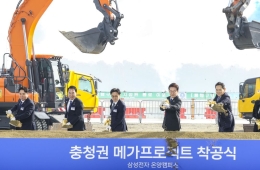
An analysis by The Asia Business Daily of the National Assembly Budget Office's materials on the 2027 budget proposal found that the Ministry of Culture, Sports and Tourism newly allocated 11.04 billion won in its proposed budget for next year for a project to improve World Cup stadiums. The project will select one World Cup stadium in each of four regions—the central region, the Daegu-Gyeongbuk region, the southeastern region, and the Honam-Jeju region—and upgrade its concert facilities.
The total project cost for each stadium is 23 billion won, with the government covering 30%. Under the government's plan, the central government will contribute 27.6 billion won, while local governments will bear 16.1 billion won per venue, or 64.4 billion won in total. By 2028, the government aims to equip the stadiums with grass-protection mats, sound systems, and retractable seating so that concerts for 40,000 to 50,000 people can be held outside the capital region.
The concern is the implementation record of existing renovation projects. The actual budget execution rate by local governments under the public sports facility renovation support program, which will include the World Cup stadium improvement project, fell from 79.0% in 2023 to 67.1% in 2024 and 58.3% last year. Unspent funds carried over from last year to this year totaled 33.508 billion won. The actual execution rate through August this year was also just 54.6%.
There were also wide regional disparities. Last year, the actual execution rate was just 15.4% in South Jeolla Province and 20.9% in North Chungcheong Province. Despite this, the ministry allocated 255.753 billion won for the overall public sports facility renovation support program next year, a 168.4% increase from this year.

The ministry cited larger construction projects, the need to secure additional local funding in response to rising prices, design changes, and civil complaints as reasons for delays in budget execution. In response, it raised the central government's subsidy rate for emergency safety projects from 50% to 70% and introduced measures such as factoring project readiness into the evaluation of grant applications. By contrast, local governments' share of the costs for the new World Cup stadium improvement project has been set at 70%.
The National Assembly Budget Office warned that a sharp increase in central government funding could lead to more project delays when local governments are struggling to secure their share and the implementation of existing projects is already sluggish. It said the likelihood of funds being spent within the year should be reassessed in light of the progress of individual construction projects and the fiscal circumstances of local governments.
The government is also working to upgrade existing concert venues in addition to World Cup stadiums. In June 2026, the Ministry of Culture, Sports and Tourism and the Korea Creative Content Agency launched a 12-billion-won support program to improve facilities for popular music concerts. Under the program, each venue can receive up to 2 billion won, covering up to 50% of project costs. The program targets one venue in the capital region with a capacity of at least 30,000 and five venues outside the capital region with capacities of at least 1,000 but fewer than 30,000.
The first round of applications selected three venues: Goyang Sports Complex in Goyang, Gyeonggi Province; the main hall of Busan Citizens' Hall; and Chiak Gymnasium in Wonju, Gangwon Province. When only two of the five planned venues outside the capital region were selected, the ministry opened an additional application round in September 2026. It also eased the requirements to allow venues to receive overlapping support from the public sports facility renovation program, provided the facilities being upgraded are different.
Goyang City will invest a total of 4 billion won, with 2 billion won each from central and city funds, to improve the concert environment. It also plans to secure approximately 15 billion won in remodeling funds in stages starting next year to renovate the stadium's aging seating and amenities. The stadium opened in 2003. Wonju City will spend a total of 2.041 billion won, including 1.0205 billion won in central government funding, to upgrade the stage sound and lighting systems and sound-absorbing facilities at Chiak Gymnasium, which opened in 1980. The main hall of Busan Citizens' Hall is an existing concert venue, not a sports facility.

A view of the main stadium at Goyang Stadium in Goyang, Gyeonggi Province. Photo provided by Goyang City.
View original imageConcerts on 19 Days, Venue Rentals for 42... Structural Limits of Sports Facilities
Facility upgrades do not automatically mean more concerts. Even with sound and lighting systems in place, sports schedules and the time needed to set up and dismantle stages continue to limit the availability of sports facilities for rental.
An analysis of operational data from Korea Sports Industry Development and venue rental records for individual events found that, of the 332 days the Seoul Olympic Gymnastics Arena (KSPO Dome) was rented for cultural events last year, 280 days, or 84.3%, were booked in seven-day blocks. Concert organizers rent the venue for the entire period needed to set up the stage, bring in equipment, hold rehearsals, and dismantle the stage.
DAY6, Kim Dongryul, and Lim Youngwoong each rented the venue for 14 days, for a combined total of 42 rental days. They held concerts on six, seven, and six days, respectively, for a total of 19 concert days. On 23 days—more than half of the total rental period—no concerts were held for audiences.
Facilities that also host sports events face even greater constraints. Gocheok Sky Dome is rented for the entire period required for stage setup and dismantling, and at least 24 hours must be reserved for dismantling alone. If the artificial turf area is used for a cultural event for no more than seven days, organizers must pay a 15-million-won restoration fee or submit a contract for restoration services. Seoul World Cup Stadium also gives priority to soccer matches and grass maintenance and restricts the installation of audience seating on the pitch during cultural events.

"At dedicated concert arenas in the United States, the stage is set up the day before a concert, and the equipment is dismantled after the show that same day. In South Korea, however, because many venues are converted from aging sports facilities, there are cases where stage setup has to begin three or four days before a concert," one concert industry official said. "You have to rent a venue for five days to put on a one-day concert. Even if you rent it for five days, revenue comes in only on the day of the concert, so it is difficult for concert promoters to make a profit."
As important as a venue's capacity is the number of days it can actually be used. Even a venue that can accommodate 50,000 people may be limited in the number of concerts it can host annually if sports schedules and stage setup and dismantling take up too much time. The number of seats that can actually be sold also varies depending on the stage configuration.
There are also limits to what sound system upgrades can achieve. In an indoor gymnasium not designed with music concerts in mind, sound can repeatedly bounce off hard walls and ceilings, reducing musical clarity. Replacing speakers and installing sound-absorbing materials can help to some extent, but resolving problems caused by the building's shape and the size of the space requires a separate architectural acoustics design.
Kim Youngsun, a professor at Seoul National University's College of Music, said, "Concert hall acoustics should be designed with the stage configuration, reverberation, and the angles of the side walls in mind, while also taking into account the acoustic qualities people actually experience."
Climate Pledge Arena in Seattle, United States, is an example of a facility whose interior structure was also changed as part of an upgrade. Built for the 1962 World's Fair, the stadium reopened in 2021 after its interior was rebuilt while preserving its roof. To address echo and reverberation problems caused by the original stadium's large interior and pyramid-shaped roof, acoustic baffles—structures that reduce sound reflection—were installed beneath the roof across an area of approximately 14,900 square meters. The number of loading facilities for concert equipment was also increased from two to eight.
Outdoor stadiums face different challenges from indoor gymnasiums. They must account for changes in sound transmission caused by wind and temperature, sound reflections from the roof structure, and concert noise spreading into nearby residential areas. The scope and cost of the required construction therefore vary according to each venue's structure and location.

Work to preserve the existing roof of Seattle Arena in 2020. Courtesy of Climate Pledge Arena.
View original image23 Billion Won to Renovate Each Stadium... The Effect on Concert Numbers Must Be Verified
The stadiums built for the 2002 Korea-Japan World Cup have been open for more than 20 years. Adding concert facilities will not eliminate the ongoing costs of maintaining the existing stadiums. Assessing the economic feasibility of renovations requires considering not only the initial investment but also the buildings' remaining useful lives and future equipment replacement costs.
According to local government fiscal disclosures based on the 2025 fiscal year-end accounts, Ulsan Munsu Football Stadium spent 7.289 billion won on maintenance last year, while Busan Asiad Main Stadium spent 6.327 billion won. Daegu Stadium and Daejeon World Cup Stadium spent 1.894 billion won and 1.217 billion won, respectively.
Kim Kyungmin, a professor at Seoul National University's Graduate School of Environmental Studies, advised, "Renovation projects for regional sports facilities require selectivity and focus. For some facilities, local governments should even consider eventually demolishing them and building anew."
It cannot be assumed that renovating an existing stadium is necessarily more economical than building a new one. Conversely, opting to build from scratch when an existing facility could be used is not necessarily the right choice either. Investment decisions should be made by comparing each facility's remaining useful life, the scope of renovations, and anticipated demand for concerts.
Before selecting project sites, the Ministry of Culture, Sports and Tourism should compare the initial costs of renovation and reconstruction with long-term maintenance costs. It should also survey actual demand for venue rentals among concert promoters and calculate the number of days available for concerts each year, taking sports schedules and the time needed to restore the grass into account.
Criteria are also needed to assess project outcomes. After construction is complete, sound performance, the number of concerts held annually, the time required to set up and dismantle stages, and concert production costs could be compared with figures from before the renovations. The point is to determine not only how much the facilities were upgraded but also how much the conditions for holding concerts improved.
Related Articles
 [Exclusive] "Only 20-25 Artists Could Fill 20,000 Seats"... K-Arena's Big Bet to Become the World's No. 1 [The Empty Stage in K-Pop's Homeland (6)]
- [Exclusive] Lower the Pitcher's Mound with a "Whoosh" and the Baseball Stadium Turns into a Concert Venue... Tokyo Dome Runs at Full Capacity for 327 Days [The Empty Stage of K-pop's Homeland 3]
- "Why Is Korea Building a 50,000-Seat Dome? Based on Baseball Attendance?"... The Question Posed by Tokyo Dome Management [The Empty Stage in K-pop's Homeland ⑤]
- [The Empty Stage in the Home of K-Pop 7] Ceiling Can Hold Up to 120 Tons of Equipment... K-Arena Also Factored in Concert Production Costs
The project cost for a single World Cup stadium is 23 billion won. The number of stadiums that have completed renovations is not the outcome the government should measure. The key question is how many more concerts can actually be held as a result of that investment.
© The Asia Business Daily. All rights reserved. Unauthorized AI training and use prohibited.