Building a 50,000-Person Venue, but Equipment Loads and Evacuation Times Left Out of Evaluation [The Empty Stage in the Home of K-Pop 10]
97 Sections Reinforced at Gocheok Dome... Are Large Concert Venues Safe?
Board of Audit and Inspection Flags Poor Safety Management at Large Sports Facilities
20 of 25 Sports Facilities Did Not Analyze Evacuation Times
No Capacity Threshold in Performance-Based Design Requirements
Although the government is pursuing the construction of a sports and concert dome stadium capable of accommodating more than 50,000 people, its evaluation criteria for selecting candidate sites do not include separate items for verifying the allowable load of concert equipment or the time needed to evacuate spectators. Under current fire safety laws and regulations, even a dome stadium with a capacity of 50,000 may fall outside the requirement to conduct performance-based design reviews to verify fire and evacuation safety. Critics say design and operating standards suited to large-scale concerts must be established first to avoid repeating safety problems seen at existing sports facilities.
An analysis by The Asia Business Daily on November 30 of the Ministry of Culture, Sports and Tourism's evaluation criteria for selecting sites for sports and concert dome stadiums found that safety conditions account for 37 points (3.7%) out of 1,000 for large domes and 31 points (3.1%) for medium-sized domes. The criteria assess disaster risks and the potential for risk reduction and response, as well as access to emergency medical services and safety response capabilities. However, the allowable load of concert equipment and spectator evacuation times are not included as separate evaluation items.

A view of Gocheok Sky Dome in Seoul. Photo provided by the Seoul Metropolitan Government.
View original imageEntry Routes Clogged During BTS Concert... Safety Concerns Over Passageways Raised 25 Years Ago
At BTS's "Arirang" world tour concert held at Busan Asiad Main Stadium in June 2026, crowds gathered on the stadium's second-floor pedestrian deck, causing severe congestion. As spectators who had walked up the sloped access route moved around looking for entrances, they became mixed in with crowds waiting to enter. For nearly 40 minutes, it was difficult to move through the area. The concert began 75 minutes later than scheduled. HYBE said the congestion resulted from a combination of factors, including confusion over on-site guidance and bottlenecks during the distribution of merchandise.
Busan Asiad Main Stadium, which opened in 2001, is a sports facility with 53,769 seats. Safety concerns over spectator passageways were raised soon after it opened. According to records of Busan Metropolitan Council meetings, then-council member Park Geuk-je pointed out the "risk of safety accidents due to steep slopes in the second- and third-floor passageways" during an administrative audit in November 2001. He also raised concerns about leaks on the exterior pedestrian deck, handrails, and finishing work on the access-route stairs.
During concerts, seating is also installed on the field, and spectators' routes vary depending on the stage location. Entry procedures, including ticket checks and security screening, also differ from those for sporting events. For these reasons, it is difficult to assess concert safety based solely on a stadium's existing capacity and traffic flow.

23 Roof Joints at Gocheok Dome Deformed... Allowable Load for Concert Equipment Halved
In the interim results of its audit of safety management at sports facilities used by large numbers of people, announced on October 21, the Board of Audit and Inspection found that 23 of the 466 joints in the roof's steel trusses at Gocheok Sky Dome had deformed beyond the construction tolerance. The allowable deviation was 15 mm, but some joints had bent by as much as 178 mm.
In September 2025, the Seoul Facilities Corporation announced that it would reduce the allowable load for concert equipment, including lighting and speakers, from 45 metric tons to 22.5 metric tons until reinforcement work was completed.
By March 2026, the Seoul Metropolitan Government had reinforced a total of 97 trusses: 23 deformed trusses and 74 surrounding trusses. However, the Board of Audit and Inspection said that reinforcement had been applied to only one side of each joint, contrary to the method recommended in the detailed safety inspection, leaving the joints with insufficient load-bearing capacity.
In a statement on November 10, the Seoul Metropolitan Government said the work had been carried out after consulting experts and that it had been monitoring the roof structure in real time since August 2026 using 29 measuring devices. It said no abnormalities had been detected up to that point and that it planned to ask the Korean Society of Steel Construction to verify whether the reinforcement method was appropriate.
At Incheon Munhak Stadium, the number of damaged members in the roof's steel trusses rose from one in 2021 to 50 in 2024. Incheon City postponed reinforcement work until 2028 and rated the affected members as "good" in safety inspections conducted in 2025 and 2026. The Board of Audit and Inspection said there was no immediate risk of collapse, but that the structure could be at risk if severe conditions such as heavy snowfall and strong winds occurred together.
Music-only concert venues account for the loads of large equipment from the design stage. K-Arena Yokohama in Japan has 480 equipment installation points and was designed to withstand a maximum load of 120 metric tons, including the equipment already installed. Incheon Inspire Arena has a capacity of about 100 metric tons, while Seoul Arena, currently under construction, was designed with overhead equipment support systems rated for 180 metric tons. Load-calculation conditions vary by facility, so the figures cannot be directly compared. However, all of these venues account for concert equipment in their structural designs.

Even a Venue for 50,000 May Not Be Required to Verify Evacuation Performance
Gaps were also identified in spectator capacity management and evacuation facilities. The Board of Audit and Inspection examined concerts held in 2024 and 2025 at seven indoor sports facilities, including Olympic Gymnastics Arena (KSPO Dome), and found that tickets were sold in 33 cases for more than 10% above the expected attendance reported in disaster response plans. In one case, ticket sales exceeded the reported figure by as much as 70%.
Under the Enforcement Decree of the Public Performance Act, to hold a performance at a venue other than a performance hall with an audience of 1,000 or more, the organizer and facility operator must jointly prepare a disaster response plan and report it to the relevant local government at least 14 days before the performance. Any changes to the plan must be reported at least seven days before the performance. This means that if the number of spectators increases, safety personnel and evacuation plans must also be reviewed.
No separate evacuation-time standards have been established for evacuation facilities at sports venues. Of the 25 large sports facilities examined in the audit, 20 did not analyze evacuation times when installing evacuation facilities. Gocheok Sky Dome arbitrarily set a benchmark evacuation time of 50 minutes, then concluded that its evacuation facilities had adequate capacity based on an analysis indicating that an actual evacuation would take 17 to 22 minutes.

Interior of Gocheok Sky Dome in Seoul. Photo courtesy of the Seoul Metropolitan Government.
View original imageInsufficient emergency generator capacity was also found at five venues, including Gocheok Sky Dome and Seoul World Cup Stadium. This raises concerns that firefighting equipment may not function properly during a power outage. The Seoul Metropolitan Government plans to complete work to secure sufficient emergency generator capacity at both stadiums by early 2027.
The current Enforcement Decree of the Act on the Installation and Management of Firefighting Systems does not set a separate threshold for requiring performance-based design based on a performance venue's capacity. Performance-based design verifies a building's safety through methods such as fire and evacuation simulations. The general gross floor area threshold set out in Article 9 of the decree is 200,000 square meters or more, while the minimum gross floor area for large-scale multipurpose domes proposed by the Ministry of Culture, Sports and Tourism is 130,000 square meters. As a result, a dome stadium with a capacity of 50,000 could be exempt from the requirement if it does not meet other legal criteria.
The Ministry of Culture, Sports and Tourism needs to specify in the design requirements for new multipurpose domes the maximum capacity for each type of performance, entry and exit routes, emergency evacuation times, and verification of the allowable load of concert equipment. It should also consider applying performance-based design according to spectator capacity. After a venue opens, its operator should manage attendance and equipment installation standards for each performance, while local governments should establish a system to compare reported expected attendance with actual ticket sales. The safety of a venue accommodating 50,000 people must be assessed not only by the number of seats, but also by how safely those spectators can enter and evacuate.
Related Articles
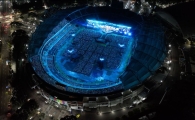 [K-Pop's Home Country Has an Empty Stage (1)] The World Wants K-Pop, but South Korea Has No 50,000-Seat Dome
- [The Empty Stage in K-pop's Home (2)] Is a 50,000-Seat Dome the Answer? Concert Venues' "Full-House Shortage"
- [Exclusive] Lower the Pitcher's Mound with a "Whoosh" and the Baseball Stadium Turns into a Concert Venue... Tokyo Dome Runs at Full Capacity for 327 Days [The Empty Stage of K-pop's Homeland 3]
- Even Without Baseball Games or Concerts, This Hot Spot Is Bustling: "A Whole Other World with a Hotel, Spa and Amusement Park" [The Empty Stage in K-Pop's Homeland 4]
A Ministry of Culture, Sports and Tourism official said, "Ensuring safety at performances requires cooperation among a wide range of stakeholders, including venue operators, concert promoters, the Ministry of Culture, Sports and Tourism, the Ministry of the Interior and Safety, local governments, police, and fire departments. We will continue working with those on the ground to pursue improvements to the system."
© The Asia Business Daily. All rights reserved. Unauthorized AI training and use prohibited.