"Expect a Turnaround in Q4"... Starbucks CEO Signals Earnings Recovery
Starbucks' The Namsan Seoul Tower Store Opening
"Took Office in June," CEO Shin Dongwoo: "Performance Improving in Second Half"
Starbucks Korea CEO Shin Dongwoo, whose company posted operating losses for the first time ever in two consecutive quarters amid controversy over its May 18 “Tank Day” marketing, said performance indicators have improved in the second half of the year and forecast a return to profitability in the fourth quarter. Shin emphasized that next year the company would focus on strengthening its fundamentals and maximizing the customer experience rather than opening more stores.
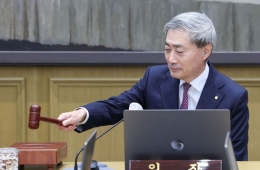
Shin held an open house event for the special store, The Namsan Seoul Tower, at N Seoul Tower in Yongsan-gu, Seoul, on November 26. “We have focused company-wide efforts on restoring customer trust,” he said. “We expect to turn a profit in the fourth quarter.” Shin took office in June, shortly after the Starbucks marketing controversy.

Shin Dong-woo, CEO of Starbucks Korea, speaks at the open house event for the special store, The Namsan Seoul Tower, at N Seoul Tower in Yongsan-gu, Seoul, on the 26th. Courtesy of Starbucks Korea.
View original imageOn May 18, 2026, the anniversary of the May 18 Democratization Movement, Starbucks held a tumbler promotion called “Tank Day.” The promotional copy sparked controversy, and Starbucks Korea immediately canceled the event and apologized. On the day of the controversy, Shinsegae Group dismissed Son Jeonghyeon, then CEO of SCK Company, and an executive in charge, and began disciplinary proceedings against the employees involved. A consumer boycott also gained momentum.
Following the marketing controversy in May, Starbucks posted its first quarterly loss in the second quarter, and the loss widened in the third quarter. SCK Company, the operator of Starbucks Korea, posted operating losses of 18.4 billion won in the second quarter and 45.3 billion won in the third quarter. Revenue was 747.3 billion won and 679 billion won, respectively, down 6.1% and 16.2% from the same periods a year earlier.
“I apologize for causing concern over the marketing issue in May,” Shin said. “We have continued to implement measures to prevent a similar controversy from happening again, and we will strengthen them going forward.”
Shin said indicators including revenue and profitability had begun to recover in the second half of the year. The year-on-year decline in revenue narrowed steadily, from 28% in June to 8% in September, while the operating loss decreased from 25.1 billion won in June to 13.5 billion won in September. Average daily revenue in September was up 17% from June, and the average number of daily visitors rose 11%. He added that the number of Rewards members exceeded 16 million in October. “Profitability improved even more clearly in October and November,” Shin said.
Shin said the company would make next year the first year of qualitative growth for Starbucks and work to enhance the quality of the brand experience as perceived by customers. This means focusing on the quality of the more than 2,200 company-operated stores currently in operation nationwide, rather than pursuing quantitative growth by expanding its store footprint. After renovating about 100 stores this year around a coffeehouse concept, the company plans to renovate around 200 more next year. It also plans to introduce signature beverages that showcase its coffee expertise, such as “Aerocano,” first launched globally by Starbucks in February 2026, while expanding its trend-responsive beverages and non-coffee lineup.
Hot Picks Today
 "Two Spend 500,000 Won in a Flash, Yet Wait Two Hours?" ... 'Dreamland' Shunned by Kids and Foreign Tourists
- The Era of Getting 200 Million Won After 30 Years Is Over... A Japanese Bank's "Perpetual Department Head" Who Just Clocked In Cries Out
- Spain Hit by Its Worst Tragedy... Lee Kangin, Moreno and Real Madrid Join Soccer World in Mourning
- They Said, “Make It Your Home for Life” - Then Suddenly Kicked 200 Passengers Off... What Happened to the Around-the-World Cruise?
- "130 Rice Bowls Sold Out in a Day"... 'Unfiltered Face' Adds 8 Million Won to Night Market Sales: China's Bungeunwoo
Meanwhile, Starbucks will officially open its 15th special store, The Namsan Seoul Tower, on November 27. Starbucks operates 14 special stores, including Gyeongdong 1960 and Jangchung Lounge R. Located on the fourth and fifth floors of N Seoul Tower, the store offers panoramic views of Namsan and the Han River. The approximately 300-pyeong store has around 200 seats and features a modern interpretation of the layout of a traditional Korean house, including a hanok gate and courtyard, a sarangchae, a toenmaru, and an anchae.
© The Asia Business Daily. All rights reserved. Unauthorized AI training and use prohibited.