Economic and Fiscal Societies' Current and Former Presidents Issue Joint Statement: "Comprehensively Review Future Response Fund"
Fifty people, including current and former presidents of 10 academic societies in Korea’s economic and fiscal fields, including the Korean Association of Public Finance and the Korean Economic Association, issued a joint statement on the 26th calling for a comprehensive review of the “2027 budget proposal” and the “Future Response Fund.” They said that raising the national debt by 106 trillion won and building a fund worth 104.4 trillion won, despite collecting an additional 194.2 trillion won in tax revenue next year, amounted to “borrowing 100 trillion won to create a 100 trillion won fiscal reservoir.” They called on the National Assembly to prevent government bond issuance without a specified purpose and normalize fiscal management.

The statement was presented at a policy forum held that day at the Francisco Education Center in Jung-gu, Seoul, titled “Problems with the 2027 Budget Proposal and the Future Response Fund and the Need for a Comprehensive Review.” It is rare for current and former presidents of multiple academic societies in the economic and fiscal fields to speak with one voice under their societies’ names.
“Savings should come from surplus funds... Debt ratio to rise to 48.3%”
The statement’s signatories pointed out that “savings should be made with money left over, not with borrowed money.” They said that even with a sharp increase in tax revenue next year, the government plans to bring the managed fiscal balance close to equilibrium while increasing total spending by 12.8% (93 trillion won), leaving no actual surplus. They argued that borrowing money to fill the fund would amount to nothing more than an accounting illusion.
They also noted that the fund’s projected investment rate of 3.85% cited by the government is lower than its borrowing rate of 4.07%. Responding to the government’s claim that the national debt ratio would fall from 51.6% to 48.3%, they said it was “an invalid comparison that uses GDP forecasts from different points in time as the denominator.” Applying the same standard, they argued, the ratio would instead rise from 47% to 48.3%.
“One line for 95.9 trillion won in ‘deposits with financial institutions’... Demanding a blank check from the National Assembly”
Criticism also focused on procedural legitimacy and the weakening of parliamentary oversight. The statement said that 95.9 trillion won of the 104.4 trillion won in surplus funds was submitted to the National Assembly under the single line item “deposits with financial institutions,” without specifying when, how much, or under what conditions the money would be used. It called this “a demand for a blank check from the National Assembly.”
The signatories also criticized the Future Response Fund for failing to meet the criteria for establishing a new fund under Article 14 of the National Finance Act. They said that by placing transfers to cover revenue shortfalls outside the limit on changes to the fund, the government had opened the way to use nearly 100 trillion won in surplus funds without prior approval from the National Assembly. They also cited as a problem the lack of proper consultation, despite the creation of the fund reducing next year’s local allocation tax by 30.5 trillion won.
“Partial revisions will not work... Adopt five measures and uphold fiscal discipline”
The presidents said that spending levels, fund contributions, and government bond issuance are interconnected and cannot be corrected through partial revisions. They called for five measures: a comprehensive review of the establishment of the Future Response Fund; rejection of the accumulation of 104.4 trillion won for which no use has been specified and of the associated government bond issuance; accumulation of a managed fiscal surplus by cutting unnecessary and non-urgent spending; codification of fund rules and removal of exceptions allowing the omission of prior approval by the National Assembly; and separate efforts to reform local allocation taxes and education finance grants.
Hot Picks Today
 "Two Spend 500,000 Won in a Flash, Yet Wait Two Hours?" ... 'Dreamland' Shunned by Kids and Foreign Tourists
- The Era of Getting 200 Million Won After 30 Years Is Over... A Japanese Bank's "Perpetual Department Head" Who Just Clocked In Cries Out
- Spain Hit by Its Worst Tragedy... Lee Kangin, Moreno and Real Madrid Join Soccer World in Mourning
- They Said, “Make It Your Home for Life” - Then Suddenly Kicked 200 Passengers Off... What Happened to the Around-the-World Cruise?
- "130 Rice Bowls Sold Out in a Day"... 'Unfiltered Face' Adds 8 Million Won to Night Market Sales: China's Bungeunwoo
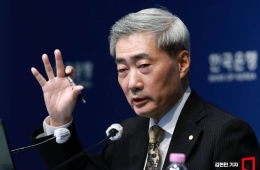
Kim Woochul, president of the Korean Association of Public Finance and a professor at the University of Seoul, who delivered the statement on behalf of the group, said, “The mistake of spending too much can be corrected in the next budget, but once fiscal discipline has been abandoned, it is difficult to restore.” He added, “The government draws up the budget, but the public repays the debt, so the National Assembly must scrutinize it to the very end.”
© The Asia Business Daily. All rights reserved. Unauthorized AI training and use prohibited.