AI Use Now Commonplace on Campuses; Education Ministry to Further Investigate Exam Cheating
Examine frequency and types of cheating this year's second semester... Survey likely around January next year
79% of university students who use AI do so "often"; only 32% believe clear guidelines are in place
Rather than blanket restrictions on AI,
assessment methods must change and students must be taught how to use it.
As cases of cheating involving advanced devices have surfaced one after another in exams such as the tax accountant certification exam and the College Scholastic Ability Test (CSAT), the Ministry of Education has decided to additionally investigate cheating involving artificial intelligence (AI) in university midterm and final exams. With AI use already commonplace among university students, some are calling for changes to university assessment methods to keep pace with the AI era, in addition to tighter exam monitoring and supervision.

According to education officials on November 26, the Ministry of Education plans to examine the frequency and types of cheating in university midterm and final exams during the second semester of this year, following the recent CSAT cheating scandal. The ministry investigated cheating through the first semester of this year ahead of the parliamentary audit, but plans to take a closer look at recent trends in light of the successive cases involving advanced devices. The investigation is likely to take place around January next year, after second-semester final exams have concluded, but a specific schedule has not yet been set. A ministry official said, "We intend to continuously investigate cheating in university exams and gain a detailed understanding of the situation."
According to data the Ministry of Education previously submitted to the office of Kim Hee-jung of the People Power Party, there were 19 cases in total of cheating involving AI during university regular exams at around 180 general universities nationwide between January 2020 and August this year. The number surged from one case in 2023 to 12 this year. At Seoul National University's College of Natural Sciences, some students were found to have used generative AI in a coding exam last year. At Yonsei University, students from five colleges, including the College of Business and the College of Pharmacy, used generative AI during exams and received disciplinary measures including three weeks of suspension.
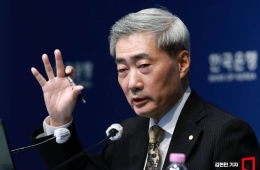
AI use among university students is already commonplace. The Korea Educational Development Institute (KEDI) held an online press briefing today and released a report titled "Under What Conditions Does University Students' Use of Generative AI Lead to Challenging Learning Experiences?" The report found that, among 30,722 students at 80 general universities who had experience using AI last year, 79.4% used it "often" or "very often."
While 67.9% of students felt that their universities encouraged the use of AI, only 37.7% had actually received AI-related education or support. Just 31.9% felt that their universities had clear guidelines or policies on AI use. In other words, eight out of 10 university students who use AI do so frequently, but only three out of 10 believe their universities have clear guidelines.
The Ministry of Education plans to investigate cheating in university exams directly, but believes that specific prevention measures should be discussed mainly through university associations such as the Korean Council for University Education (KCUE). This is because exam conditions and academic regulations differ by university, and the autonomy of academic operations must also be taken into account. The ministry is expected to share the findings with universities and propose related discussions to the KCUE. Possible measures include university presidents jointly adopting a resolution to revise academic regulations and impose tougher penalties for cheating involving advanced devices. Some universities have already begun preparing their own responses ahead of second-semester final exams. Hanyang University plans to develop a platform that uses existing electronic lecterns in classrooms to detect wireless signals and to introduce metal detectors. Lee Gi-jeong, president of the KCUE and president of Hanyang University, said, "We published an article on Hanyang University's response for other universities to refer to, and shared the measures with them as well."
However, some argue that as AI technology advances, tighter exam monitoring and supervision alone will not be enough to prevent cheating, and that universities must change their assessment methods themselves. One approach would be to move away from traditional written exams and expand oral assessments or in-depth interviews in which students explain the evidence behind their answers and their reasoning process. POSTECH's introduction of 200-minute in-depth interviews for admissions last year, in which students are assessed through questions with no predetermined answers, offers one example. Although this method is used to select new students, it could also be adapted for regular university exams, since it helps assess students' reasoning processes and the grounds for their judgments.
Hot Picks Today
 "Two Spend 500,000 Won in a Flash, Yet Wait Two Hours?" ... 'Dreamland' Shunned by Kids and Foreign Tourists
- The Era of Getting 200 Million Won After 30 Years Is Over... A Japanese Bank's "Perpetual Department Head" Who Just Clocked In Cries Out
- Spain Hit by Its Worst Tragedy... Lee Kangin, Moreno and Real Madrid Join Soccer World in Mourning
- They Said, “Make It Your Home for Life” - Then Suddenly Kicked 200 Passengers Off... What Happened to the Around-the-World Cruise?
- "130 Rice Bowls Sold Out in a Day"... 'Unfiltered Face' Adds 8 Million Won to Night Market Sales: China's Bungeunwoo
KEDI researchers recommended that universities focus less on restricting AI use and instead teach students to use AI for learning purposes and improve assignments and assessment methods. Kim Ji-ha, a senior research fellow, said, "In addition to establishing guidelines on AI use, universities should explain to students, with examples from individual courses, the permitted scope of use for each class, how to disclose AI use, and the responsibility for verifying AI-generated content. This will help students understand not only that guidelines exist, but also what they require, and apply them to their assignments."
© The Asia Business Daily. All rights reserved. Unauthorized AI training and use prohibited.