Why the Korea Real Estate Board, Which Tracks Home Prices, Called for a "New City for 1.5 Million People" at the National Assembly for the First Time in 6 Years
National Assembly Policy Seminar to Address Regional Polarization
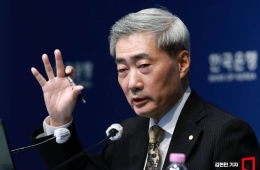
The Korea Real Estate Board, which handles real estate statistics, including housing price surveys and the calculation of officially assessed prices, held a policy seminar at the National Assembly for the first time in six years and raised issues related to balanced national development, including the construction of new cities for 1.5 million people in provincial regions. The move reflects President Lee Heonuk's belief that instability in housing prices in the Seoul metropolitan area should be addressed as a problem of spatial imbalance across the country, rather than one of housing supply and demand.

On November 25, the Korea Real Estate Board held a policy seminar at the National Assembly Members' Office Building with Jo In-cheol, a Democratic Party of Korea lawmaker and member of the National Assembly's Land, Infrastructure and Transport Committee. It was the first such event in six years, since 2020. The Korea Real Estate Board, a public institution under the Ministry of Land, Infrastructure and Transport, primarily handles market statistics and management, including surveys of apartment price trends, the calculation and verification of officially assessed housing prices, and operation of the housing subscription system. It has rarely addressed broad policy issues.
Behind the statistical agency's move into the policy arena is President Lee's long-held belief in the importance of addressing regional imbalances. He described the housing shortage in the Seoul metropolitan area as "a modern urban problem that emerged as populations flocked to cities after the Industrial Revolution." He said, "There are limits to addressing this through increased housing supply or regulations in the Seoul metropolitan area alone. The problem of housing prices there can also be resolved by providing enough high-quality urban spaces in provincial regions to reduce their scarcity."
The Korea Real Estate Board's recent appointment of Cha Mi-sook, formerly of the Korea Research Institute for Human Settlements under the Office for Government Policy Coordination, as head of its Real Estate Research Institute is also in line with this approach. Cha, who chaired the discussion that day, said, "People may ask why the Korea Real Estate Board is addressing regional issues, but real estate is fundamentally a matter of national spatial planning."
Hot Picks Today
 "Two Spend 500,000 Won in a Flash, Yet Wait Two Hours?" ... 'Dreamland' Shunned by Kids and Foreign Tourists
- The Era of Getting 200 Million Won After 30 Years Is Over... A Japanese Bank's "Perpetual Department Head" Who Just Clocked In Cries Out
- Spain Hit by Its Worst Tragedy... Lee Kangin, Moreno and Real Madrid Join Soccer World in Mourning
- They Said, “Make It Your Home for Life” - Then Suddenly Kicked 200 Passengers Off... What Happened to the Around-the-World Cruise?
- "130 Rice Bowls Sold Out in a Day"... 'Unfiltered Face' Adds 8 Million Won to Night Market Sales: China's Bungeunwoo
That day, President Lee proposed building high-density, self-sufficient new cities for 1.5 million people, instead of relying on the existing industrial complex model. The plan would connect surrounding cities within 15 minutes by public transportation, with the Honam and Yeongnam regions as its central axes. He argued that building new cities would be faster than redeveloping existing ones, where land prices are high and it is difficult to reconcile competing interests. "The era when manufacturing created many jobs is coming to an end, and people cannot get by on jobs created through government intervention alone," he said. "To attract innovative talent in knowledge industries, let's provide an annual allowance of KRW 30 million to each of 300,000 people, for a total of KRW 9 trillion a year."
© The Asia Business Daily. All rights reserved. Unauthorized AI training and use prohibited.