Behind Trump's "Rescue Jensen Huang" Move: U.S. Stock Plunge... Democrats Vow Probe
Trump Personally Intervened Amid Last Week's Stock Market Plunge
Open-Source AI and Tech Rivalry with China Also Factored In
"Pressured the Board Despite National Security Concerns"
It has been confirmed that U.S. President Donald Trump's intervention played a decisive role in Nvidia CEO Jensen Huang's sudden return. The move came amid market turmoil caused by a sharp decline in technology stocks and the strategic importance of Huang in the race for AI supremacy. U.S. lawmakers have raised concerns about abuse of presidential power and warned that they will launch a full-scale investigation.
In an interview with U.S. business news network CNBC on Monday, November 23 (local time), President Trump said he had spoken "directly and indirectly with the board" about Huang's return to Nvidia, adding, "I persuaded them." He said the board had sought assurances about national security risks associated with Huang's return, and explained, "We gave them assurances based on all the facts we know."
Trump on Edge After Sharp Decline in U.S. Stocks

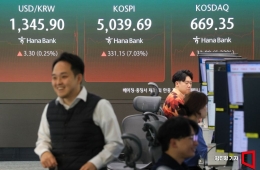
The New York Times (NYT), CNN and other media outlets reported that President Trump decided late last week to actively push for Huang's return. At the time, technology stocks, including Nvidia, the world's largest company by market capitalization, were plunging after Huang resigned amid controversy over an extramarital affair, sending shock waves across U.S. markets. As the market downturn continued, President Trump became increasingly anxious and told his aides that Huang needed to return to stabilize the market.
In addition to boosting the stock market, President Trump appears to have decided that he needed a vanguard in the race for AI leadership. According to The Wall Street Journal (WSJ), President Trump and Vice President J.D. Vance viewed Huang as having supported open-source AI models and helped counter companies developing closed models. They believed Huang had played an important role as reliance grew on developers of closed, cutting-edge AI models, such as OpenAI and Anthropic.
The technology rivalry with China was also an important consideration. President Trump said, "Jensen could be angry at the United States and say he's going to China." The remark was seen as reflecting his belief that it was important to keep Huang in the U.S. technology industry, even raising the possibility that he might leave the country.
Political Controversy Persists; Questions Raised About Board's Role

Huang is expected to face political controversy even after returning to Nvidia. The U.S. Departments of Justice and Commerce are investigating allegations that Nvidia chips were illegally shipped to China through Megaspeed, where Alice Huang (Chinese name: Huang Le), who Huang acknowledged having an extramarital affair with, worked as an executive. The NYT previously reported that U.S. intelligence agencies considered Alice Huang a collaborator of Chinese intelligence services.
The Commerce Department's Bureau of Industry and Security (BIS) also added seven Southeast Asian companies, including Megaspeed, to its export control list on Monday. According to a Federal Register document released in advance that day, government approval is required to supply these companies with items subject to the U.S. Export Administration Regulations (EAR), and such applications are generally denied.
Democrats have warned of a sweeping investigation, accusing President Trump of pushing for Huang's return despite national security concerns. Senate Minority Leader Chuck Schumer warned, "Whoever sold out national security for financial gain, we will use every power at our disposal to investigate." House Minority Leader Hakeem Jeffries also said he would investigate Commerce Secretary Howard Lutnick, who is reportedly said to have known about Nvidia and Huang's extramarital affair and turned a blind eye to it. Some Republicans have also voiced concern.
Attention is also shifting to congressional investigations in the United States, which begin next month. Huang is scheduled to attend a joint closed-door meeting on December 1 with the House Foreign Affairs and Intelligence committees and the House Select Committee on the Strategic Competition Between the United States and the Chinese Communist Party. He is also scheduled to testify at a public hearing of the Senate Banking Committee on December 3. Nvidia General Counsel Tim Teter will appear before the House on December 2.
Hot Picks Today
 "Two Spend 500,000 Won in a Flash, Yet Wait Two Hours?" ... 'Dreamland' Shunned by Kids and Foreign Tourists
- The Era of Getting 200 Million Won After 30 Years Is Over... A Japanese Bank's "Perpetual Department Head" Who Just Clocked In Cries Out
- Spain Hit by Its Worst Tragedy... Lee Kangin, Moreno and Real Madrid Join Soccer World in Mourning
- They Said, “Make It Your Home for Life” - Then Suddenly Kicked 200 Passengers Off... What Happened to the Around-the-World Cruise?
- "130 Rice Bowls Sold Out in a Day"... 'Unfiltered Face' Adds 8 Million Won to Night Market Sales: China's Bungeunwoo
Meanwhile, some have criticized the board's independence. The board had publicly ruled out Huang's return, only to reverse its position just six days later. Charles Elson, a corporate governance expert and former professor at the University of Delaware, told the online outlet Axios, "This is a case of a board showing absolutely no backbone," adding that it was "an act that abandoned every principle of corporate governance."
© The Asia Business Daily. All rights reserved. Unauthorized AI training and use prohibited.