Deal on Transition Away from Fossil Fuels Falls Through... COP31 Fails to Reach Comprehensive Agreement for First Time in 17 Years (Updated) [Reading Science]
Failure to Adopt Cover Decision... Developed and Developing Countries Clash over Emissions Cuts and Climate Finance
Partial Agreements on Adaptation and Just Transition... Scientists: "Practical Emissions-Cutting Action Must Be Accelerated"
The 31st Conference of the Parties to the United Nations Framework Convention on Climate Change (COP31) ended without countries bridging their differences over the transition away from fossil fuels and expanded climate finance. Once again, the international community's collective response to limiting the rise in the global average temperature to 1.5 degrees Celsius above pre-industrial levels showed its limitations. However, agreement was reached in some areas, including climate change adaptation, a just transition, and international carbon markets.

According to the Ministry of Climate, Energy and Environment, COP31 opened on November 9 in Antalya, Türkiye, and continued negotiations until November 22 (local time), two days beyond its scheduled closing date of November 20, but failed to adopt a key cover decision. It closed at around 1 a.m. on November 23 Korea time. This was the first time in 17 years since COP15 in Copenhagen, Denmark, in 2009 that parties failed to reach a comprehensive agreement on the main directions for responding to the climate crisis.
More than 100,000 people from national governments, international organizations, industry, and civil society attended the conference. Marking the 10th anniversary of the Paris Agreement's entry into force, a key agenda item was how to translate existing emissions-reduction targets into concrete policies and action.
Cover Decision Omits Transition Away from Fossil Fuels... No Agreement on Emissions Cuts
The Turkish and Australian COP presidencies sought to advance the "Antalya Pact," which included minimizing the scale and duration of the "overshoot" beyond 1.5 degrees Celsius, as well as electrification and expanded climate finance. However, countries clashed over whether to explicitly include a transition away from fossil fuels in the decision, preventing its final adoption.
Disagreements also continued between countries calling for stronger greenhouse gas emissions reductions and developing countries prioritizing expanded financial and technical support. In particular, parties could not agree on how to operate the work program to accelerate the implementation of emissions-reduction policies after 2027.
There was broad agreement on extending the emissions-reduction work program, which was due to end in 2026, and on how it would operate, but differences remained over linking it to the Global Stocktake (GST). Parties also failed to develop additional guidance for applying to countries' Nationally Determined Contributions (NDCs). The two agenda items will be discussed again at next year's meeting.
Climate finance also revealed the limits of progress. Parties discussed a baseline and implementation pathway for expanding funding in connection with the commitment agreed last year to "make efforts to at least triple adaptation finance by 2035," but did not agree on specific measures to advance it.
However, parties finalized arrangements for the climate finance work program, which addresses issues including developed countries' obligations to provide finance, and agreed to continue consultations through workshops and annual reports until 2028.

Scientists: "Exceeding 1.5 Degrees Will Cause Irreversible Changes"
Scientists continued to criticize the lack of concrete commitments to implement greenhouse gas emissions reductions.
Kook Jongseong, a professor in the Department of Earth and Environmental Sciences at Seoul National University, said, "The most concerning point is that, while acknowledging the possibility that the global average temperature will rise more than 1.5 degrees Celsius above pre-industrial levels, the parties have not put forward sufficient concrete measures to reduce greenhouse gas emissions and minimize that rise."
"In the context of climate change, exceeding 1.5 degrees is not simply a matter of temperatures rising temporarily," Professor Kook said. "The climate system has considerable inertia, and once a certain level of warming is exceeded, long-lasting or difficult-to-reverse changes may occur in the cryosphere, ocean circulation, ecosystems, and other areas."
He added, "What matters in responding to climate change is not repeatedly reaffirming targets, but accelerating practical action to minimize the peak level and duration of warming."
Cho Cheon-ho, former director of the National Institute of Meteorological Sciences, said bluntly, "There has been progress in the global response to climate change, but we still have a long way to go to overcome the climate crisis."
Analyzing the draft COP31 decision, former Director Cho explained that some projections before the Paris Agreement anticipated a rise of more than 4 degrees Celsius in the global average temperature, but that it could still rise by about 2.6 degrees even if all countries fully implement their new emissions-reduction targets. This means that although the international community's response has lowered the projected increase, there remains a significant gap from the Paris Agreement's 1.5-degree target.

Tim Naish, chair of the World Climate Research Programme (WCRP) and a professor at Victoria University of Wellington in New Zealand who followed the negotiations on site, said, "This conference was called the 'COP of implementation,' but the co-presidencies of Türkiye and Australia failed to achieve any of the goals they had set." He criticized the outcome, saying, "There is no concrete content on transitioning away from fossil fuels, our most important tool."
Naish said there had also been disagreements over incorporating scientific evidence into the negotiations. "What I did not expect was how vigorously the scientific evidence would be attacked," he said, noting that some countries had tried to exclude climate science reports and research findings from international organizations from the negotiations.
Karan Titus, a researcher at the University of Canterbury in New Zealand, also warned, "Any temperature rise beyond the 1.5-degree target could have devastating and potentially irreversible consequences for ecosystems and vulnerable communities."
Experts also said attention should be paid to the effects that changes in polar ice sheets could have on the Korean Peninsula.
Lee Wonsang, principal researcher at the Glaciology and Geosphere Research Division of the Korea Polar Research Institute, emphasized, "Changes in the polar regions are not something happening far away. For our country, surrounded by water on three sides, every millimeter of sea-level rise matters."
"According to an analysis by researchers at the Korea Polar Research Institute, mass loss from the Greenland and Antarctic ice sheets will cause sea levels off Incheon and Busan to rise about 10% more than the global average by 2050," Lee said. "As a country directly affected by changes in polar ice sheets, we must remain alert."
Partial Agreements on Adaptation and Carbon Markets... Korea Expands International Cooperation
Despite the failure to adopt a cover decision, some progress was made in negotiations on individual areas.
On climate change adaptation, parties agreed to establish a technical task force to support the practical use of the 59 adaptation indicators adopted last year. Thirty-six experts nominated by the parties will develop measurement methods for each indicator and guidance on using the data by 2027.
Parties also agreed to establish an implementation platform to help turn national adaptation plans developed by least developed countries into actual projects. They also agreed to extend the "Just Transition Work Programme," which aims to reduce the impact of the transition to carbon neutrality on workers and local communities. However, negotiations on the specific operating framework for the just transition mechanism were deferred until next year.
For international carbon markets, parties agreed to improve the operation of systems for trading and reporting greenhouse gas emissions reductions between countries under Article 6 of the Paris Agreement. This includes sharing experience in reviewing emissions reductions and prioritizing the development of a central accounting and reporting platform and database.
At the conference, the Korean government introduced "Korea's Green Transformation (K-GX)," a policy to advance the green transformation of industry and energy, as well as policies to expand electrification, and broadened the foundation for related international cooperation.

Simon Stiell, Executive Secretary of the United Nations Framework Convention on Climate Change (UNFCCC), speaks at the 31st UN Climate Change Conference (COP31) in Antalya, Türkiye. COP31 closed on the 22nd local time without adopting an umbrella decision, amid disagreements among countries over issues including the transition away from fossil fuels. Photo provided by the UNFCCC.
View original imageKorea signed a memorandum of understanding (MOU) with Australia on cooperation in decarbonization and submitted a joint proposal to the United Nations Framework Convention on Climate Change. It also introduced "RISE ASIA," an Asian energy security initiative being pursued with the International Energy Agency (IEA).
A total of nine countries, including Singapore, Sri Lanka, Morocco, and Paraguay, expressed interest in joining the Global Voluntary Carbon Market (GVCM), an initiative led by Korea. Korea also joined the "Global Electrification Pledge," which calls for electricity to account for 35% of the world's final energy consumption by 2035.
On wildfire response, Korea led high-level discussions with Türkiye and Brazil to launch the "Antalya Integrated Wildfire Management Action Plan," securing support from 24 countries. Korea was also elected to the Adaptation Fund Board for the fourth consecutive time.
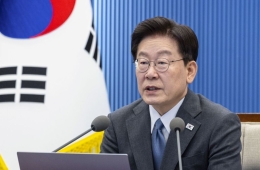
Kim Seonghwan, Minister of Climate, Energy and Environment, said, "It is deeply regrettable that the Conference of the Parties to the United Nations Framework Convention on Climate Change failed to adopt a cover decision at a time when the climate crisis is growing more severe." He added, "Building on the K-GX strategy, the Republic of Korea will accelerate the green transformation of industry and energy and work with the international community to deliver tangible greenhouse gas emissions reductions."
Hot Picks Today
 "Two Spend 500,000 Won in a Flash, Yet Wait Two Hours?" ... 'Dreamland' Shunned by Kids and Foreign Tourists
- The Era of Getting 200 Million Won After 30 Years Is Over... A Japanese Bank's "Perpetual Department Head" Who Just Clocked In Cries Out
- Spain Hit by Its Worst Tragedy... Lee Kangin, Moreno and Real Madrid Join Soccer World in Mourning
- They Said, “Make It Your Home for Life” - Then Suddenly Kicked 200 Passengers Off... What Happened to the Around-the-World Cruise?
- "130 Rice Bowls Sold Out in a Day"... 'Unfiltered Face' Adds 8 Million Won to Night Market Sales: China's Bungeunwoo
COP32 will be held next year in Addis Ababa, Ethiopia. Strengthening the implementation of emissions reductions and expanding climate finance, issues left unresolved at this conference, are expected to be key negotiating priorities once again.
© The Asia Business Daily. All rights reserved. Unauthorized AI training and use prohibited.