[Editorial] Democratic Party, Drop Chief Justice Impeachment Bid and Focus on People's Livelihoods

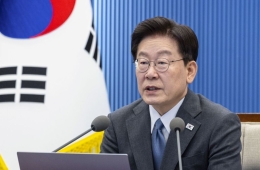
Kim Minseok, leader of the Democratic Party of Korea, delivers opening remarks at a Supreme Council meeting held at the National Assembly on the 23rd. Photo by Yoon Dongju.
View original imageThe Democratic Party of Korea has adopted a formal party position to pass a motion to impeach Supreme Court Chief Justice Cho Hee-dae by the end of this year. The party had initially said it would pursue a parliamentary investigation, but abruptly shifted course to impeachment after the Supreme Court on November 19 overturned and remanded part of a ruling involving former Prime Minister Han Duck-soo’s charge of performing key duties in an insurrection, with the intent of acquitting him. The party cited six grounds for impeachment, including Cho’s passive response during martial law, a ruling overturning and remanding a case shortly before the presidential election, his refusal to seek renomination of Supreme Court justices, and issues concerning the use of official operating expenses. However, the insurrection special counsel had already investigated Cho’s response during martial law and found no grounds to pursue charges. The party also left open the possibility of including the latest Supreme Court ruling as a ground for impeachment, saying it would “continue to review” the matter.
It is true that the ruling overturning and remanding the case and the refusal to seek renomination of Supreme Court justices have drawn criticism and sparked controversy. But linking these issues to impeachment is another matter. Impeachment is possible not for a mere violation of the law, but when there has been a “grave” unconstitutional or illegal act serious enough to justify removal from office. It is questionable how many people would agree that Cho’s actions meet that standard. This has fueled speculation that Democratic Party leader Kim Minseok, under pressure from hard-liners and caught up in a contest to appear more uncompromising than the Rebuilding Korea Party, may have turned to impeachment as a way out of internal party conflict.
The practical benefits are also unclear. If the impeachment motion passes, the chief justice’s powers, including authority over judicial appointments, will be suspended until the Constitutional Court rules. Cho’s term runs until June 5, 2027, and, given the process of selecting his successor, there is little time left for him to exercise influence. In these circumstances, impeaching the head of the Supreme Court, one of the three branches of government, is highly likely to lead to unnecessary conflict and wasteful political bickering. The political backlash against the ruling party could also be substantial.
Hot Picks Today
 "Two Spend 500,000 Won in a Flash, Yet Wait Two Hours?" ... 'Dreamland' Shunned by Kids and Foreign Tourists
- The Era of Getting 200 Million Won After 30 Years Is Over... A Japanese Bank's "Perpetual Department Head" Who Just Clocked In Cries Out
- Spain Hit by Its Worst Tragedy... Lee Kangin, Moreno and Real Madrid Join Soccer World in Mourning
- They Said, “Make It Your Home for Life” - Then Suddenly Kicked 200 Passengers Off... What Happened to the Around-the-World Cruise?
- "130 Rice Bowls Sold Out in a Day"... 'Unfiltered Face' Adds 8 Million Won to Night Market Sales: China's Bungeunwoo
The Democratic Party is the ruling party and bears responsibility for governing the country. It should carefully consider whether it can withstand the political gridlock and loss of public support that an impeachment without clear grounds could bring. The National Assembly has a backlog of bills affecting people’s livelihoods, including next year’s budget and the Urban and Residential Environment Improvement Act and the Digital Disaster and Disability Safety Management Act. Having championed itself as a “capable, people-centered majority party,” the Democratic Party should reconsider its impeachment push and focus on delivering results through legislation that serves the public.
© The Asia Business Daily. All rights reserved. Unauthorized AI training and use prohibited.