Government Backs Global Cooperation on K-AI Semiconductors, Moves to Address Component Supply Risks
Ministry of Science and ICT Reviews Industry Issues with 24 Companies, Including AMD and NVIDIA
Discusses Ways to Build on Big Tech Partnerships and Stabilize Memory Supply Chains
The government is moving to expand cooperation between domestic artificial intelligence (AI) semiconductor companies and global tech giants such as AMD, NVIDIA and Intel, while developing support measures to address concerns over the supply of key components. As rising demand for memory and semiconductor substrates increases the burden on domestic startups and small and medium-sized fabless companies specializing in semiconductor design, the aim is to turn cooperation with global companies into tangible business results and strengthen supply chain stability.

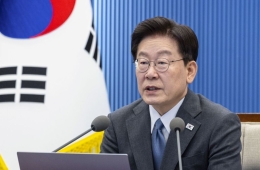
A file photo to help readers understand the article. Deputy Prime Minister and Minister of Science and ICT Bae Kyunghoon speaks at a meeting with the AI semiconductor industry, titled “Building an Open AI Computing Infrastructure Ecosystem,” at the HJ Business Center in Jongno-gu, Seoul, on the 20th. Provided by the Ministry of Science and ICT.
View original imageThe Ministry of Science and ICT held a meeting on key issues facing the domestic AI semiconductor industry on Nov. 23 at Space Share Seoul Station 2 Center in Seoul, with representatives from 24 AI semiconductor companies in attendance. Participants reviewed the status of cooperation with global tech giants and discussed industry challenges and responses related to supply uncertainties for key components and materials, as well as changes in U.S. policy.
Recently, AMD signed a memorandum of understanding (MOU) with FuriosaAI and MangoBoost to build an open, heterogeneous AI infrastructure. NVIDIA agreed to work with SK Telecom and Rebellions to build AI infrastructure based on NVLink Fusion, a high-speed interconnect technology. Intel also broadened its partnerships by launching the K-AI Full-Stack Alliance with 23 domestic companies.
However, the expansion of AI data centers has driven up demand for high-bandwidth memory (HBM), low-power DRAM (LPDDR) and semiconductor package substrates, raising concerns about supply shortages and price increases. AI semiconductor startups, which purchase smaller volumes than large corporations, are at a relative disadvantage in securing a stable supply of components and managing costs.
The meeting was attended by neural processing unit (NPU) developers such as FuriosaAI, Rebellions, HyperAccel, DeepX and Mobilint, as well as companies involved in data processing units (DPUs) and next-generation memory interconnect technology (CXL), including MangoBoost and Panmnesia. Representatives from the Korean offices of AMD, NVIDIA and Intel also attended.
Participating companies proposed strengthening joint testing and technical cooperation to ensure that partnerships with global tech giants lead to tangible business results. They emphasized the need to share demand and supply information with domestic memory and component companies and to establish a cooperative framework that enables small and medium-sized fabless companies to secure key components reliably.
U.S. AI and data center policies, along with changes in global tech giants' investment strategies, were also cited as key variables. Companies called for government support to prepare for policy changes following the U.S. midterm elections and to leverage them as an opportunity to build domestic AI data centers and expand overseas sales of Korean-made semiconductors.
Hot Picks Today
 "Two Spend 500,000 Won in a Flash, Yet Wait Two Hours?" ... 'Dreamland' Shunned by Kids and Foreign Tourists
- The Era of Getting 200 Million Won After 30 Years Is Over... A Japanese Bank's "Perpetual Department Head" Who Just Clocked In Cries Out
- Spain Hit by Its Worst Tragedy... Lee Kangin, Moreno and Real Madrid Join Soccer World in Mourning
- They Said, “Make It Your Home for Life” - Then Suddenly Kicked 200 Passengers Off... What Happened to the Around-the-World Cruise?
- "130 Rice Bowls Sold Out in a Day"... 'Unfiltered Face' Adds 8 Million Won to Night Market Sales: China's Bungeunwoo
Lee Dogyu, Director General of the Information and Communications Policy Office at the Ministry of Science and ICT, said, "While Korean AI semiconductor companies are expanding cooperation with global tech giants, uncertainties are also growing due to supply concerns over key components and changes in U.S. policy. We will support efforts to turn cooperation into tangible business results and actively work to address the challenges facing the industry."
© The Asia Business Daily. All rights reserved. Unauthorized AI training and use prohibited.