"Is It Safe to Use at Work?" 58% of Female Office Workers Worry About AI Sex Crimes Involving Photos
Workplace Gapjil 119 survey of 1,000 workers... 58.2% of women concerned
88.4% say workplace prevention rules are absent or they do not know if they exist
Potential gender discrimination in AI hiring and performance reviews also flagged
More than half of office workers are concerned that photos of them posted on company intranets, messaging platforms, and other channels could be used in AI-enabled sex crimes. By contrast, only one in 10 said their current employer had rules in place to prevent and respond to such crimes.

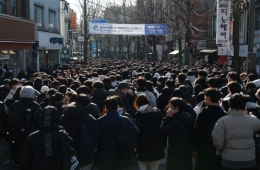
More than half of office workers are concerned that photos of them posted on company intranets, messaging platforms, and other channels could be misused in AI-enabled sex crimes. The image was generated using AI to help illustrate the article.
View original imageAccording to Workplace Gapjil 119, a civic group, a survey commissioned from polling agency Global Research found that 53.1% of respondents felt anxious that photos of them posted on company intranets, messaging platforms, social networking services (SNS), and other channels could be exploited in AI-enabled sex crimes. The survey was conducted from August 1 to 7 among 1,000 office workers aged 19 or older nationwide.
Women were more likely than men to say they felt anxious, at 58.2% compared with 49.0%, a gap of 9.2 percentage points. The figure reached 60.9% among women in non-regular employment.
Despite these concerns, the survey found that workplace prevention systems were inadequate. Only 11.6% said their company had rules to prevent and respond to AI-enabled sex crimes. A total of 88.4% said their company had no such rules (48.6%) or that they did not know whether any existed (39.8%).

Commuters make their way through Gwanghwamun Intersection in Seoul. Yonhap News Agency
View original imageThere have also been cases in which photos posted on internal workplace networks were exploited in AI-enabled sex crimes. In November last year, a senior official at the Guro District Office in Seoul downloaded a female colleague's photo from the internal organizational chart, used generative AI to edit it to make them appear to be a couple, and posted it on social media. In September, the Seoul Southern District Court found the official guilty of violating the Act on Special Cases Concerning the Punishment of Sexual Crimes and defamation, and sentenced him to a fine of 6 million won. The Seoul Metropolitan Government's Personnel Committee voted to dismiss the employee.
Office workers cited stronger in-house security rules (29.2%) as the measure most needed to prevent AI-enabled sex crimes. Other suggestions included establishing rules that define digital sex crimes and specify disciplinary standards and reporting and response procedures (28.8%), and immediately referring cases to investigators and supporting the removal of illegally manipulated images when harm occurs (18.5%).
Respondents also expressed concern that the introduction of AI technology could deepen gender discrimination in recruitment and performance evaluations. A total of 38.8% said AI-driven automation would increase the risk of job losses in occupations with a large share of women workers. Meanwhile, 36.8% said AI recruitment programs would reject more female applicants, and 36.1% said AI performance evaluations would rate female employees' abilities lower.
Measures suggested to prevent this included disclosing the criteria and content of evaluations using AI algorithms (42.9%) and regularly auditing recruitment and personnel systems for gender bias and disclosing the results (40.4%).
The survey's margin of error was ±3.1 percentage points at a 95% confidence level.
Hot Picks Today
 "Two Spend 500,000 Won in a Flash, Yet Wait Two Hours?" ... 'Dreamland' Shunned by Kids and Foreign Tourists
- The Era of Getting 200 Million Won After 30 Years Is Over... A Japanese Bank's "Perpetual Department Head" Who Just Clocked In Cries Out
- Spain Hit by Its Worst Tragedy... Lee Kangin, Moreno and Real Madrid Join Soccer World in Mourning
- They Said, “Make It Your Home for Life” - Then Suddenly Kicked 200 Passengers Off... What Happened to the Around-the-World Cruise?
- "130 Rice Bowls Sold Out in a Day"... 'Unfiltered Face' Adds 8 Million Won to Night Market Sales: China's Bungeunwoo
Kim Jayeon, a labor attorney with Workplace Gapjil 119, said, "AI technology is advancing rapidly, and digital sex crimes and gender discrimination involving its misuse are encroaching on workers' daily lives even faster. Strong, proactive measures by businesses and the government are needed to create safe working environments."
© The Asia Business Daily. All rights reserved. Unauthorized AI training and use prohibited.