Trump: "I'm Not Rushing Any Decision"... Delaying Strikes on Iran Until Next Year?
Likely to wait and see the effects of naval blockade and economic sanctions
U.S. Senate rejects resolution limiting war powers in Iran conflict
Trump stresses legitimacy of war with Iran
U.S. President Donald Trump has suggested that he may decide next year whether to resume large-scale strikes against Iran. His remarks are being interpreted as a sign that he intends to maintain pressure through a naval blockade and economic sanctions while watching for a change in Iran's position.

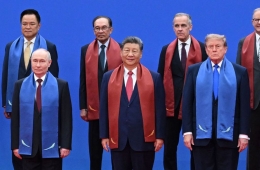
In an interview with foreign media outlets on his way home after the Asia-Pacific Economic Cooperation (APEC) summit on Nov. 19 (local time), Trump responded to the possibility of resuming airstrikes against Iran, saying, "We'll talk about it after the new year begins," and adding, "We have time."
In a phone interview with the U.S. online news outlet Axios that day, Trump also said, "I'm not rushing any decision [on Iran]," adding, "We'll see what happens after the new year begins."
In an earlier interview with Fox News, Trump also said he would "see what happens after Jan. 1" regarding whether to resume strikes against Iran.
Trump had previously claimed, ahead of the U.S. midterm elections held on Nov. 3, that Iran would be more willing to negotiate after the elections. However, as talks between the two sides failed to make a breakthrough even after the midterms, he appears to be delaying a decision on large-scale military action.
Axios reported that Trump's remarks may be intended to buy more time to assess the impact of the naval blockade and economic pressure on Iran.
The political situation in the United States is also a factor. Democrats, who secured majorities in both the House and Senate in the midterm elections, are expected to move to rein in the Trump Administration's war with Iran in earnest after the 120th Congress convenes on Jan. 3 next year.
The Republican-majority U.S. Senate on that day rejected a war powers resolution calling for the withdrawal of U.S. forces from hostilities with Iran, with 48 votes in favor and 51 against. This was the first major resolution related to the war with Iran to be put to a vote in Congress since the midterm elections.
Israel presses U.S. for additional strikes...

Despite Trump's remarks, the United States could still launch large-scale airstrikes before the end of the year. Before the strikes against Iran in February, Trump had publicly said that he had not yet decided whether to take military action.
According to Axios, the White House has asked the Defense Department and intelligence agencies to assess Iran's expected response to several strike scenarios prepared by the U.S. military. They are also reportedly examining whether it would be possible to avoid damage to oil and gas facilities in Gulf countries from Iranian retaliatory attacks.
Meanwhile, Israel is stepping up its calls for further strikes. Last week, Roman Gofman, head of Israel's Mossad intelligence agency, visited the United States and met with CIA Director John Ratcliffe and Middle East envoy Steve Witkoff, among others.
At the direction of Prime Minister Benjamin Netanyahu, Gofman reportedly asked U.S. officials to resume attacks on Iran and shared intelligence about Iran's activities related to the development of chemical and biological weapons.
Hot Picks Today
 "Two Spend 500,000 Won in a Flash, Yet Wait Two Hours?" ... 'Dreamland' Shunned by Kids and Foreign Tourists
- The Era of Getting 200 Million Won After 30 Years Is Over... A Japanese Bank's "Perpetual Department Head" Who Just Clocked In Cries Out
- Spain Hit by Its Worst Tragedy... Lee Kangin, Moreno and Real Madrid Join Soccer World in Mourning
- They Said, “Make It Your Home for Life” - Then Suddenly Kicked 200 Passengers Off... What Happened to the Around-the-World Cruise?
- "130 Rice Bowls Sold Out in a Day"... 'Unfiltered Face' Adds 8 Million Won to Night Market Sales: China's Bungeunwoo
The New York Times (NYT) reported the previous day, citing U.S. and Israeli officials, that Trump was considering further strikes in response to Israeli warnings that Iran was rebuilding its missile and drone capabilities and advancing its chemical and biological weapons development program. However, U.S. and Israeli officials reportedly disagree over the actual stage Iran has reached in developing such weapons.
© The Asia Business Daily. All rights reserved. Unauthorized AI training and use prohibited.