[Good Morning Stocks] U.S. Falls Despite Anthropic IPO; South Korea Seen Opening Lower
U.S. stocks close lower as funds flow out of big tech stocks
South Korean stocks expected to "open lower and pare losses"
U.S. stocks closed lower despite the success of Anthropic's initial public offering (IPO), as funds flowed out of big tech stocks and controversy arose over technology exports to China involving AMD. South Korean stocks are also expected to open lower on the 20th, but buying prompted by perceptions that the market is oversold is likely to pare losses.

With the KOSPI opening an hour late due to the College Scholastic Ability Test on the 19th, the index rose at the open before fluctuating. The KOSPI, KOSDAQ and won-dollar exchange rate are displayed in the dealing room at Hana Bank's headquarters in Jung-gu, Seoul. 2026.11.19 Photo by Cho Yongjun
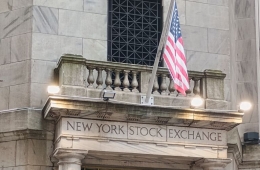
View original imageOn the 19th (local time), the S&P 500 fell 2.02% to close at 7,175.83 on the New York Stock Exchange. The tech-heavy Nasdaq Composite dropped 2.25% to 23,879.20, while the Dow Jones Industrial Average fell 2.19% to close at 49,097.06.
Anthropic, which went public that day, saw its stock surge 17% on its first day of trading, making its IPO a success. The offering price was $83, and the stock opened at $111.50 on its first day before closing at $97.17. However, investors' efforts to raise funds to buy Anthropic shares led to outflows from other AI stocks, including Nvidia (-3.3%) and Micron (-2.1%).
In addition, short-selling firm Hunterbrook alleged that a Chinese server company had used AMD technology, while investment analysis outlet The Bear Cave pointed to AMD's circular financing structure. AMD shares fell 7.7% from the previous day's close.
However, analysts said Anthropic's successful IPO had helped avert an immediate crisis of uncertainty over artificial intelligence (AI). "It's worth noting that sentiment toward investment across AI stocks could have cooled further if Anthropic's listing had not been successful, and that supply-and-demand rotation issues following major IPOs tend to be short-lived," said Han Jiyoung, an analyst at Kiwoom Securities. "Uncertainty remains over the investment and fundraising burdens facing AI companies, but it is appropriate to give greater weight to the possibility that Anthropic could generate investment momentum."
Han added, "There has still been no official statement from the U.S. government on the concerns over export controls on China and circular financing involving AMD, which have intensified following the scandal involving former Nvidia CEO Jensen Huang." She continued, "Issues involving restrictions on China and circular financing have been headwinds for the stock market since earlier this month, so the possibility that the AMD risks raised by Hunterbrook will spread further should be viewed as limited."
South Korean stocks are expected to open lower on the 20th, influenced by the decline in U.S. markets. However, technical buying prompted by perceptions that the market is oversold is expected to help pare losses during the session.
"The key for the South Korean market is how strong foreign investors' selling will be after a sharp drop at the open," said Seo Sangyoung, an executive director at Mirae Asset Securities. "In particular, Micron said it expects the memory supply shortage in 2027 to be more severe than this year, and Nvidia also provided solid earnings and a positive sales outlook. This means expectations for improved earnings in the semiconductor industry remain valid."
Hot Picks Today
 "Two Spend 500,000 Won in a Flash, Yet Wait Two Hours?" ... 'Dreamland' Shunned by Kids and Foreign Tourists
- The Era of Getting 200 Million Won After 30 Years Is Over... A Japanese Bank's "Perpetual Department Head" Who Just Clocked In Cries Out
- Spain Hit by Its Worst Tragedy... Lee Kangin, Moreno and Real Madrid Join Soccer World in Mourning
- They Said, “Make It Your Home for Life” - Then Suddenly Kicked 200 Passengers Off... What Happened to the Around-the-World Cruise?
- "130 Rice Bowls Sold Out in a Day"... 'Unfiltered Face' Adds 8 Million Won to Night Market Sales: China's Bungeunwoo
Seo said, "This suggests that rather than continuing to fall, semiconductor stocks could attract bargain hunters at a certain level." However, he added, "With supply-and-demand uncertainty ahead of U.S. options expiration and lingering uncertainty related to China regulations, the influx of aggressive buying will be limited. South Korean stocks may try to pare losses through bargain hunting after a sharp drop at the open, but the strength and sustainability of any rebound will depend on foreign investors' cash and futures flows."
© The Asia Business Daily. All rights reserved. Unauthorized AI training and use prohibited.