"The Noise Will Die Down": One Day After Distancing Herself from the Jensen Huang Controversy, AMD Also Faces "China Risk"
Lisa Su speaks for first time since Jensen Huang's resignation
"An exceptional leader; we need to distance ourselves from the noise"
The next day, Hunterbrook reported exclusively:
"AMD technology flowed to Chinese firm under export controls"
As the artificial intelligence (AI) semiconductor industry is rocked by former Nvidia CEO Jensen Huang's alleged affair scandal and accusations of involvement in Chinese espionage, Nvidia rival AMD has also become embroiled in allegations of technology leaks to China. The claims emerged just after AMD CEO Lisa Su said she wanted to distance herself from the controversy surrounding Huang.
According to Business Insider on November 19 local time, Su said the previous day at the TomorrowX Summit in Austin, Texas, "Nvidia is an incredible company, and Huang was an exceptional leader." She added, "From AMD's and the industry's perspective, we need to distance ourselves from the noise around us," stressing that "the noise will die down on its own over time."

Lisa Su, AMD's chair, answers questions at the AMD Gamer Day event held at Dragon City in Yongsan-gu, Seoul, on the 7th of last month. Yonhap News
View original imageThis was the first time Su had publicly commented on the Nvidia controversy since Huang's resignation as CEO. The two are Taiwanese Americans and fifth-degree relatives. Su did not directly address the allegations against Huang or the possibility that AMD could benefit from Nvidia's leadership change. Instead, she emphasized that AMD had enormous business opportunities as it built AI infrastructure and met customer demand. "I firmly believe that technology can greatly improve people's lives," she said. "That seems to have been somewhat overshadowed by all the noise around us."
However, the day after Su's remarks, AMD also faced risks related to China. Hunterbrook Media, an investigative news outlet linked to a hedge fund, alleged that AMD technology had continued flowing to Chinese server manufacturer IEIT Systems, which is subject to U.S. Department of Commerce export controls.
According to Hunterbrook, IEIT was added to the U.S. Department of Commerce's export control list in March last year. As a result, companies must obtain authorization from the authorities before providing it with products or technology subject to U.S. export control regulations. However, IEIT reportedly installed the latest versions of firmware needed to run AMD chips in its servers in its products at least six times even after the sanctions took effect. Hunterbrook reported that the most recent update was made on October 19.
Hunterbrook also said that three companies with close ties to IEIT - China's Maginfra, Singapore's K2US, and the U.S.-based Ibrex - were using virtually identical AMD firmware. Ibrex, in particular, was previously identified by The New York Times (NYT) and The Wall Street Journal (WSJ) as an intermediary in alleged efforts to bypass restrictions and supply Nvidia semiconductors to China. Hunterbrook further argued that AMD is exposed to China-related risks no less than Nvidia, given that it generates more than 20% of its total revenue from customers in China and Hong Kong and relies on Chinese companies for a significant portion of its back-end semiconductor processes, including assembly, testing, and packaging.
Hot Picks Today
 "Two Spend 500,000 Won in a Flash, Yet Wait Two Hours?" ... 'Dreamland' Shunned by Kids and Foreign Tourists
- The Era of Getting 200 Million Won After 30 Years Is Over... A Japanese Bank's "Perpetual Department Head" Who Just Clocked In Cries Out
- Spain Hit by Its Worst Tragedy... Lee Kangin, Moreno and Real Madrid Join Soccer World in Mourning
- They Said, “Make It Your Home for Life” - Then Suddenly Kicked 200 Passengers Off... What Happened to the Around-the-World Cruise?
- "130 Rice Bowls Sold Out in a Day"... 'Unfiltered Face' Adds 8 Million Won to Night Market Sales: China's Bungeunwoo
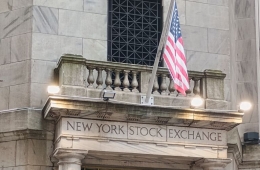
AMD denied the allegations. According to Bloomberg, an AMD spokesperson said, "Hunterbrook's claims distort our business practices and relationships. AMD complies with U.S. export control laws and maintains rigorous procedures across its global operations." After the report, AMD shares plunged more than 11% during the trading session on the New York Stock Exchange before recovering some of their losses to close down 7.72% from the previous session at $489.19.
© The Asia Business Daily. All rights reserved. Unauthorized AI training and use prohibited.