Exports Top $1 Trillion... Lee: "Fruit of Challenges and Dedication"
Fourth worldwide after the U.S., Germany and China
Fostering AI and biotech, supporting exports of K-consumer goods
Lee reiterates "growth for all" for large and small businesses, the Seoul metropolitan area and other regions
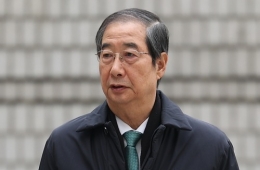
Korea’s annual exports surpassed $1 trillion for the first time on November 19, making it the world’s fourth-largest exporter after the United States, Germany and China. President Lee Jaemyung called the achievement “the fruit of challenges spanning generations and the efforts of all the people” and said he would turn the export success into “growth for all,” with large and small businesses, as well as the capital region and other regions, sharing in its benefits.

President Lee Jaemyung delivers a speech at the APEC CEO Summit at the Qianhai International Convention Center in Shenzhen, China, on the 18th (local time). Nov. 18, 2026. Yonhap News.
View original imagePresident Lee, who is visiting Shenzhen, China, to attend the Asia-Pacific Economic Cooperation (APEC) Economic Leaders’ Meeting, wrote on X (formerly Twitter) that day that it was “a valuable achievement, the fourth of its kind in the world.” According to provisional figures from the Ministry of Trade, Industry and Energy, cumulative exports for the year surpassed $1 trillion at 2:09 p.m. Korea Standard Time on November 19. The United States and Germany reached the milestone in 2006, followed by China in 2007. Korea has increased its export volume 100-fold in the 49 years since it first recorded annual exports of $10 billion in 1977.
“Some devoted their youth in sewing factories where they could hardly straighten their backs, some in shoe factories filled with the smell of glue, and others at welding sites in shipyards where sparks flew,” President Lee wrote. “Even today, countless businesspeople and workers are opening up global markets and driving Korea’s exports.”
President Lee said he would strengthen the competitiveness of key industries and foster AI and biotechnology as future growth engines. He also said the government would actively support overseas expansion by consumer goods such as K-beauty and K-food. He stressed that “export success should improve people’s lives” and called for “growth for all,” with large and small businesses, as well as the capital region and other regions, sharing in the opportunities and rewards of growth.
Semiconductors led export growth this year. As investment in AI expanded and demand for memory chips increased, semiconductor exports from January through October reached $396.8 billion, up 193.1% from the same period last year. They accounted for 42.7% of total exports. Exports excluding semiconductors also rose 20.2% over the same period. Cosmetics exports reached $12.4 billion, already exceeding the full-year record of $11.4 billion set last year.
Hot Picks Today
 "Two Spend 500,000 Won in a Flash, Yet Wait Two Hours?" ... 'Dreamland' Shunned by Kids and Foreign Tourists
- The Era of Getting 200 Million Won After 30 Years Is Over... A Japanese Bank's "Perpetual Department Head" Who Just Clocked In Cries Out
- Spain Hit by Its Worst Tragedy... Lee Kangin, Moreno and Real Madrid Join Soccer World in Mourning
- They Said, “Make It Your Home for Life” - Then Suddenly Kicked 200 Passengers Off... What Happened to the Around-the-World Cruise?
- "130 Rice Bowls Sold Out in a Day"... 'Unfiltered Face' Adds 8 Million Won to Night Market Sales: China's Bungeunwoo
Exports by small and medium-sized enterprises from January through October totaled $107.6 billion, up 9.9% from a year earlier and a record high. However, the third-quarter export growth rate varied widely by company size: 104% for large companies and 11% for small and medium-sized enterprises.
© The Asia Business Daily. All rights reserved. Unauthorized AI training and use prohibited.