Hwaseong City to Revise Resident Autonomy Council Operations in 29 Eup, Myeon and Dong to Reflect Urban-Rural Conditions
Review of Member Selection and Council Office Operations at Second Ministry Consulting Session
Ordinance Revision Planned to Reflect Urban-Rural Conditions and Feedback from the Field
Hwaseong Special City, Gyeonggi Province (Mayor Jeong Myeong-geun), is revising its system for operating resident autonomy councils to reflect the area’s distinctive mix of urban and rural communities. Drawing on feedback from the field since the councils began operating in all 29 eup, myeon and dong, the city plans to review member qualifications and selection procedures, as well as how council offices are run, and incorporate the findings into an ordinance revision.

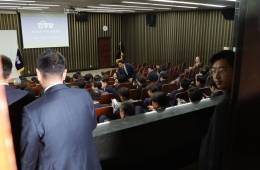
Participants in the pilot consulting session on promoting resident autonomy in Hwaseong Special City pose for a commemorative photo on the 18th. Photo provided by Hwaseong City.
View original imageHwaseong City said on November 19 that it held the second pilot consulting session to promote resident autonomy at Dongtan-gu Office on November 18, with officials from the Ministry of the Interior and Safety, resident autonomy experts and council members in attendance.
Introduced by the Ministry of the Interior and Safety for the first time this year, the initiative aims to assess how resident autonomy is being managed in 15 cities, counties and districts selected through an open call and identify areas for improvement in each region.
Hwaseong City launched its “Hwaseong-style Resident Autonomy Council” initiative in 2019 and began a phased transition to the council system in 2020. The councils now operate in all 29 eup, myeon and dong. The city believes that operating standards and support measures need to reflect differences in conditions between urban and rural areas, as well as varying levels of resident autonomy capacity across the eup, myeon and dong.
At the first consulting session, held on November 4 at the Dongtan 7-dong Administrative Welfare Center, participants examined challenges encountered in running the councils and discussed the direction of an ordinance revision.
The second session reviewed ordinance provisions on member qualifications and selection procedures, council composition and the operation of council offices. When council members described difficulties they face in the field, ministry officials and experts discussed potential improvements based on relevant laws and regulations and examples of how other regions operate their councils.
The city plans to identify areas for improvement through additional consulting and then incorporate them into revisions to the resident autonomy council ordinance and its operating policies.
Hot Picks Today
 "Two Spend 500,000 Won in a Flash, Yet Wait Two Hours?" ... 'Dreamland' Shunned by Kids and Foreign Tourists
- The Era of Getting 200 Million Won After 30 Years Is Over... A Japanese Bank's "Perpetual Department Head" Who Just Clocked In Cries Out
- Spain Hit by Its Worst Tragedy... Lee Kangin, Moreno and Real Madrid Join Soccer World in Mourning
- They Said, “Make It Your Home for Life” - Then Suddenly Kicked 200 Passengers Off... What Happened to the Around-the-World Cruise?
- "130 Rice Bowls Sold Out in a Day"... 'Unfiltered Face' Adds 8 Million Won to Night Market Sales: China's Bungeunwoo
Yoo Un-ho, director of Hwaseong City’s Autonomous Administration Bureau, said, “Improving the system based on feedback from the field is important to ensure that resident autonomy councils operate in a way that suits local conditions. Building on the discussions at this consulting session, we will address challenges in the councils’ operations and create an environment in which residents can take the lead and participate.”
© The Asia Business Daily. All rights reserved. Unauthorized AI training and use prohibited.