"No One Is Being Held Responsible"... Wando Marine Healing Center: 80 Billion Won Invested, "Impossible to Turn a Profit"
Two and a half years after opening, performance falls short... "Breaking even" impossible
Chairman Choi Jeonguk: "Evaluation institute forecast an annual deficit of 900 million won"
Residents call for "switching from a corporation to a foundation or public corporation"
Residents criticized the Wando Marine Healing Center, which was built with more than 80 billion won in public funds, saying, "It was structured to be impossible to turn a profit from the outset." Two and a half years after opening, its performance has fallen far short of the vision presented at the time. The public forum also addressed a range of issues, including rising labor costs and lax management at the Wando County corporation that operates the center, as well as the possibility of changing its operating structure.
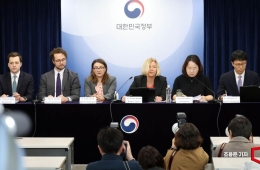
On November 17, the Special Committee on Assessing the State of the Marine Healing Industry of the Wando County Council held a public hearing to gather residents' opinions at the Wando Living and Culture Center, with around 240 residents in attendance.

The Special Committee on Fact-Finding into the Marine Healing Industry of the Wando County Council held a public hearing to gather residents' opinions, attended by around 240 residents. Courtesy of the Wando County Council.
View original imageThe hearing began with opening remarks by Chairman Choi Jeonguk, followed by a report on the committee's activities from Vice Chair Jimin, the committee secretary, a report on the status of its review from Committee Chair Park Byeongsu, and then a session for hearing and discussing residents' opinions. Since it was formed in August, the committee has conducted on-site inspections of marine healing facilities, received briefings from relevant agencies, and consulted experts in various fields.
◆Average spend of 30,000 won per customer, 180 visitors a day... annual revenue under 2 billion won
Residents focused their criticism on the limits of the center's revenue model. Bae, a resident of Wando-eup, said, "With an average spend of around 30,000 won per customer and a safe daily capacity of 180 people, annual revenue would be less than 2 billion won. It's impossible to make a profit under this model, yet no one is being held responsible."
One proposal was to amend the law to secure government support, since the governing law, the Act on the Management and Utilization of Marine Healing Resources, has no provision for operational support.
Cha, another Wando-eup resident, also questioned the model, saying, "With the current structure, where revenue depends on multiplying the average spend per customer by the turnover rate, the center cannot break even. Wasn't it designed from the outset in a way that made that impossible?" Cha also called for measures to reduce energy costs, such as maintaining the water temperature in the Thalasso Pool, and for setting a standard for the maximum acceptable deficit, given the center's status as a public facility.
That day, Chairman Choi Jeonguk disclosed details about the circumstances when the project was launched. "At the time, the county administration projected attracting 600 billion won in private investment, creating 30,000 jobs, and turning a profit of 100 million won in the first year of operation and 2.6 billion won by the tenth year," Choi said. "The council opposed establishing a corporation because there were no successful examples of publicly operated service businesses."
Choi added, "The Local Public Enterprise Evaluation Institute forecast an annual deficit of 900 million won, but the county administration said it would attract 100,000 to 200,000 people a year and make a profit, so we had no choice but to approve it. The current deficit is developing in a way that is entirely different from the original basis for approval."

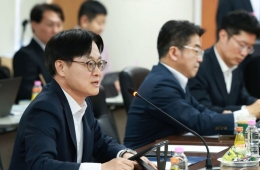
Residents said the Wando Marine Healing Center was “structured in a way that made it impossible to turn a profit from the outset.” Photo courtesy of Wando County Council.
View original image◆Labor costs up 40% in three years... "Hired staff without consultation even while the committee was active"
The corporation's labor costs also came under scrutiny. A committee adviser said, "The corporation has 65 employees, and labor costs have risen from 2 billion won in 2025 to 2.68 billion won this year and 2.8 billion won next year, accounting for around 50% of the budget."
Examples of lax management included closing the facility for a month in February and March this year to carry out a basic interior renovation costing around 500 million won, and hiring two public relations and marketing staff in October, while the committee was active, without consulting the council. The adviser said, "The center cannot escape its deficit unless labor costs are adjusted," and called for analyzing usage by time of day and consolidating or discontinuing programs with low attendance.
The corporation's president responded, "Because we were unable to hire regular employees for certain positions, we hired fixed-term employees, which led to some labor costs being double-counted. We will decide on measures to reduce staffing and increase capacity after conducting a financial analysis and consulting experts."
Choi, a resident of Wando-eup, criticized the corporation, saying, "Job creation was promoted when it was established, but the results have been very poor. It was set up hastily without sufficient review." Choi proposed changing the operating structure from a corporation to a foundation or another type of public enterprise, and appointing executives with a business-oriented mindset.

Chair Choi Jungwook emphasized, "This is the time to take stock of our efforts to ensure that the marine healing industry delivers tangible operational results and revitalizes the local economy." Provided by Wando County Council.
View original image◆"Turned away because they couldn't book"... Complaints about access and fees
Residents also raised a number of complaints about the visitor experience. Kim, a resident of Geumil-eup, said, "There are many cases of tourists being unable to take part in activities because they can't make a reservation and having to leave. It's a problem that visitors are turned away even when utilization is low."
Chairman Choi said that limited capacity in the second-floor Deluxe and Premium areas was the reason, as visitors flock to the center on weekends and during peak seasons. He also acknowledged that staff needed to be more courteous.
Other proposals included lowering fees for the second floor and operating the healing center as a residential program for stays of three days to one week in conjunction with accommodation; attracting large semiconductor companies in the Honam region to use the center as a training facility; attracting sports teams for off-season training by building accommodation and sports grounds on public land near the center; and partnering with medical and Korean medicine universities or outsourcing the center's operations.
Some also called for the government to take responsibility. Chu, a resident of Wando-eup, said, "Since the marine healing industry is a government policy project being pursued in four cities and counties, the Ministry of Oceans and Fisheries' policy and financial responsibilities should also be reviewed." Chu called for the Second Basic Plan for Marine Healing, which is currently being drawn up, to include measures to address Wando's problems.
If amendments to the law are delayed, Chu also proposed establishing a support account under the balanced development fund in connection with Article 283 (Special Provisions for Marine Healing Resources) of the Special Act on the Establishment of the Jeonnam-Gwangju Integrated Special City.
◆Committee: "Prioritize continued operation over closure... Consider an appropriate level of deficit"
The committee came down in favor of continued operation rather than immediate closure. Committee Chair Park said, "We acknowledge that a large amount of public funding has been invested and that results have fallen short of expectations," but added, "This is not the stage to decide between expansion and suspension."
The committee chair and the council chair said, "Given that more than 80 billion won in public funds has been invested, we will first consider how to keep the center operating." They added, "Council members share the view that profitable operations will be difficult. The key questions are what level of deficit residents can accept and what operating model is appropriate."
They also signaled their intention to determine who was responsible. Committee Chair Park said, "We will verify who drew up the plan, the grounds for requesting the budget, and whether the problems were known but left unaddressed." Park added, "Based on verified materials, including management evaluations, we will ask the county and the corporation to submit improvement plans and, if necessary, improve the council's budget and administrative report review processes."
Chairman Choi emphasized, "The marine healing industry is a future growth engine developed using Wando's abundant marine resources. Now is the time to look back and assess whether the efforts made so far are leading to tangible operational results and revitalizing the local economy."
Vice County Governor Choi Byeongnam, who attended as a representative of the county administration, said, "We will reflect residents' opinions in our administration, address their concerns, and develop measures to redefine the center's status and role."
Hot Picks Today
 "Two Spend 500,000 Won in a Flash, Yet Wait Two Hours?" ... 'Dreamland' Shunned by Kids and Foreign Tourists
- The Era of Getting 200 Million Won After 30 Years Is Over... A Japanese Bank's "Perpetual Department Head" Who Just Clocked In Cries Out
- Spain Hit by Its Worst Tragedy... Lee Kangin, Moreno and Real Madrid Join Soccer World in Mourning
- They Said, “Make It Your Home for Life” - Then Suddenly Kicked 200 Passengers Off... What Happened to the Around-the-World Cruise?
- "130 Rice Bowls Sold Out in a Day"... 'Unfiltered Face' Adds 8 Million Won to Night Market Sales: China's Bungeunwoo
The committee will continue its work through December 31. It plans to compile improvement measures and policy proposals based on the hearing, on-site inspections, submitted materials, and expert consultations in a report on its activities, which it will deliver to the Wando County administration.
© The Asia Business Daily. All rights reserved. Unauthorized AI training and use prohibited.