President Lee on China's MFN Treatment of K-Content: "A Foundation for a New Future in Korea-China Relations"
South Korea-China FTA Follow-Up Talks Conclude After 8 Years and 8 Months
Co-Productions Expanded to Dramas and Variety Shows; Tourism and Construction Sectors Open Up
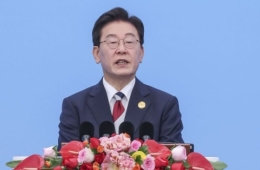
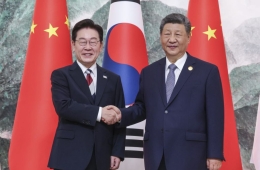
President Lee Jae Myung, who is visiting Shenzhen, China, to attend the Asia-Pacific Economic Cooperation (APEC) summit, said on November 18, "China's agreement to grant South Korea most-favored-nation treatment marks more than a full and substantive restoration of relations between South Korea and China; it will serve as a foundation for building a new future for those relations." His remarks followed a summit meeting with Chinese President Xi Jinping in Shenzhen, where the two leaders declared the conclusion in substance of follow-up negotiations on services and investment under the South Korea-China Free Trade Agreement (FTA). China agreed not to treat South Korean films and games less favorably than those from third countries and to apply the principle of non-discrimination to prior content reviews.

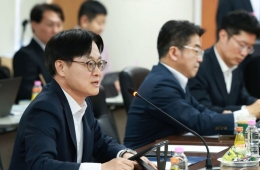
On X (formerly Twitter) that day, President Lee quoted a post containing an article about China's most-favored-nation treatment of South Korean films and games and made the remarks. He wrote, "Thank you to the government officials who worked so hard and played a major role in the negotiations with China." He then named the Ministry of Foreign Affairs, the Ministry of Culture, Sports and Tourism, the Ministry of Trade, Industry and Energy, and the National Security Office and Policy Office at the Blue House, and asked people to encourage the officials who took part in the negotiations.
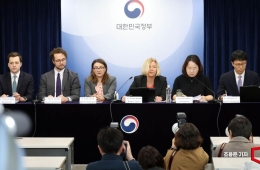
According to the Ministry of Trade, Industry and Energy, this is the first time China has agreed to include most-favored-nation treatment for the film and game sectors and the principle of non-discrimination in prior reviews in a trade agreement. The two countries also agreed to expand the scope of co-productions, previously limited to films under the existing agreement, to include dramas, animation, variety shows, and documentaries. At their meeting that day, President Xi expressed support for gradually expanding cultural exchanges. As expectations grow that the so-called "Hallyu ban" may be eased, how the agreement will be applied to the screening of South Korean films in China and the local launch of games is expected to be a key issue going forward.
Conditions for entering the tourism, legal, and construction sectors will also change. South Korean travel agencies established in 23 regions in China will be allowed to sell overseas travel packages to local residents. The areas where South Korean law firms can establish offices and jointly handle cases with Chinese law firms will expand from the Shanghai Pilot Free Trade Zone to the Tianjin and Qianhai Pilot Free Trade Zones and the Hainan Free Trade Port. China also agreed to remove an existing provision in the agreement that limited the scope of construction projects in which South Korean companies could participate.
Hot Picks Today
 "Two Spend 500,000 Won in a Flash, Yet Wait Two Hours?" ... 'Dreamland' Shunned by Kids and Foreign Tourists
- The Era of Getting 200 Million Won After 30 Years Is Over... A Japanese Bank's "Perpetual Department Head" Who Just Clocked In Cries Out
- Spain Hit by Its Worst Tragedy... Lee Kangin, Moreno and Real Madrid Join Soccer World in Mourning
- They Said, “Make It Your Home for Life” - Then Suddenly Kicked 200 Passengers Off... What Happened to the Around-the-World Cruise?
- "130 Rice Bowls Sold Out in a Day"... 'Unfiltered Face' Adds 8 Million Won to Night Market Sales: China's Bungeunwoo
Follow-up negotiations began in March 2018, but no formal talks were held for more than four years due to differences between the two countries. After the leaders agreed at their summit in Beijing this January to work toward meaningful progress within the year, the two countries held five rounds of formal negotiations this year alone. They plan to resolve the remaining technical wording through working-level consultations, then proceed with legal review, formal signing, and entry into force.
© The Asia Business Daily. All rights reserved. Unauthorized AI training and use prohibited.