Korea-China FTA Services and Investment Talks Reach Substantive Conclusion... Kim Jeongkwan: "Expanding Trade in K-Content, Tourism, and Finance"
Upgrading Services and Investment to a New Level
Commitment to "Most-Favored-Nation Treatment" in Film, Gaming, and Other Sectors
Strengthening Investment Protections and Improving Regulatory Predictability
Follow-up negotiations on services and investment under the Korea-China Free Trade Agreement (FTA) have concluded. The negotiations took 8 years and 8 months to reach this point, having begun in March 2018.
The Ministry of Trade, Industry and Energy said on November 18 that the two countries had declared the negotiations on services and investment under the Korea-China FTA substantially concluded at a bilateral summit held on the sidelines of the Asia-Pacific Economic Cooperation (APEC) summit. A substantial conclusion means that negotiations have ended, but the two sides have agreed to resolve some remaining technical drafting issues through working-level discussions.

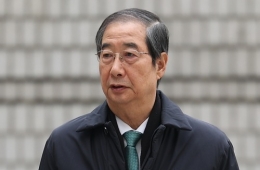
Minister of Trade, Industry and Energy Kim Jeong-gwan said, "The conclusion of these follow-up negotiations has established a stable institutional foundation for Korean companies to enter the Chinese market in sectors where they have strengths, including K-content, tourism, finance, and distribution. I hope this will lead to a further expansion of services trade and investment between our two countries and help take Korea-China economic cooperation to a new stage."
The follow-up negotiations on services and investment under the Korea-China FTA were launched as a follow-up to the original Korea-China FTA, which entered into force in December 2015, with the aim of raising the level of liberalization in these sectors. Since the negotiations began in March 2018, the two countries had negotiated the agreement text and market access in services, investment, and finance. However, they faced difficulties, including a pause of more than four years in formal negotiations due to differences in their positions.
The negotiations gained momentum in January this year, when the leaders of the two countries agreed at a Korea-China summit to work toward meaningful progress within the year. The two sides subsequently narrowed their differences through multiple high-level consultations, including a Korea-China trade ministers' meeting in March, a meeting in June between the head of the Ministry of Trade, Industry and Energy's Office of Trade and China's international trade representative, and a Korea-China trade ministers' meeting in Shanghai in November. This year alone, the two countries held five formal rounds of negotiations, from the 13th round in Beijing in January to the 17th round in Seoul in October, as well as numerous intersessional talks. As a result, they reached a substantial conclusion about 8 years and 8 months after negotiations began.
A ministry official said, "The significance of this conclusion is that it raises the level of market access and the rules governing services and investment under the original agreement, establishing an institutional foundation for further expanding cooperation between the two countries in these areas. Korea-China trade in goods currently stands at about $270 billion, while services trade is about $38.8 billion, leaving considerable room for services trade to grow compared with trade in goods." The ministry expects services trade between the two countries to expand further following this conclusion, just as trade in goods grew after the original agreement entered into force.
◆Commitment to Most-Favored-Nation Treatment... Establishing a Foundation for K-Content to Enter the Market= Under the negotiations, China committed to granting treatment no less favorable than that accorded to third countries in sectors such as film and games. China also committed to applying the principle of non-discrimination in prior reviews of content, including online games and films. The ministry expects these provisions, included in a Chinese trade agreement for the first time, to provide more stable conditions for K-content to enter the Chinese market.
In addition, the two countries agreed on an annex on the co-production of audiovisual programs, expanding the scope of co-productions under the original agreement, which had been limited to films, to include a variety of audiovisual programs such as dramas, animation, variety shows, and documentaries. This is expected to encourage joint productions between the two countries and broaden the production base for Korea's content industry.

◆Creating Conditions for Entry into China's Outbound Tourism Market= In the tourism sector, the agreement provides that Korean travel agencies established in 23 regions in China may operate outbound tourism businesses, arranging overseas travel for Chinese citizens and foreign nationals residing in China. This establishes an institutional basis for Korean travel agencies to recruit Chinese group tourists directly and sell a variety of independent travel packages. Going forward, Korean travel agencies are expected to identify new revenue sources by developing and selling tourism products linked to K-pop, beauty, and food, or by highlighting the unique features of different regions in Korea. The provisions may also serve as a basis for expanding their business by linking it to tourism in third countries, including Japan and Southeast Asia, as well as Korea.
◆Expanding Market Access in Legal Services, Distribution, Construction, and Finance= In legal services, the two countries agreed to expand the locations where Korean law firms may be established and jointly handle cases or form business partnerships with Chinese law firms. In addition to the existing Shanghai Free Trade Zone (FTZ), the permitted locations will include the Tianjin FTZ, the Qianhai FTZ, and the Hainan Free Trade Port (FTP, covering all of Hainan). Law firms with business partnerships had already been able to provide services throughout China, but the change is significant because it gives them more options for choosing where to establish an office, an important factor in maintaining physical access to clients.
In distribution, the agreement includes a commitment allowing Korean companies that wish to operate more than 30 stores in China to do so independently, without forming joint ventures with Chinese companies. The ministry expects this to help Korean distribution, fashion, and beauty companies maintain their K-brand identity while expanding their stores in China.
In construction, the agreement removes the restriction under the original agreement on the types of construction projects in which Korean companies may participate, expanding their eligibility to all projects. This is expected to create more opportunities for Korean companies to participate in China's construction market, which is worth about $4 trillion annually.
In finance, the two countries agreed to apply "future most-favored-nation treatment." If China commits to further opening its financial market in a future trade agreement with a third country, Korean companies will automatically receive the same benefits.
Korea, too, committed to granting China greater market access than under the original agreement in areas including legal services, distribution, and audiovisual services, within the scope of domestic law and current regulations. For example, Korea will allow business partnerships between Korean and Chinese law firms and has incorporated existing regulations into the agreement for areas not covered by the original agreement, such as equipment rental and leasing services in construction and film screening services.

◆Strengthening Investment Protections and Improving Regulatory Predictability= The two countries included in the agreement an obligation to prohibit performance requirements, agreeing not to impose conditions on investors from the other country, such as requiring technology transfer as a condition of investment. This establishes an institutional safeguard enabling Korean companies to operate local businesses while protecting their technology.
The agreement also strengthens the effectiveness of investor protections under the investor-state dispute settlement (ISDS) system by extending ISDS protection to investments made before an investment is established and specifying procedural rules. At the same time, it establishes safeguards against abuse, including the early dismissal of unfounded claims and restrictions on duplicate claims, with the aim of balancing investor protection and governments' legitimate authority to set policy.
On regulation, the countries are shifting from the positive-list approach to market access used in the original agreement to a negative-list approach. They will list current regulations by sector and, in principle, will not introduce new regulations that are not listed. They have also adopted a ratchet principle, under which regulations liberalized through voluntary amendments to laws cannot later be tightened. This will ensure that the effects of future regulatory easing remain protected under the agreement.
Hot Picks Today
 "Two Spend 500,000 Won in a Flash, Yet Wait Two Hours?" ... 'Dreamland' Shunned by Kids and Foreign Tourists
- The Era of Getting 200 Million Won After 30 Years Is Over... A Japanese Bank's "Perpetual Department Head" Who Just Clocked In Cries Out
- Spain Hit by Its Worst Tragedy... Lee Kangin, Moreno and Real Madrid Join Soccer World in Mourning
- They Said, “Make It Your Home for Life” - Then Suddenly Kicked 200 Passengers Off... What Happened to the Around-the-World Cruise?
- "130 Rice Bowls Sold Out in a Day"... 'Unfiltered Face' Adds 8 Million Won to Night Market Sales: China's Bungeunwoo
The Ministry of Trade, Industry and Energy plans to conduct a legal review with China to finalize the wording of the agreement and swiftly proceed with the follow-up procedures required for its formal signing and entry into force.
© The Asia Business Daily. All rights reserved. Unauthorized AI training and use prohibited.