One Satellite Fails to Deploy on Nuri's Fifth Launch... Power Cut, Cause Unknown
The ejection command was issued normally, but the cover-opening motor failed to operate
Insufficient telemetry data prevented investigators from pinpointing the cause... Electrical signal system to be made redundant starting with the next launch
It was confirmed that one CubeSat failed to separate from the fifth Nuri launch vehicle, launched last month, because no current flowed to the satellite ejection device, preventing the cover-opening motor from operating. However, the precise cause of the power supply interruption could not be determined due to insufficient telemetry data. The government plans to take measures to prevent a recurrence, including adding redundancy to the electrical signal system for the ejection device starting with the next launch.
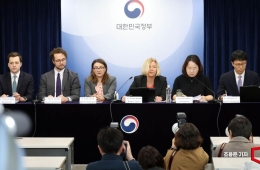
The Korea Aerospace Administration (KASA) and the Korea Aerospace Research Institute (KARI) said they analyzed the flight results of the Nuri rocket launched on October 7 and the cause of the CubeSat's failure to deploy at a meeting to review the results of the fifth Nuri launch, held on November 18 at KARI in Daejeon.

The Quaternion CubeSat PERSAT-2, which failed to separate during the fifth launch of Nuri on October 7. The satellite was scheduled to monitor marine debris off Jeju and along the southern coast. Provided by the Korea Aerospace Research Institute.
View original imageThe fifth Nuri launch vehicle carried a total of 15 satellites, including five ultra-small cluster satellites and 10 CubeSats. Five ultra-small cluster satellites and nine CubeSats separated normally, but one CubeSat, Quaternion's PERSAT-2, failed to eject from the launch vehicle.
The investigation found that the command to eject the satellite was issued normally from the upper stage of the launch vehicle, but no current flowed to the ejection actuator. As a result, the motor that opens the ejection tube cover did not operate, and the satellite failed to separate from the launch vehicle.
The underlying cause of the loss of current could not be identified. Due to insufficient telemetry signals, investigators could not determine whether there was a problem with signal transmission from the launch vehicle to the ejection tube or a mechanical defect in the ejection tube itself.
Starting with the next launch, KARI plans to strengthen pre-launch inspections of ejection-related components and their operating status, and implement supplementary measures such as adding redundancy to the electrical signal system. The aim is to improve reliability so that satellite ejection can continue even if some equipment malfunctions.
However, the Nuri launch vehicle itself was found to have flown as planned. From its on-time liftoff through first-stage separation, second-stage ignition, fairing separation, and third-stage ignition, the major flight procedures were carried out at their scheduled times. The vehicle also reached its target orbit, and the five ultra-small cluster satellites were successfully deployed in multiple separations.
Hanwha Aerospace, the system integration company for Nuri, also took part in the review meeting and shared the technology and experience it had gained during launch operations. Hanwha Aerospace participated in the review of this launch, as it did after the fourth launch last year.
Hot Picks Today
 "Two Spend 500,000 Won in a Flash, Yet Wait Two Hours?" ... 'Dreamland' Shunned by Kids and Foreign Tourists
- The Era of Getting 200 Million Won After 30 Years Is Over... A Japanese Bank's "Perpetual Department Head" Who Just Clocked In Cries Out
- Spain Hit by Its Worst Tragedy... Lee Kangin, Moreno and Real Madrid Join Soccer World in Mourning
- They Said, “Make It Your Home for Life” - Then Suddenly Kicked 200 Passengers Off... What Happened to the Around-the-World Cruise?
- "130 Rice Bowls Sold Out in a Day"... 'Unfiltered Face' Adds 8 Million Won to Night Market Sales: China's Bungeunwoo
Korea Aerospace Administration Commissioner Tae seog Oh said, "The fifth launch achieved the multiple deployment of the ultra-small cluster satellites and an on-time launch, while also identifying areas for improvement related to the CubeSat that failed to deploy. We will address the identified issues and continue to improve reliability."
© The Asia Business Daily. All rights reserved. Unauthorized AI training and use prohibited.