Choo Mi-ae, 31 Mayors and County Governors Call for Greater National Fiscal Responsibility for Firefighting and Welfare
Gyeonggi Governor Choo Mi-ae and the mayors and county governors of the province’s 31 cities and counties called for the national government to take greater fiscal responsibility for firefighting and welfare and to ensure stable funding for local governments.
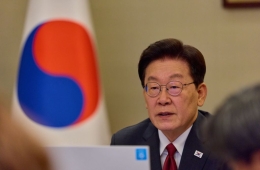
Governor Choo attended the first regular meeting of the Gyeonggi Mayors and County Governors Association, held at the convention hall of Anyang Art Center on November 17, and voiced her support for a joint proposal containing these demands.
The Gyeonggi Mayors and County Governors Association is a statutory administrative council formed by the heads of the province’s 31 cities and counties to promote exchanges and cooperation, discuss shared issues, and make proposals to the central government or Gyeonggi Province.
This was the first time a sitting Gyeonggi governor had attended a regular meeting of the association to discuss issues facing the cities and counties. It was the second time the governor had met with mayors and county governors since the launch of the ninth popularly elected administration, following a meeting with them in July.
“Fire service financing remains unresolved. The share of local consumption tax needs to rise to 40% for local governments to manage their finances properly, but even this is being held back,” Governor Choo said. “We cannot build robust infrastructure this way. The central government’s position remains firm.”
She added, “Gyeonggi Province cannot move forward on its own. We can succeed when all 31 cities and counties move in the same direction as one, working for our residents. I hope today marks the beginning of the Gyeonggi Mayors and County Governors Association serving as the most steadfast guardian of Gyeonggi residents.”
At the meeting, Governor Choo also heard the cities’ and counties’ proposals to the central government, including a request to adjust the overconcentration control zone to build a self-sufficient city in Gyosan New Town.
“There was a request for the government to apply exception clauses flexibly so that a city can secure self-sufficient spaces even when the government designates a new town,” she said. “It will not be easy, as this requires an amendment to the law, but Gyeonggi Province will take the lead in arranging a meeting with local members of the National Assembly.”
Choi Dae-ho, chair of the Gyeonggi Mayors and County Governors Association, said, “Local governments face fiscal and administrative challenges of unprecedented severity. The 31 cities and counties cannot weather this powerful storm by fending for themselves. By standing together with one voice and pooling our wisdom, we can protect the fiscal autonomy of local governments and safeguard the lives of our residents.”

Gyeonggi Province Governor Choo Mi-ae poses for a commemorative photo at the first regular meeting of the Gyeonggi Mayors and County Governors Association, held at the convention hall of Anyang Arts Center on the 17th. Courtesy of Gyeonggi Province.
View original imageTitled “Call for Easing the Fiscal Burden on Basic Local Governments and Strengthening National Fiscal Responsibility,” the joint proposal calls for strengthening national fiscal responsibility so that the salaries of national fire service personnel are not passed on to metropolitan and basic local governments; ensuring stable funding so that declines in local share tax revenues do not hamper the fiscal management of basic local governments; improving the local preference index to reflect regional differences; and expanding national funding for social welfare budgets.
The local preference index recently introduced by the government is a standard for incorporating regional conditions, such as distance from Seoul and socioeconomic indicators, into policy support. It divides 229 regions nationwide into four categories.
Governor Choo and the association expressed concern that 24 of the province’s 31 cities and counties had been classified in Category 1, which receives the lowest level of support. They said that the regions’ fiscal conditions and specific characteristics were not being adequately reflected simply because they are close to Seoul.
Gyeonggi Province plans to actively engage with the central government to address the issue of being subject to regulations while receiving less support because it is part of the Seoul metropolitan area, including in the designation of regulatory free zones and opportunity development zones.
Hot Picks Today
 "Two Spend 500,000 Won in a Flash, Yet Wait Two Hours?" ... 'Dreamland' Shunned by Kids and Foreign Tourists
- The Era of Getting 200 Million Won After 30 Years Is Over... A Japanese Bank's "Perpetual Department Head" Who Just Clocked In Cries Out
- Spain Hit by Its Worst Tragedy... Lee Kangin, Moreno and Real Madrid Join Soccer World in Mourning
- They Said, “Make It Your Home for Life” - Then Suddenly Kicked 200 Passengers Off... What Happened to the Around-the-World Cruise?
- "130 Rice Bowls Sold Out in a Day"... 'Unfiltered Face' Adds 8 Million Won to Night Market Sales: China's Bungeunwoo
After the regular meeting, Governor Choo visited Anyang City’s Smart City Integrated Center. She heard about Anyang’s smart city operations and toured major facilities, including its exhibition and experience hall. She also rode in an autonomous vehicle and observed the smart city system’s proactive approach to disaster, safety, and traffic issues.
© The Asia Business Daily. All rights reserved. Unauthorized AI training and use prohibited.