After a '007 Operation,' She Stood Before Putin... Kim Jeonga's 10 Years Translating 6,700 Pages
First Complete Korean Translations of Dostoevsky's Four Major Novels by a Single Translator
Received the Pushkin Medal Directly from Putin at the Kremlin
Reveals Details of Secretive Ceremony at November 17 Press Conference
Translated Every Dawn While Running a Fashion Company... A Decade-Long Undertaking
On November 4, in the Ekaterininsky Hall of the Kremlin in Moscow, Russia, Korean translator Dr. Kim Jeonga, 57, stood before Russian President Vladimir Putin. She was there to receive the Pushkin Medal, a Russian state award, for translating into Korean four of the great Russian novelist Dostoevsky's works over a period of 10 years. The award came as Russia had classified South Korea as an unfriendly country.

Dr. Kim Jeonga, who spent 10 years completing the first-ever full translations of Dostoevsky's four major novels and received the Pushkin Medal, Russia's highest state honor for culture and the arts, poses for a photo at a press conference at the Seoul Press Center on the 17th. Yonhap News Agency
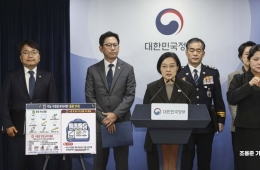
View original imageThe process leading up to the ceremony was anything but ordinary. Details of the schedule, from her departure to her entry into the Kremlin and the ceremony itself, were not made public. At a press conference held on November 17 at the Korea Press Center in Seoul, Dr. Kim recalled the events, comparing them to a "007 operation." Amid tight security, the message she delivered at the ceremony was about literature, not politics.
After receiving the medal directly from President Putin, Dr. Kim recalled in her acceptance speech when she first encountered Dostoevsky at age 18. She said Dostoevsky's books were chronicles of the human soul and prayers for humanity, and that his language built bridges connecting languages, cultures and people's hearts instead of walls. She also said the award felt like a gift from Dostoevsky.
The works she translated are "Crime and Punishment," "The Idiot," "Demons" and "The Brothers Karamazov." This is the first time in South Korea that one person has translated all four novels, considered the pinnacle of Dostoevsky's literary work, from beginning to end. Starting with "Crime and Punishment" in 2020 and ending with "The Brothers Karamazov," published last year, she completed a project spanning approximately 6,700 pages.
Dr. Kim's days began earlier than most people's. After studying Russian literature at Seoul National University's Department of Russian Language and Literature and the University of Illinois in the United States, she taught at a university and has run fashion company Space Nul since 2008. She ran the company during the day, then sat at her desk at 1 or 2 a.m. to wrestle with Dostoevsky's sentences. After starting the translations, she cut back on evening plans and kept to a routine that gave her time to work in the early morning hours.
At times, her body could not keep up. At a press conference last year for the publication of "The Brothers Karamazov," she revealed that she had been wearing a back brace and wrist supports and working on her feet since the time she translated "The Idiot." By the time she translated the final novel, her knees and eyes hurt as well. She also recounted that while reading passages in which the author poured his grief over the loss of his son into his work, she cried so much that a doctor advised her not to cry for a while.

Dr. Kim Jeonga, who completed her own full translations of Dostoevsky's four major novels over a period of 10 years and received the Pushkin Medal, Russia's highest state honor for culture and the arts, answers questions at a press conference at the Seoul Press Center on the 17th. Yonhap News.
View original imageWhy was she so devoted to Dostoevsky? At a press conference last year, Dr. Kim explained that the essence of Dostoevsky's literature was the Russian word "sostradaniye," meaning compassion. When she first read "Crime and Punishment" as a high school senior, she discovered the author's gaze of compassion, which extended even to those who had committed crimes. That was what led a student who had dreamed of studying law to turn to Russian literature.
She later began calling Dostoevsky "Teacher Do." When she completed translations of the four major novels last year, she described her soul and the author's as if they were connected by an umbilical cord. She chronicled the 10-year translation process in "Dostoevsky Translation Diary," published this year. The combined edition bringing the four novels together weighs 5.4 kg.
In August, the Russian government decided to award Dr. Kim the Pushkin Medal in recognition of her contributions to preserving and promoting Russian literature and culture abroad. The Pushkin Medal is a state award presented to individuals who have contributed to the promotion of culture and the arts, the preservation of cultural heritage, and cultural exchanges between countries. Russian state news agency TASS also introduced Dr. Kim on November 4 as one of the foreign recipients of the award.
The award also comes against the political backdrop of the war between Russia and Ukraine. In an earlier interview with Russia's TASS, Dr. Kim said she was a literary scholar and translator, not a politician, and did not take a political position in support of or opposition to either side.
Hot Picks Today
 "Two Spend 500,000 Won in a Flash, Yet Wait Two Hours?" ... 'Dreamland' Shunned by Kids and Foreign Tourists
- The Era of Getting 200 Million Won After 30 Years Is Over... A Japanese Bank's "Perpetual Department Head" Who Just Clocked In Cries Out
- Spain Hit by Its Worst Tragedy... Lee Kangin, Moreno and Real Madrid Join Soccer World in Mourning
- They Said, “Make It Your Home for Life” - Then Suddenly Kicked 200 Passengers Off... What Happened to the Around-the-World Cruise?
- "130 Rice Bowls Sold Out in a Day"... 'Unfiltered Face' Adds 8 Million Won to Night Market Sales: China's Bungeunwoo
The words she shared at the Kremlin return to her faith in the literature she has translated for 10 years: people can understand one another's suffering and share compassion, even across differences in nationality and language. Dr. Kim said she would "continue building bridges between different cultures through translation."
© The Asia Business Daily. All rights reserved. Unauthorized AI training and use prohibited.