"Why aren't metal detectors being used?" "Can disaster alerts be disabled?" Questions flood in... Government responds [CSAT Cheating Response Q&A]
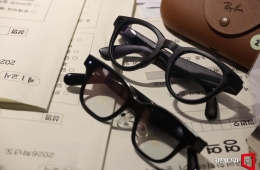
As concerns grow over cheating in the 2027 College Scholastic Ability Test (CSAT) using smart glasses, miniature cameras and other devices, calls to postpone the exam are growing louder. The government also discussed the possibility of postponing the CSAT, but decided to hold it as scheduled, citing the confusion this would cause for test-takers and disruptions to the university admissions schedule.
To prevent cheating, all test-takers must hand over electronic devices such as mobile phones to proctors before the start of the first period, following their instructions. The government plans to send a disaster alert text message to identify anyone who fails to hand over a device. The alert is scheduled to sound once between 8:25 and 8:30 a.m., before the exam begins. It will be sent as an emergency alert, which cannot be disabled.
Metal detectors will be available at this year's CSAT test sites, but will be used only when suspicious circumstances arise. The government said that conducting searches of every test-taker would be difficult due to legal and human rights constraints.
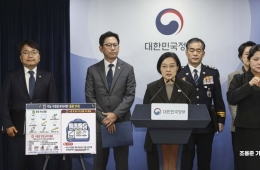
After issuing a public address on measures to address cheating during the CSAT at the Government Complex Seoul on the afternoon of Nov. 17, the government provided further details during a question-and-answer session. Below is a summary of the key questions and answers.

Prime Minister Han Seongsuk delivers a public address on measures to address cheating incidents during the College Scholastic Ability Test (CSAT) at the Joint Briefing Room of the Government Complex Seoul in Jongno-gu, Seoul, on the afternoon of Nov. 17, 2026. Photo by Jo Yongjun
View original imageQ. Was postponing the CSAT considered?
A. It was not the case that the option was never considered. We discussed it. However, the test questions have already been finalized, the test writers are in isolation, and the exam papers have been transported and are almost at the schools. Postponing the CSAT would pose very serious security problems. In addition, even if it were postponed, the maximum delay would be one to two weeks. We concluded that even if we could develop better measures within that period, the resulting confusion for test-takers and continued disruptions to university admissions would be a greater problem.
Q. If cooperation with global big tech companies is possible, could the use of AI to solve questions in South Korea during the CSAT be blocked in advance?
A. It is not easy to tune models or create filters specifically for South Korea. However, we are discussing the possibility of reviewing relevant records and taking action after the fact, since those records already exist, if we can identify those who cheated.
Q. When will the stickers attached to buttons be applied? Would test-takers need to arrive earlier in that case?
A. The stickers will be applied when the first period begins, and test-takers are advised to leave them on until the exam ends. If a sticker comes off during the exam, a proctor will reapply it, which does not take long. Test-takers must enter the exam room by 8:10 a.m., and the exam begins at 8:40 a.m. We believe the 30 minutes available will be sufficient.
Q. If disaster alerts are turned off, wouldn't it be impossible to identify phones that have not been handed over?
A. There are three types of disaster alerts: emergency alerts, urgent alerts and safety guidance alerts. Emergency alerts cannot be disabled, so, with very rare exceptions such as some 3G phones, all phones should receive them as long as they are turned on. That means they will definitely sound if a phone is switched on. The alert is being sent to make use of that feature.
Q. When will the disaster alert be sent?
A. We plan to send it before the exam begins, sometime between 8:25 and 8:30 a.m.
Q. Why is it difficult to screen every test-taker using metal detectors?
A. If we scan students' bags with metal detectors, we will find many metal objects inside, such as lunch boxes and keys. We would then need to open and inspect the bags or scan the students' bodies, which requires a legal basis. That is why we will not screen everyone, although metal detectors will be available at CSAT test sites. If there are suspicious or unusual circumstances, we plan to call the student to the exam site's headquarters and conduct a full scan there using a metal detector. I understand that scanning someone's body without a legal basis raises human rights concerns, so it would be difficult to implement immediately.
Q. Does the government plan to investigate online posts claiming that people used AI to gain admission to medical schools in past CSATs?
A. We have all cybercrime investigation units nationwide operating around the clock. We will verify the facts and, as necessary, refer cases for a rigorous investigation.
Q. What about the blanket Wi-Fi shutdown that the government said on Monday it would consider?
A. Since personal Wi-Fi cannot be completely blocked, we will check Wi-Fi connection records and other information. We have completed preparations for a comprehensive response to Wi-Fi use, and are also considering additional measures.
Hot Picks Today
 "Two Spend 500,000 Won in a Flash, Yet Wait Two Hours?" ... 'Dreamland' Shunned by Kids and Foreign Tourists
- The Era of Getting 200 Million Won After 30 Years Is Over... A Japanese Bank's "Perpetual Department Head" Who Just Clocked In Cries Out
- Spain Hit by Its Worst Tragedy... Lee Kangin, Moreno and Real Madrid Join Soccer World in Mourning
- They Said, “Make It Your Home for Life” - Then Suddenly Kicked 200 Passengers Off... What Happened to the Around-the-World Cruise?
- "130 Rice Bowls Sold Out in a Day"... 'Unfiltered Face' Adds 8 Million Won to Night Market Sales: China's Bungeunwoo
Q. What is your response to criticism that the measures are excessive?
A. I believe the turmoil that would be caused in our society if the CSAT were not conducted rigorously and fairly would be worse than a disaster. We have therefore concluded that an extensive response is necessary.
© The Asia Business Daily. All rights reserved. Unauthorized AI training and use prohibited.