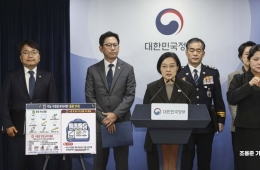
Homeownership Hits Record High, but Rent Burden for Tenants Reaches an Eight-Year Peak [Real Estate A to Z]
Ministry of Land, Infrastructure and Transport Releases 2025 Housing Survey
Seoul Leads Nation at 21.5%; Gyeonggi Posts Biggest Increase
Newlyweds' Rent Burden Tops 20% for First Time in Six Years
Survey First Applies Rent Conversion Rates by Cit
The share of monthly income that tenants paying jeonse or monthly rent spend on housing costs reached an eight-year high. Meanwhile, the homeownership rate among all households stood at 62.0%, the highest since the survey began in 2006. Although more households owned their homes, the housing cost burden on tenants without homes of their own grew instead.
Tenants in Seoul Spend 21.5% of Monthly Income on Rent

According to the 2025 Korea Housing Survey, released by the Ministry of Land, Infrastructure and Transport on November 17, the ratio of monthly rent to monthly income (RIR) for tenant households nationwide was 17.0% last year, up 1.2 percentage points from 15.8% the previous year. This was the highest level in eight years, since the survey switched from biennial to annual surveys in 2017, when the figure was also 17.0%. The year-on-year increase was also the largest since 2017. In other words, someone earning 1 million won a month spends 170,000 won on rent.
Housing cost burdens rose for tenants across the Seoul metropolitan area, including Seoul, Gyeonggi Province and Incheon. Seoul's RIR was 21.5%, up 0.7 percentage points from 20.8% the previous year, the highest in the country. Gyeonggi Province's figure rose 2.2 percentage points, from 15.2% to 17.4%, the largest increase among the country's 17 cities and provinces. Incheon also saw an increase, from 15.8% to 17.0%. The RIR was 19.7% for the Seoul metropolitan area as a whole, 16.2% for metropolitan cities outside the capital region and 13.3% for other provinces, all up from the previous year.
An official at the Korea Research Institute for Human Settlements, which compiled and analyzed the survey results, said, "Household incomes changed little, while both jeonse and monthly rent prices rose, pushing up the rent burden." A ministry official said, "Jeonse prices for row houses and multi-family homes, which fell significantly in the wake of jeonse fraud in 2022 and 2023, have also partly recovered."
Housing Cost Burden Grows for Young People and Newlyweds

Housing cost burdens also increased for younger tenants. Among young households, defined as those whose head of household is aged 19 to 34, 80.6% lived in rental housing. The RIR for young tenants rose to 17.4% last year from 16.0% in 2024. The rate of young people living in homes they own rebounded from 12.2% to 14.8%, but remained 4.4 percentage points below the 19.2% recorded in 2017. The RIR for newlywed tenants married for seven years or less rose 2.5 percentage points, from 17.7% to 20.2%, matching the 2019 figure and reaching its highest level since the integrated survey began.
This year, monthly rents have continued to rise in Seoul's outskirts and mid- to lower-priced areas. On October 21, a unit with an exclusive area of 84 square meters at Geonyeong 3-cha in Junggye-dong, Nowon-gu, was newly leased for a monthly rent of 2.1 million won with a 350 million won deposit. On the same day, a 115-square-meter unit at Shindonga in Junggye-dong was leased for 3.4 million won a month with a 200 million won deposit. In Seongbuk-gu, where monthly rents rose 11.82% through September this year, an 84-square-meter unit at Kkumui Sup Kolon Hanulchae in Jangwi-dong was leased on October 8 for 3.25 million won a month with a 40 million won deposit.
The survey results were compiled based on the third week of June last year, so they do not reflect the increases in jeonse and monthly rents that continued for more than a year afterward. A ministry official said, "The purpose is not to show recent movements in home prices or jeonse and monthly rents, but to examine how people's housing conditions change over the long term. Surveys need to use the same reference period each year to allow comparisons of how housing conditions change."
It Takes 12 Years of Saving Every Won of Your Pay to Buy a Home in Seoul... Housing Costs Rise in Gyeonggi

It is also taking longer to buy a first home. The time it takes to purchase a first home after becoming a household head increased from 7.9 to 8.0 years, matching the 2012 figure and marking the longest period since the survey began in 2006.
Gyeonggi Province, where rents rose the most, was the only area in the Seoul metropolitan region where the burden of buying a home also increased. The price-to-income ratio (PIR), which measures how many years it would take a homeowner household to buy a home if it spent none of its annual income, rose in Gyeonggi from 6.9 to 7.5 times, based on the median.
By contrast, Seoul's PIR fell from 13.9 to 11.7 times, but buying a home there still requires saving every won of one's pay for about 12 years. Incheon declined from 6.6 to 6.1 times, bringing the PIR for the Seoul metropolitan area as a whole down from 8.7 to 8.2 times. The national PIR was 6.3 times, unchanged from the previous year. An official at the Korea Research Institute for Human Settlements said, "The median in Seoul fell because price increases since June last year were not reflected, and because the share of lower-priced homes, such as row houses and multi-family homes, in the sample increased."
Housing cost burdens also affected decisions about marriage and having children. Young households ranked difficulties in securing a home, including the deposit, as the second-biggest reason for delaying or avoiding marriage, after financial circumstances. Newlyweds cited housing costs as the housing-related factor that most influenced their decision to have children. When asked which government support measures were most needed, young households ranked support for jeonse loans first (35.4%), while newlyweds ranked support for home purchase loans first (44.9%).
The ministry surveyed 61,000 households nationwide, including 6,000 households surveyed remotely for the first time. Young households accounted for about 14% (approximately 8,500 households), and newlyweds about 8.7% (approximately 5,300 households). To calculate the RIR by converting jeonse deposits or rental deposits into monthly rent, the survey applied rates for each of the 17 cities and provinces for the first time, rather than a single nationwide rate, reflecting the fact that the jeonse-to-monthly-rent conversion rate is lower in Seoul, where jeonse deposits are higher, than in other regions. Unlike the homeownership rate published by the Ministry of Data and Statistics the day before, which counts only homes listed in the property register, the survey's homeownership rate includes non-housing residences such as officetels when respondents say they own their home.
The final research report will be released on the Transport Statistics Nuri website on the morning of November 18.
Hot Picks Today
 "Two Spend 500,000 Won in a Flash, Yet Wait Two Hours?" ... 'Dreamland' Shunned by Kids and Foreign Tourists
- The Era of Getting 200 Million Won After 30 Years Is Over... A Japanese Bank's "Perpetual Department Head" Who Just Clocked In Cries Out
- Spain Hit by Its Worst Tragedy... Lee Kangin, Moreno and Real Madrid Join Soccer World in Mourning
- They Said, “Make It Your Home for Life” - Then Suddenly Kicked 200 Passengers Off... What Happened to the Around-the-World Cruise?
- "130 Rice Bowls Sold Out in a Day"... 'Unfiltered Face' Adds 8 Million Won to Night Market Sales: China's Bungeunwoo

© The Asia Business Daily. All rights reserved. Unauthorized AI training and use prohibited.