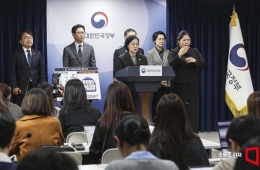
Oh Se-hoon on Hangang Bus Construction Cost Allegations: "I'll Investigate"
Issues raised during city administration Q&A at Seoul Metropolitan Council on the 17th
Oh Se-hoon: "We will need to conduct audits in two separate areas"
On operating loss subsidies: "It also serves tourism and leisure functions"
Seoul Mayor Oh Se-hoon said he would “have an investigation conducted” into allegations that some of the funds for building Hangang Bus vessels had been transferred to a third party. He added, however, that there was no legal problem with how the funds had been disbursed.
Oh made the remarks on the 17th while attending a question session on city administration during the 340th regular session of the Seoul Metropolitan Council, in response to the allegations that surfaced during the Hangang Bus project.

Seoul Mayor Oh Sehoon delivers a policy address on the 2027 budget proposal and fund management plan earlier this month. Yonhap News Agency.
View original imageLee Youngsil of the Democratic Party of Korea, who posed questions that day, said, “I had known about materials containing reports on Hangang Bus long before they were published recently. I asked two or three people in positions of influence in Seoul to tell me how they would resolve the issue, but no one came forward to explain.” In response, Oh said, “After this question session and the budget review period are over, I think we will need to conduct audits in two separate areas,” adding, “We can audit within the scope of the audit authority held by the Future Hangang Headquarters and SH Corporation, but shouldn’t Hangang Bus Co. have a separate audit system?”
Lee questioned the appropriateness of the disbursement, alleging that Hangang Bus paid Sungjin Heavy Industries approximately 2.9 billion won for vessel construction and then instructed it to transfer approximately 700 million won to another company. Oh, however, said, “In the end, we are told that the actions were not legally problematic,” while responding that he would “have an investigation conducted” into the authenticity of the contract and the disbursement process. In a separate statement, the Seoul Metropolitan Government also explained that the funds had been withdrawn within the existing 50 billion won credit limit and that the 700 million won had been spent on project-related expenses, including insurance premiums and fuel costs.
Noh Yeonsoo of the Democratic Party of Korea questioned the justification for subsidizing operating losses, noting that 95.8% of Hangang Bus trips were for tourism and leisure, while only 0.9% were for commuting. Oh responded, “Waterborne public transportation serves both as a means of getting around and as a means of tourism and leisure.” He added, “Democratic Party lawmakers only see what they want to see. With that kind of pessimistic outlook, nothing can be accomplished.”
Questions on city administration also included assessments of the government’s real estate policies. When Lee Dohee of the People Power Party asked about his position on recent remarks by President Lee Jae-myung regarding housing prices, Oh said, “Apartment prices in Seoul have risen for 12 consecutive weeks,” adding, “A smaller increase does not mean housing prices have stabilized.”
Hot Picks Today
 "Two Spend 500,000 Won in a Flash, Yet Wait Two Hours?" ... 'Dreamland' Shunned by Kids and Foreign Tourists
- The Era of Getting 200 Million Won After 30 Years Is Over... A Japanese Bank's "Perpetual Department Head" Who Just Clocked In Cries Out
- Spain Hit by Its Worst Tragedy... Lee Kangin, Moreno and Real Madrid Join Soccer World in Mourning
- They Said, “Make It Your Home for Life” - Then Suddenly Kicked 200 Passengers Off... What Happened to the Around-the-World Cruise?
- "130 Rice Bowls Sold Out in a Day"... 'Unfiltered Face' Adds 8 Million Won to Night Market Sales: China's Bungeunwoo
Regarding the government’s portrayal of the recent increase in housing permits as an achievement, he said, “No one would think that projects prepared over several years were made possible solely by the current government’s push for speed.” He added, “I cannot agree at all with the notion that a shortage of housing supply is the Seoul Metropolitan Government’s responsibility, while an increase in supply is an achievement of the central government.”
© The Asia Business Daily. All rights reserved. Unauthorized AI training and use prohibited.