Water Management Overhauled to Address Climate Crisis... Flood Forecasting Points to Expand to 270
The government will overhaul its water management system to address floods and droughts, which are worsening due to the climate crisis. It will increase the number of flood forecasting points from 223 to 270 by 2030 and strengthen flood and drought forecasting systems using artificial intelligence (AI). It will diversify water supply sources by connecting dams and rivers and step up maintenance of aging levees and sewer pipes.
The Ministry of Climate, Energy and Environment said it had reported the "Measures to Improve the Water Management System in the Era of the Climate Crisis" at a Cabinet meeting on the 17th.
The measures are intended to address a climate crisis in which extreme rainfall and localized droughts occur simultaneously. Nationwide precipitation this summer totaled 558 mm, just 76.1% of the average for a typical year. As of November 15, the storage rates at Seomjingang Dam and Unmun Dam stood at 18.5% and 28.4%, respectively, compared with typical levels of 41.3% and 49.8%. Meanwhile, Geoje, South Gyeongsang Province, recorded 124.5 mm of rain in one hour this year, surpassing the previous record of 104 mm.

The government will first secure additional flood storage capacity by using agricultural reservoirs, hydropower dams and estuary barrages that are not designed for flood control. It has already secured 1.04 billion tons of flood control capacity this year and plans to identify more facilities that can be put to use. It will also expand large-scale underground drainage facilities to prevent urban flooding. Deep underground stormwater tunnels at Seoul's Gangnam Station and Gwanghwamun, as well as the Dorimcheon underground flood diversion channel, will be built before the 2029 flood season. The Mokgamcheon and Wonjucheon detention basins will be completed by 2029, and Bonghwa Dam by 2028.
The government will also diversify water sources to address droughts. An emergency water conveyance channel to send water from the Seomjingang River to Dongbok Dam will be built by 2029, while preliminary planning for a water conveyance tunnel connecting Namgang Dam and Hapcheon Dam will begin in 2027. It also plans to supply 330,000 tons of reclaimed wastewater per day to southern Gyeonggi Province and 200,000 tons per day to semiconductor industrial complexes in the Honam region by 2030.
The government will strengthen its flood forecasting and monitoring systems. It will increase the number of river flood forecasting points from 223 to 270 by 2030 and expand the urban flood forecasting service, which has been piloted in six Seoul districts, to six metropolitan cities by the first half of 2030. An AI-based flow forecasting model will be introduced for drought forecasting starting in 2027. The number of water-level monitoring stations will rise from 1,023 in 2026 to 1,191 in 2030, while the number of flow measurement facilities will increase from 218 to 579. By 2028, the government will also establish a system in which AI analyzes weather forecasts and water-level data from dams and rivers to help determine when and how much water dams should release.
The government will also improve conditions in vulnerable areas and upgrade aging facilities. It will rank 1,073 local rivers at high risk of flooding by priority for maintenance and provide the rankings to local governments. The number of groundwater storage dams in islands and mountainous areas vulnerable to drought will increase from four to eight by 2030. Of the 65 aging levees, the 40 that have not yet been upgraded will be addressed by 2030. About 4,000 km of aging sewer pipes requiring replacement or repair will also be upgraded by that year. Emergency water release facilities will be installed at 14 water supply dams, and the safety of dam structures, intake towers and other facilities will be reinforced.
Hot Picks Today
 "Two Spend 500,000 Won in a Flash, Yet Wait Two Hours?" ... 'Dreamland' Shunned by Kids and Foreign Tourists
- The Era of Getting 200 Million Won After 30 Years Is Over... A Japanese Bank's "Perpetual Department Head" Who Just Clocked In Cries Out
- Spain Hit by Its Worst Tragedy... Lee Kangin, Moreno and Real Madrid Join Soccer World in Mourning
- They Said, “Make It Your Home for Life” - Then Suddenly Kicked 200 Passengers Off... What Happened to the Around-the-World Cruise?
- "130 Rice Bowls Sold Out in a Day"... 'Unfiltered Face' Adds 8 Million Won to Night Market Sales: China's Bungeunwoo
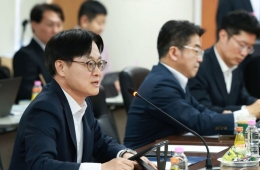
Keum Han-seung, First Vice Minister of Climate, Energy and Environment, said, "The current water management system, designed around past rainfall patterns, clearly has its limitations. We will expand water storage capacity and water sources, strengthen forecasting and monitoring, and prioritize vulnerable areas."
© The Asia Business Daily. All rights reserved. Unauthorized AI training and use prohibited.