Even If Wi-Fi Is Cut Off at CSAT Sites, It Won't Be Enough to Stop AI-Assisted Cheating (Roundup)
Alternative Communication Methods Such as 5G and LTE Remain Available
Restrictions on Signal Blocking... Urgent Need to Establish Systems

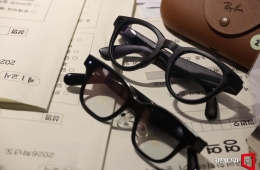
The government has decided to strengthen Wi-Fi management around College Scholastic Ability Test (CSAT) sites amid concerns that various smart devices, including AI glasses, could be used to cheat. However, questions have been raised about whether the measure will be effective, as it would be difficult to block communications entirely when examinees could still use 5G and LTE mobile networks even if Wi-Fi were disabled.
On November 17, the Ministry of Science and ICT said it would focus on strengthening Wi-Fi management, including considering blocking Wi-Fi at test sites ahead of the CSAT, and would coordinate with relevant ministries to pursue the measures. An official at the ministry said, "As concerns grow about cheating with AI devices ahead of the CSAT, we are discussing a range of technically feasible ways to prevent it. The government is carefully examining whether communications can be blocked, but completely cutting off communications at test sites is not realistically feasible because of relevant laws and potential side effects."
The government has proposed tighter management of public Wi-Fi as one possible measure, but critics say this would not be enough to prevent cheating in practice. An official at one telecommunications company said, "It is not technically difficult to block school and public Wi-Fi," adding, "However, it is questionable whether people planning to cheat would use public Wi-Fi, which is slower than 5G." An official at another telecommunications company said, "It is difficult to prevent cheating entirely when alternatives are available, such as 5G and LTE mobile networks or connecting devices to smartphones via Bluetooth."
The Ministry of Education initially said it would discuss blocking radio signals with the Ministry of Science and ICT, but later reversed course, saying it would be "difficult," after failing to account for technical and legal constraints. Under the Radio Waves Act, communications blocking is generally prohibited, and radio-wave blocking devices may be used only in exceptional cases stipulated by law for public safety. Concerns have also been raised that if telecommunications operators stop transmissions from base stations to block communications in a specific area, nearby homes and businesses could be affected, and side effects such as interference with emergency response could occur. In particular, jammers that disrupt communications on specific frequencies are illegal under current law, and it would be difficult to put the technical measures needed to block communications solely at CSAT test sites in place within a short time.
Lee Seongyeop, a professor at Korea University Graduate School of Management of Technology, said, "Even if public Wi-Fi is blocked, various other means of communication remain available, so it is difficult to prevent cheating completely." He added, "In the long term, we need to consider establishing a systematic system to block various smart devices, including by installing security checkpoints at test sites." Park Chunsik, a former professor in the Department of Information Security at Seoul Women's University, said, "The most urgent thing in practical terms is to strengthen training for test-site supervisors." He emphasized, "Supervisors should first familiarize themselves with the features of smart devices such as AI glasses so they can monitor examinees rigorously, and give clear verbal warnings in advance backed by strong measures to eradicate cheating."
Park Taejeong, a professor at KAIST, added, "With the rapid development of AI, government intervention in the public interest of the community is steadily increasing. If society reaches a consensus on the side effects of AI, as it did during the COVID-19 pandemic, the government should also consider actively reflecting that consensus in its policies."
Hot Picks Today
 "Two Spend 500,000 Won in a Flash, Yet Wait Two Hours?" ... 'Dreamland' Shunned by Kids and Foreign Tourists
- The Era of Getting 200 Million Won After 30 Years Is Over... A Japanese Bank's "Perpetual Department Head" Who Just Clocked In Cries Out
- Spain Hit by Its Worst Tragedy... Lee Kangin, Moreno and Real Madrid Join Soccer World in Mourning
- They Said, “Make It Your Home for Life” - Then Suddenly Kicked 200 Passengers Off... What Happened to the Around-the-World Cruise?
- "130 Rice Bowls Sold Out in a Day"... 'Unfiltered Face' Adds 8 Million Won to Night Market Sales: China's Bungeunwoo
Meanwhile, the Broadcasting Media Communications Commission said on November 17 that it shared concerns that miniature cameras and other devices could be misused to cheat on exams, undermining their fairness and credibility. It added that it would work with relevant organizations to prevent the online circulation of information that encourages cheating.
© The Asia Business Daily. All rights reserved. Unauthorized AI training and use prohibited.