"Stop Stealth Tax Hikes" ... 'Paycheck Defense Task Force' Launches, Reigniting Debate on Income Tax Inflation Indexing
Attention is turning to whether discussions on introducing inflation indexing for income tax will be revived as the "Paycheck Defense Task Force (TF)," aimed at boosting workers' real income, gets underway. The proposal has been rejected several times amid concerns over reduced tax revenue and tax cuts for high-income earners. But it is being raised again as prolonged high inflation fuels workers' discontent over "stealth tax hikes."

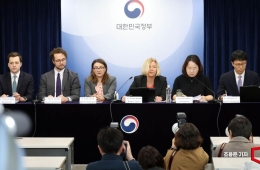
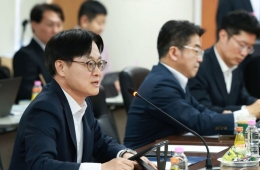
According to the Ministry of Finance and Economy on November 17, First Vice Minister Kwon Dae-young held the TF's first meeting with relevant government agencies on November 13 and began identifying new initiatives to increase workers' disposable income and reduce living costs. The meeting followed up on a gathering of senior presidential aides chaired by Presidential Chief of Staff Lim Kwang-hyun on November 9.
The central question is whether to introduce inflation indexing for income tax. The system would automatically raise tax bracket thresholds each year in line with consumer price inflation, easing the tax burden. South Korea's earned income tax currently has eight progressive brackets, ranging from 6% on taxable income of 14 million won or less to 45% on income exceeding 1 billion won. This can lead to "bracket creep": even when real wages remain unchanged because of inflation, workers face higher tax rates because their nominal wages have risen. According to the National Assembly Budget Office, total gross salaries subject to taxation grew by an average of 6.1% per year over the past decade (2014-2024), while earned income tax revenue rose by an average of 9.2% annually. This has prompted criticism that the government is raising taxes stealthily by increasing revenue without revising the law. South Korea last adjusted all tax brackets in 2008 and made a partial adjustment limited to lower brackets in 2022.
In February 2025, the Democratic Party of Korea established the Paycheck Defense Task Force under its then-leader Lee Jae-myung and called for changes to the income tax inflation-indexation system. Lim, who led the TF at the time, said, "Introducing the system would reduce tax revenue, but it's questionable whether it's right to make up for a revenue shortfall by raising taxes on salaried workers." He also emphasized that 22 of the 38 OECD member countries had adopted the system.
The rationale for indexing income tax to inflation is clear, but the proposal has repeatedly failed to advance. Tax authorities have maintained a negative stance until recently. Lee Hyeong-il, Deputy Prime Minister and Minister of Finance and Economy, said at a parliamentary audit last October, "If the tax brackets are adjusted, the benefits will be far more concentrated among high-income earners." In other words, a comprehensive adjustment would mainly benefit high-income earners, who have a greater ability to pay taxes.
The case for caution is also bolstered by the low effective income tax rate by international standards. According to the OECD, in 2027, South Korea's effective income tax rate for a single worker with no children, measured as a share of gross salary, will be 7.1%, less than half the OECD average of 15.5%. Moreover, as of last year, 32.5% of wage earners, or 6.84 million people, paid no income tax, inevitably adding to the fiscal authorities' burden.
Hot Picks Today
 "Two Spend 500,000 Won in a Flash, Yet Wait Two Hours?" ... 'Dreamland' Shunned by Kids and Foreign Tourists
- The Era of Getting 200 Million Won After 30 Years Is Over... A Japanese Bank's "Perpetual Department Head" Who Just Clocked In Cries Out
- Spain Hit by Its Worst Tragedy... Lee Kangin, Moreno and Real Madrid Join Soccer World in Mourning
- They Said, “Make It Your Home for Life” - Then Suddenly Kicked 200 Passengers Off... What Happened to the Around-the-World Cruise?
- "130 Rice Bowls Sold Out in a Day"... 'Unfiltered Face' Adds 8 Million Won to Night Market Sales: China's Bungeunwoo
Lim, who previously led the Democratic Party's Paycheck Defense Task Force, also proposed measures beyond income tax inflation indexing, including ▲raising the basic deduction from 1.5 million won to 1.8 million won per person ▲increasing the monthly tax-exempt meal allowance limit from 200,000 won to 300,000 won ▲raising the age limit for the basic child deduction from 20 to 25 ▲introducing a tax credit for fees paid to arts and sports academies for elementary and middle school students.
© The Asia Business Daily. All rights reserved. Unauthorized AI training and use prohibited.