AI Cheating Sends Shockwaves... 3 Days Before CSAT, Education Sector on High Alert: "No CSAT Postponement"
On Nov. 16, officials demonstrated how to detect cheating with smart glasses... relying on visual inspections
One or two dedicated staff members to be assigned to each of 1,312 CSAT test sites
No additional staff despite controversy over cheating at the tax accountant exam
"We will step up monitoring of micro cameras and other electronic devices, not just smart glasses."
"When you wear smart glasses and solve the questions, you have to tilt your head down excessively. When solving long reading passages in Korean, you take pictures diagonally (because you have to photograph the entire question), and the lenses then display a fluorescent color or a hatched pattern."
Three days before the 2027 College Scholastic Ability Test (CSAT), the Ministry of Education demonstrated on the 16th how cheating using AI-equipped smart glasses could be detected. After multiple cases of cheating with smart glasses were uncovered in middle and high school exams across the country this year, the top scorer in a recent tax accountant exam also admitted to using a micro camera and AI. This has put education authorities on high alert just days before the CSAT.
A demonstration held that day at the Government Complex Sejong recreated a cheating scenario involving smart glasses and gave participants the chance to try products from Rokid, the most widely sold brand in South Korea, and Meta.

On the 16th, three days before the 2027 College Scholastic Ability Test, the Ministry of Education staged a demonstration of how cheating using AI-enabled smart glasses could be detected. Reporter Oh Jooyeon
View original imageThe smart glasses I tried on differed somewhat from regular glasses in appearance and weight. They looked like thick-rimmed glasses, but had thicker temples and a small camera attached to the left side to photograph and transmit exam questions. The camera's position may vary by product. To turn on the smart glasses, you have to press the power button on one of the temples, which makes a "click" sound. When the glasses were connected to a smartphone, they could photograph the exam paper in front of you as you looked down at it.
When a Ministry of Education official demonstrated cheating by wearing smart glasses and taking an exam, their body began to lean toward the exam paper while they checked its contents and obtained answers. However, it was unclear whether one invigilator could immediately recognize such unnatural posture as cheating while monitoring many students in a classroom.

On Nov. 11, officials from eyewear companies demonstrate smart glasses at the Seoul Metropolitan Office of Education in Yongsan-gu, Seoul, ahead of training for headquarters personnel assigned to oversee smart glasses at the 2026 College Scholastic Ability Test, which is eight days away. 2026.11.11. Photo by Kang Jinhyung
View original image
On Nov. 11, eight days before the 2027 College Scholastic Ability Test (CSAT), training was held at the Seoul Metropolitan Office of Education in Yongsan-gu for all 239 staff members assigned to operate smart glasses at test sites in Seoul. Nov. 11, 2026. Photo by Kang Jinhyeong.
View original imageAccording to the Ministry of Education, there were four cases of cheating involving smart glasses in middle and high school exams this year. As such cheating has been confirmed in actual school exams, the ministry plans to strengthen enforcement during the CSAT as well. All electronic devices, including smart glasses, are prohibited. Simply wearing smart glasses is considered cheating: the exam being taken is invalidated, and the student is barred from taking the CSAT the following year. At a plenary meeting of the National Assembly's Education Committee that day, Education Minister Choi Kyo-jin stressed these sanctions and penalties, saying, "We will work with the National Assembly to pursue a legislative amendment that extends the period of ineligibility from the current one year to three years."
At least one staff member assigned to identify smart glasses will be stationed at each of the country's 1,312 CSAT test sites. Two staff members will be assigned to sites with 20 or more exam rooms. However, no additional staff were hired following the cheating incident at the tax accountant exam.
When a regular exam-room invigilator spots a device suspected of being smart glasses, a designated staff member will inspect it and determine whether it is prohibited. The Seoul Metropolitan Office of Education held training for 239 designated headquarters staff on Nov. 11 and plans to assign one or two staff members, depending on the size of the school, to each of 228 test sites in Seoul. It also briefed regular CSAT invigilators on precautions related to smart glasses.
Concerns have also been raised about the effectiveness of enforcement, since staff must rely on visual inspections without specialized detection equipment. With more than 550,000 students taking the exam at 1,312 test sites nationwide, how effectively regular invigilators and staff assigned to detect smart glasses can respond will be crucial.

Eight days ahead of the 2026 College Scholastic Ability Test, training was held on Nov. 11 at the Seoul Metropolitan Office of Education in Yongsan-gu, Seoul, for headquarters staff assigned to the CSAT smart glasses program. The photo shows the smart glasses used in the training. Nov. 11, 2026. Photo by Kang Jinhyeong
View original imageAnother concern is that methods of cheating using AI are not limited to smart glasses.
The top scorer in this year's tax accountant exam took both the first and second stages by photographing exam questions with a micro camera and then using generative AI and a smartphone. Two invigilators were assigned to each of the first and second stages, but they did not detect the cheating. At a high school in Yangcheon-gu, Seoul, allegations also emerged that more than 170 students had used generative AI for an in-class Korean performance assessment. All 249 students have decided to retake the test. (See our Nov. 9 article.)
As AI-assisted cheating emerges through various channels, including not only smart glasses but also micro electronic devices and digital devices used for school assessments, some say the entire exam supervision system needs to be reviewed, rather than focusing enforcement on specific devices.
A Ministry of Education official said, "For decades, the CSAT has been supervised more rigorously than any other exam," adding, "The rules cover everything from the requirement to submit personal belongings and what can be placed on the desk to even water bottles." The official added, "We will ensure that cheating involving recently prominent devices such as smart glasses and micro cameras is also thoroughly monitored."
Some have called for the CSAT to be postponed, saying the tax accountant exam cheating case has raised the possibility of cheating with various smart devices, not just smart glasses. However, a Ministry of Education official said, "We are not considering postponing the CSAT."
Meanwhile, from that day through Nov. 18, the Ministry of Education will distribute CSAT question papers and answer sheets to 85 test districts nationwide. Police will escort them during transport, and the papers and answer sheets will be stored at separate locations in each test district until the day before the exam. They are scheduled to be transported to the country's 1,312 test sites on the morning of Nov. 19, the day of the exam.
Related Articles
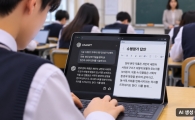 [Exclusive] More Than 170 Seoul High School Students Suspected of 'AI Cheating' on Korean Assessment... All to Retake It
A total of 551,864 students registered for this year's CSAT, down 2,310 from last year. However, the number of repeat test-takers, including high school graduates and students who passed the high school equivalency exam, reached 196,473, the highest in 23 years. They accounted for 35.6% of all applicants, the highest share in 31 years. Analysts say the large number of repeat test-takers reflects the fact that this is the last CSAT under the current elective-subject system, as well as the introduction of the regional doctor system.
© The Asia Business Daily. All rights reserved. Unauthorized AI training and use prohibited.