821 Trillion Won Budget Moves to Budget Subcommittee... Battle Over Whether Future Fund Is a Political Slush Fund
D-17 Until the Statutory Deadline for Passing the Budget
As the National Assembly begins its detailed review of next year's 820 trillion won budget proposal, the 162 trillion won Future Response Fund has emerged as a flashpoint in the budget battle. The National Assembly's Special Committee on Budget and Accounts will hold subcommittee meetings from November 16 to 20 to review proposed increases and cuts, and plans to approve the budget at a full committee meeting on November 30. About 17 days remain until the December 2 statutory deadline. The Democratic Party says it will push to pass the budget on time while preserving the total budget and the 162 trillion won Future Response Fund. The People Power Party, however, is gearing up to abolish the fund and cut more than 27 trillion won from the original proposal, setting the stage for intense wrangling. To meet the statutory deadline, the key negotiations will effectively need to take place this week.

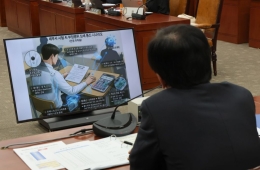
A review of next year's budget proposals for non-economic ministries is underway in the National Assembly Budget and Accounts Committee meeting room on the 11th. Nov. 11, 2026. Reporter Yoon Dongju
View original image17 Days Until Statutory Deadline: Parties Deadlocked Over Future Fund
The biggest point of contention in this year's budget review is whether to establish the 162.3 trillion won Future Response Fund. The People Power Party has stepped up its offensive by calling for the fund's abolition, but divisions have emerged within its own ranks. Some party lawmakers have reportedly sought increases for fund projects related to their constituencies: Kim Tae-gyu requested an additional 4 billion won for personnel costs at the Ulsan National Institute of Science and Technology (UNIST), while Yoon Yong-geun called for an additional 3.2 billion won for design costs at the Chungnam Science Academy. Cho Seung-hwan also requested an additional 38.4 billion won for a support project to modernize coastal fishing vessels, and Lee Jin-sook sought an additional 800 million won for research and operating expenses at the Daegu Gyeongbuk Institute of Science and Technology.
The total amount of increases that opposition lawmakers have requested from the government for fund-related projects is said to exceed 20 trillion won. People Power Party floor leader Jeong Jeom-sik belatedly ordered lawmakers to withdraw their requests for increases. The Democratic Party, however, has intensified the standoff by calling for increases of more than 25 trillion won, including 11 trillion won for local future growth support and 9.5 trillion won in sovereign wealth fund contributions to invest in strategic industries such as semiconductors. It accused the opposition of "calling for the fund's abolition while privately seeking increases for its projects."
The parties are also at odds over the transparency of fund operations and the National Assembly's oversight authority. Under the current government proposal, the government could, without separate approval from the National Assembly, arbitrarily increase or redirect 30% of next year's Future Response Fund program spending of 45.4 trillion won, or 13.62 trillion won. This is considered a poison-pill provision that could undermine the legislature's budget review and oversight functions. This has strengthened calls during the Budget Committee's review to sharply lower the discretionary rate and restore the National Assembly's control over the budget.
The Fund's Purpose Also Under Scrutiny...Existing Programs May Be Transferred
The fund's fundamental purpose has also come under scrutiny. Critics have long argued that, contrary to its stated purpose of investing in the future, more than half of its budget is simply repackaged funding for existing programs under new names. A breakdown of the 45.4 trillion won budget for next year's Future Response Fund shows that 58.4% of the total, or 26.4959 trillion won, consists of funding transferred from existing accounts and funds or allocated by consolidating or splitting existing programs. Purely new programs account for only about 18.9 trillion won.
Notable examples include rigid, recurring expenditures such as the Basic Child Allowance, childcare teacher personnel costs, and the Youth Future Savings Account, which have been folded into the fund in large numbers under the banner of responding to future needs. As a result, political circles and others have raised concerns that putting recurring spending programs into a fund under that label runs counter to its purpose and could turn it into a political slush fund. With the parties at odds over whether the fund should continue, its 45.4 trillion won in program spending and the rules governing its operation are expected to be up for adjustment during the final budget negotiations.
Hot Picks Today
 "Two Spend 500,000 Won in a Flash, Yet Wait Two Hours?" ... 'Dreamland' Shunned by Kids and Foreign Tourists
- The Era of Getting 200 Million Won After 30 Years Is Over... A Japanese Bank's "Perpetual Department Head" Who Just Clocked In Cries Out
- Spain Hit by Its Worst Tragedy... Lee Kangin, Moreno and Real Madrid Join Soccer World in Mourning
- They Said, “Make It Your Home for Life” - Then Suddenly Kicked 200 Passengers Off... What Happened to the Around-the-World Cruise?
- "130 Rice Bowls Sold Out in a Day"... 'Unfiltered Face' Adds 8 Million Won to Night Market Sales: China's Bungeunwoo
This Week a Turning Point for Key Negotiations Over Future Fund
The statutory deadline for passing the budget is December 2. To pass it by the deadline, the key negotiations must take place between November 16 and 20. If the parties fail to find common ground this week on the points of contention and the direction of adjustments—including the size of the Future Response Fund, the scope of cuts, and how to handle local share taxes—the subcommittee's review could be pushed into the latter part of the month, potentially disrupting both the November 30 full committee meeting and passage at the December 2 plenary session. A political source said, "With the parties deadlocked over the Future Response Fund and contentious bills, if they fail to establish a framework for agreement early on, the later schedule could come under intense pressure, significantly reducing the chances of passing the budget by the statutory deadline."
© The Asia Business Daily. All rights reserved. Unauthorized AI training and use prohibited.