[Law & Story] A Troubling Seventh Special Counsel
All eight cases in President Lee's trials are investigation targets
Could be overturned through "cancellation of indictments"
Granting investigative powers to assigned prosecutors under the former law may be unconstitutional

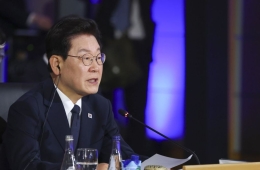
The bill to promulgate the Special Counsel Act on Fabricated Indictments, passed by the National Assembly under the leadership of the Democratic Party of Korea, is scheduled to be submitted to a Cabinet meeting on Nov. 17. At the meeting, chaired by Prime Minister Han Seongsuk in place of President Lee Jae-myung, who is on an overseas trip, the promulgation bill is expected to pass. If President Lee gives his approval, it will take effect immediately.
Following the insurrection special counsel, the Kim Keon Hee special counsel, the special counsel for the Marine who died in the line of duty, the standing special counsel for the Gwanbonggwon-Coupang case, the second comprehensive special counsel, and the election commission special counsel, this will be the seventh special counsel appointed under this administration.
When suspicions have been raised and circumstances make it difficult to expect an independent investigation by existing investigative agencies such as the police or the prosecution, it is essential to uncover the truth through a special counsel and bring those involved to trial. But a special counsel is, by definition, a sword to be drawn only in exceptional circumstances. If investigations by special counsels appointed under the ruling party's leadership continue throughout the year, they may cease to be special counsels and instead become a team carrying out investigations ordered by the administration to pursue the results it wants. The scenes in trials over cases indicted by Kwon Chang-young's second comprehensive special counsel, whose appointment was pushed through despite widespread concerns, in which prosecutors are repeatedly reprimanded by judges for shoddy indictments or misapplication of the law, starkly show how dangerous it is to conduct an investigation with its conclusion already decided.
Above all, the Special Counsel Act on Fabricated Indictments has far too many problems in its own right. All eight cases across the five trials involving President Lee are included in its scope of investigation: Daejang-dong, Wirye New Town, Baekhyeon-dong, Seongnam FC, the alleged remittance to North Korea by Ssangbangwool, the alleged witness tampering involving Kim Jin-seong, and the alleged misuse of Gyeonggi Province's corporate credit card.
In particular, the scope of the investigation includes the public official election law violation case related to the Daejang-dong and Baekhyeon-dong development projects, which the Supreme Court en banc has already overturned and remanded with the view that the defendants were guilty. If this special counsel law, whose very name uses the categorical terms "fabricated investigations and fabricated indictments," takes effect, a special counsel investigation could reverse cases in which the prosecution has brought charges or a court has found the defendants guilty, potentially undermining confidence in the criminal justice system as a whole.
The same applies to the other cases. The Democratic Party cites the findings of earlier parliamentary investigations as justification for appointing a special counsel, but neither the parliamentary investigations nor the Ministry of Justice's fact-finding inquiry has revealed any concrete unlawful or illegal acts by prosecutors. On the contrary, Lee Hwa-young, former vice governor of Gyeonggi Province, who claimed that a prosecutor tried to coax him during a salmon-and-alcohol party, was convicted of perjury under the Act on Testimony and Appraisal before the National Assembly for related remarks. In response to public opinion, the party removed "deciding whether to maintain indictments" from the special counsel's duties, where it had originally been included in the bill. But that still does not go far enough to dispel public doubts about the purpose of establishing the special counsel.
It has been only a month and a half since the prosecution service was abolished and the Serious Crimes Investigation Agency and the Public Prosecution Office were established, on the grounds that prosecutors should not hold both investigative and indictment powers. Yet it is difficult to see what justification there could be for allowing Public Prosecution Office prosecutors assigned to the special counsel team investigating cases involving President Lee to conduct investigations as well as bring indictments. There are also constitutional concerns from a legal standpoint: with the Criminal Procedure Act amended and prosecutors' authority to conduct direct investigations abolished, granting investigative authority to prosecutors assigned to the special counsel through a special provision applying the pre-amendment Criminal Procedure Act, which has already ceased to have effect, may be unconstitutional.
Hot Picks Today
 "Two Spend 500,000 Won in a Flash, Yet Wait Two Hours?" ... 'Dreamland' Shunned by Kids and Foreign Tourists
- The Era of Getting 200 Million Won After 30 Years Is Over... A Japanese Bank's "Perpetual Department Head" Who Just Clocked In Cries Out
- Spain Hit by Its Worst Tragedy... Lee Kangin, Moreno and Real Madrid Join Soccer World in Mourning
- They Said, “Make It Your Home for Life” - Then Suddenly Kicked 200 Passengers Off... What Happened to the Around-the-World Cruise?
- "130 Rice Bowls Sold Out in a Day"... 'Unfiltered Face' Adds 8 Million Won to Night Market Sales: China's Bungeunwoo
With the prosecution service abolished for the first time in 78 years and new investigative agencies established, frontline staff are facing greater confusion than ever. The police, overwhelmed by a surge in cases, are struggling to process them on time even when working overtime, while members of the public who have suffered crimes are enduring delays in investigations. At a time when all available resources should be focused on establishing the new criminal justice system as quickly as possible, I wonder how much it serves the national interest to draw more than 300 personnel away to investigate the prosecutors who handled cases in which the president is on trial. A sword drawn too often grows dull, and a dull sword cuts the wrong things. That is why the seventh special counsel is cause for concern.
© The Asia Business Daily. All rights reserved. Unauthorized AI training and use prohibited.