Lee Publicly Warns Against "Obstructing Reform": "Judge Whether It Needs to Be Done, Not by Approval Ratings"
"Difficult to tolerate using the name of reform to obstruct reform"
"Must be proven through results achieved by putting it into action"
President Lee Jae-myung said on Nov. 15, "It is difficult to tolerate using the name of reform to obstruct reform." Citing real estate and tax reforms, the consolidation and relocation of public institutions, and other measures as reform priorities, Lee stressed that the first question should be whether a measure is necessary for the people, even if his approval rating falls.

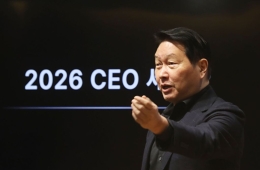
President Lee Jae Myung speaks about revitalizing the capital market at a policy meeting on capital markets in Yeouido, Seoul, on Nov. 13, 2026. Yonhap News Agency
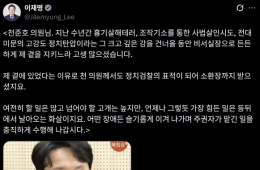
View original imageLee made the remarks in a post titled "Not Words, but Action" on X (formerly Twitter) that day. "True reform is unpopular and cannot avoid opposition from numerous stakeholders," he wrote. "If we are going to talk about reform, we should first consider whether something needs to be done, rather than criticize someone for taking action that lowers their approval rating."
He also warned public figures who invoke reform and the greater good against capitalizing on the resulting opposition or obstructing reform. Lee cited "national prosperity and public welfare" as the standard for judging reform, saying that it "must be proven through results achieved by putting it into action."
Lee mentioned economic reform to restore growth, livelihood-focused reform to ease polarization, and real estate reform to address a problem he described as ruinous to the nation. He also listed tax and fiscal reform; the consolidation and relocation of public institutions; prosecution and police reform to ensure fair investigations; and defense reform to enable the country to defend itself. These tasks, he said, are "so large and numerous that they cannot all be resolved even if we work at full capacity, around the clock, 24/7, every day of the year, until the day my presidential term ends."
At a Cabinet meeting on Nov. 10, Lee also called for accelerating reform of public institutions. He said the interests of individual institutions must not stand in the way of reform and instructed ministries to develop incentives to expedite structural reforms. He also asked the prime minister to lead discussions directly on issues where disagreements between ministries and institutions were delaying coordination.
Hot Picks Today
 "Two Spend 500,000 Won in a Flash, Yet Wait Two Hours?" ... 'Dreamland' Shunned by Kids and Foreign Tourists
- The Era of Getting 200 Million Won After 30 Years Is Over... A Japanese Bank's "Perpetual Department Head" Who Just Clocked In Cries Out
- Spain Hit by Its Worst Tragedy... Lee Kangin, Moreno and Real Madrid Join Soccer World in Mourning
- They Said, “Make It Your Home for Life” - Then Suddenly Kicked 200 Passengers Off... What Happened to the Around-the-World Cruise?
- "130 Rice Bowls Sold Out in a Day"... 'Unfiltered Face' Adds 8 Million Won to Night Market Sales: China's Bungeunwoo
Lee did not name any specific individuals or political parties in his post. On the night of Nov. 14, he shared a video of Assemblyman Chun Jun-ho, who served as his chief of staff when he was leader of the Democratic Party of Korea, and wrote, "As always, the hardest arrows to bear are those that come from behind." In the Democratic Party of Korea, a dispute between factions continues over remarks by Supreme Council member Choi Min-hee that Lee opposed the impeachment of former President Yoon Suk Yeol when he was party leader. The presidential office has denied the claim, calling it baseless, and party leader Kim Min-seok has ordered an ethics review.
© The Asia Business Daily. All rights reserved. Unauthorized AI training and use prohibited.