"Generative AI Poses New Challenges for Platforms... Reliable Content and Creator Compensation Matter"
Korea Media Management Association Special Seminar
"A virtuous cycle that encourages continued creation is imperative"

Professor Jung Yunhyuk of Korea University presents on compensation policies for content providers at AI companies. Photo provided by Naver.
View original imageIt was argued that for AI search on platforms to be sustainable, it must provide reliable answers while also preserving creators' incentive to contribute the original content those answers draw on. Generative AI search reduces the cost of finding information for users, but also creates new challenges for the original-content ecosystem, including bias in source selection and exposure and fewer clicks through to original content. Analysts say this makes changes to the strategies of existing platforms inevitable.
On November 13, discussions on building a sustainable content ecosystem in the age of generative AI took place at a special seminar hosted by the Korea Media Management Association at the HJ Business Center in Gwanghwamun, Seoul, under the theme "AI Platforms and a Sustainable Content Ecosystem."
Kim Gyeongoe, a professor at Yonsei University's College of Liberal Arts and Sciences, said, "The fact that AI has made content easier and less costly to produce means that anyone can now create content, and competition has intensified. As anyone can use AI to create similar content, AI-generated content alone is unlikely to be competitive."
Professor Kim said, "As we encounter AI-generated content more often in our daily lives, we are experiencing sooner than expected an era in which people see little need to assign additional value to content or provide extra compensation for it. Ultimately, identifying creators who produce useful content that people can trust and rely on, and supporting them so they can continue to receive compensation and create better content, can provide the foundation for growth across the entire content ecosystem."

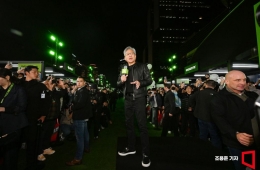
Panelists speak at a special seminar hosted by the Korea Media Management Association at the HJ Business Center in Gwanghwamun, Seoul, on the theme “AI Platforms and a Sustainable Content Ecosystem.” Provided by Naver.
View original imageThe seminar presented the results of a survey conducted by a research team led by Jung Yoonhyuk, a professor at Korea University's Media College. The survey covered 100 creators and 200 users of AI search and chatbots. According to the results, 77% of respondents said that human experience and expertise would be difficult to replace entirely with AI summaries, while 87% of creators said it was important for their contributions to be clearly recognized in AI search. The survey also found that creators and users alike most preferred a compensation model in which individual creators are paid directly for the use of their content by AI companies.
Professor Jung said, "For AI search to be sustainable, it is important to create a virtuous cycle in which good answers and good source content support each other. To maintain creators' incentive to participate, policies need to ensure that creators receive value in return for their contributions and that users are informed of those contributions."
As a specific example of creator compensation, Naver's creator-AI fellowship program, Naver Mate, launched in June, was introduced. Naver Mate selects participants from among creators on Blog, Cafe, Knowledge iN, and Premium Contents, based on their contributions to AI services, and provides benefits such as activity support funds.
"MJ's Hudadak Recipe," a creator participating in Naver Mate, said, "Naver Mate motivates creators to reflect on the direction of their writing and the quality of their content. Feeling that their experience and value have been recognized gives them the drive to continue creating. However, it is disappointing that the diverse experiences and expertise creators have built up over many years are sometimes reduced to a line or two in AI answers, and that the context and depth of their content are not fully conveyed."
The creator added, "I believe creators should be able to find more opportunities through AI search and build trusted brands based on their own expertise and experience. If AI answers convey the richness of the content and link to the original blog post, allowing users to gain a deeper understanding of and trust in the creator's experience and perspective, this can create a virtuous cycle that leads to the creator producing new content."
Hot Picks Today
 "Two Spend 500,000 Won in a Flash, Yet Wait Two Hours?" ... 'Dreamland' Shunned by Kids and Foreign Tourists
- The Era of Getting 200 Million Won After 30 Years Is Over... A Japanese Bank's "Perpetual Department Head" Who Just Clocked In Cries Out
- Spain Hit by Its Worst Tragedy... Lee Kangin, Moreno and Real Madrid Join Soccer World in Mourning
- They Said, “Make It Your Home for Life” - Then Suddenly Kicked 200 Passengers Off... What Happened to the Around-the-World Cruise?
- "130 Rice Bowls Sold Out in a Day"... 'Unfiltered Face' Adds 8 Million Won to Night Market Sales: China's Bungeunwoo
Choi Hanbyeol, a professor in the Department of Management Information Systems at Dong-A University, said, "Compensation for content in the AI era should not be limited to simply paying for the use of content. The volume, quality, and diversity of content produced can vary depending on what is recognized as a contribution and which creative activities are rewarded." Professor Choi added, "The key to a sustainable AI content ecosystem is to create a virtuous cycle that encourages creators to continue creating by combining transparent and fair financial compensation with social recognition and trust."
© The Asia Business Daily. All rights reserved. Unauthorized AI training and use prohibited.