Foreign Media: "Alice Huang Is Agent in 'Chip Team,' Semiconductor Unit of China's Top Intelligence Agency"
"A Lobbying Effort in Washington to Push for Easing Semiconductor Export Restrictions"
Could Be a State-Level Intelligence Operation Orchestrated by China's Top Leadership
A report has emerged that Alice Huang (Chinese name: Huang Le), who has been linked to an alleged affair with former Nvidia CEO Jensen Huang, belongs to an operations unit specializing in semiconductors within China's Ministry of State Security, the country's top intelligence agency.

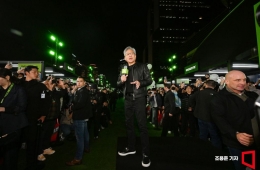
Jensen Huang, former CEO of Nvidia, and Alice Huang, who is suspected of being a Chinese spy. Screenshot from social media.
View original imageAccording to foreign media reports on the 11th (local time), Taiwan's Liberty Times, citing information obtained by the U.S. side and anonymous sources, reported that it had learned Alice Huang was a member of the so-called "Chip Team," a unit specializing in semiconductors under China's Ministry of State Security.
According to the report, Chinese authorities activated a secret, government-wide operations unit to obtain advanced U.S. technologies, including artificial intelligence (AI), and assigned Alice Huang a frontline role in disrupting Nvidia's internal semiconductor supply chain. There were also allegations that she sought to persuade the United States to ease semiconductor export restrictions on China through lobbying efforts in Washington, with Jensen Huang at the forefront.
Liberty Times claimed, "China took note of the fact that Nvidia could benefit more from eased restrictions and sought to use Jensen Huang as a channel for lobbying the U.S.," adding, "To that end, Alice Huang was tasked with developing a close relationship with Jensen Huang and persuading him to urge the U.S. government to ease restrictions on China's behalf."
In fact, the Trump Administration allowed Nvidia to resume exports of its H20 semiconductors to China last year, and partially eased export restrictions on its high-performance H200 semiconductors this January. However, it has not been confirmed to what extent the U.S. easing of semiconductor restrictions on China was connected to Alice Huang's activities.
There were also allegations that China tasked Alice Huang with setting up shell companies in third countries and helping to arrange indirect procurement of semiconductors and high-performance servers that Chinese companies would find difficult to purchase directly. Hong Kong-based media outlet hk01 also reported that after Alice Huang resigned as a director of Singaporean company Megaspeed in 2024, its Indonesian subsidiary reportedly imported Nvidia chips and data center equipment for VFO International, a Hong Kong company owned by Alice Huang.
As various allegations about Alice Huang's activities continue to emerge, some analysts have suggested that the case may be part of a state-level intelligence operation orchestrated by China's top leadership to weaken U.S. dominance in AI technology.
Christopher Johnson, president of China Strategies Group, who spent 20 years handling China-related issues at U.S. intelligence agencies, said in an interview with U.S. public broadcaster PBS on the 9th (local time), "China is deeply concerned about the fundamental pressure created by U.S. controls on advanced semiconductor exports." He added, "When China sets a national strategic objective, it uses every means available to achieve it, including purchasing or stealing technology."
Hot Picks Today
 "Two Spend 500,000 Won in a Flash, Yet Wait Two Hours?" ... 'Dreamland' Shunned by Kids and Foreign Tourists
- The Era of Getting 200 Million Won After 30 Years Is Over... A Japanese Bank's "Perpetual Department Head" Who Just Clocked In Cries Out
- Spain Hit by Its Worst Tragedy... Lee Kangin, Moreno and Real Madrid Join Soccer World in Mourning
- They Said, “Make It Your Home for Life” - Then Suddenly Kicked 200 Passengers Off... What Happened to the Around-the-World Cruise?
- "130 Rice Bowls Sold Out in a Day"... 'Unfiltered Face' Adds 8 Million Won to Night Market Sales: China's Bungeunwoo
He said the case may also have been part of a broader influence operation aimed at preventing further U.S. restrictions on semiconductor exports by exploiting the close relationship between Jensen Huang and President Trump. "China's Ministry of State Security often identifies people close to its target and uses them to influence the ultimate target," he said.
© The Asia Business Daily. All rights reserved. Unauthorized AI training and use prohibited.