Andong Medical Center Faces Closure Risk as Equity Falls 60% in a Year... Provincial Councilor Park Chaea Urges, "Draw Up Measures"
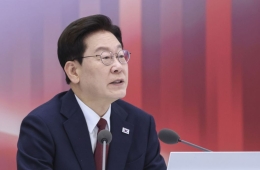
Park Chaea, a member of the Gyeongsangbuk-do Provincial Council (People Power Party, Gyeongsan 4), expressed serious concern about the possibility that Andong Medical Center could become fully capital-impaired during a November 12, 2026, administrative audit of the center. She called on Gyeongsangbuk-do to draw up fundamental measures to stabilize its finances and establish a medium- to long-term operational plan.
According to Andong Medical Center's 2025 financial statements, it recorded a net loss of 5.38834 billion won last year. Its total equity fell from 8.9349 billion won in 2024 to 3.5 billion won in 2025, a decline of 60.3% in just one year.

If the center incurs a net loss in 2026 of the same magnitude as the previous year and there are no separate changes in capital, such as additional contributions, its total equity is projected to fall to negative 1.8 billion won by year-end. This could leave the center fully capital-impaired, with liabilities exceeding assets, underscoring the urgent need for preemptive action.
"It is a serious problem for a medical center responsible for public healthcare in the region to be at risk of becoming fully capital-impaired," Park said. "The situation could disrupt payments for basic operating expenses and staff salaries as early as 2027." She urged Gyeongsangbuk-do to comprehensively analyze the causes of accumulated losses and the center's operating structure and draw up effective measures to stabilize its finances.
Park called for the center to distinguish between structural losses resulting from the provision of public healthcare and factors that can be addressed through management improvements, and to establish a phased action plan ranging from short-term responses to the financial crisis to medium- and long-term management normalization. She also said Gyeongsangbuk-do should consistently monitor progress by clearly specifying management improvement goals, deadlines, and those responsible for implementation.
Park presented three options for Andong Medical Center's future operations: relocating to and constructing a new facility in the provincial government complex city; keeping the current site and building a separate Gyeongkuk University hospital; or integrating with or transitioning into a Gyeongkuk University hospital.
Hot Picks Today
 "Two Spend 500,000 Won in a Flash, Yet Wait Two Hours?" ... 'Dreamland' Shunned by Kids and Foreign Tourists
- The Era of Getting 200 Million Won After 30 Years Is Over... A Japanese Bank's "Perpetual Department Head" Who Just Clocked In Cries Out
- Spain Hit by Its Worst Tragedy... Lee Kangin, Moreno and Real Madrid Join Soccer World in Mourning
- They Said, “Make It Your Home for Life” - Then Suddenly Kicked 200 Passengers Off... What Happened to the Around-the-World Cruise?
- "130 Rice Bowls Sold Out in a Day"... 'Unfiltered Face' Adds 8 Million Won to Night Market Sales: China's Bungeunwoo
"The future of Andong Medical Center must not remain uncertain amid a major change in the medical environment, namely the establishment of a university hospital," Park said. "In deciding on an operational plan, such as relocation or integration, a consultative body should be formed with Andong residents, local political and administrative figures, and medical center staff, and their views should be fully considered. The accessibility of current patients, including older adults and people with mobility difficulties, must be carefully assessed. Measures should also be prepared to ensure that whichever option is pursued, the region's public healthcare services are not weakened and there are no gaps in medical care."
© The Asia Business Daily. All rights reserved. Unauthorized AI training and use prohibited.