Reconstruction Charges Amid Abolition Debate... Will Government Make Targeted Adjustments?
Land Minister Says System Needs Review
Public Opinion Divided Over Reconstruction Charges
Potential Changes to Calculation and Payment Methods
Hong Jiseon, Minister of Land, Infrastructure and Transport, said there were “matters that need to be reviewed comprehensively” regarding the Reconstruction Excess Profit Recovery System, which imposes a charge on gains from reconstruction projects. With attention focused on when the charges under the system will be imposed, the minister has officially acknowledged the need for a review. The Ministry of Land, Infrastructure and Transport believes that implementing the system as originally scheduled could have a considerable impact on the market and has begun examining it from various angles.
At a plenary meeting of the National Assembly’s Land, Infrastructure and Transport Committee on November 12, Minister Hong responded to a question from People Power Party lawmaker Kim Eun-hye about abolishing the system, saying, “I don’t think it is a matter of deciding that a policy is unconditionally right or wrong. There are effects on stabilizing housing market prices, as well as concerns about infringement of individual property rights, so there are matters that need to be reviewed comprehensively.” In June 2024, Kim introduced a bill to repeal the Act on Restitution of Excess Rebuilding Gains.

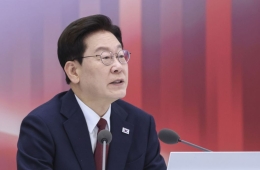
Hong Jiseon, Minister of Land, Infrastructure and Transport, delivers an explanation of the 2027 budget bill and fund management plan at a plenary meeting of the National Assembly's Land, Infrastructure and Transport Committee on the 12th. Yonhap News
View original imageMinister Hong’s remarks are being interpreted as signaling the possibility of revising the current system. The Ministry had previously been conducting a legal review of the deadline for imposing reconstruction charges. As the deadline for the first such charge on an apartment complex in Seoul’s Gangnam area approaches, local governments have asked the Ministry to clarify the issue amid ambiguity in the interpretation of the law. With public opinion sharply divided over the charges and the need to assess their overall impact on the market, there is growing expectation that the deadline may be postponed once again.
The Democratic Party did not take a clear position on reconstruction charges during last year’s presidential election. President Lee Jae-myung has also not made his position clear since taking office. However, given that he has expressed criticism through various channels of specific groups or individuals privatizing development gains, the market expects the government to adopt a “implement first, improve later” approach to the reconstruction charge system. At the same time, the government is focused on increasing housing supply, and the possibility that imposing the charges could send a negative signal to the market is a concern.

A reconstruction site at an apartment complex in Seocho-gu, Seoul. Yonhap News Agency
View original imageIf the system is revised, possible changes could include the method for calculating the charges and payment arrangements. In response to Democratic Party lawmaker Ahn Tae-jun’s proposal that the method of recouping gains be revised, Minister Hong said, “If discussions take place in the National Assembly, the Ministry of Land, Infrastructure and Transport will present its views.”
Hot Picks Today
 "Two Spend 500,000 Won in a Flash, Yet Wait Two Hours?" ... 'Dreamland' Shunned by Kids and Foreign Tourists
- The Era of Getting 200 Million Won After 30 Years Is Over... A Japanese Bank's "Perpetual Department Head" Who Just Clocked In Cries Out
- Spain Hit by Its Worst Tragedy... Lee Kangin, Moreno and Real Madrid Join Soccer World in Mourning
- They Said, “Make It Your Home for Life” - Then Suddenly Kicked 200 Passengers Off... What Happened to the Around-the-World Cruise?
- "130 Rice Bowls Sold Out in a Day"... 'Unfiltered Face' Adds 8 Million Won to Night Market Sales: China's Bungeunwoo
There is also a strong possibility of revising the calculation method, including addressing the low reliability of statistics on housing price increases used to calculate excess gains and the unclear calculation criteria, which result in widely varying estimates among local governments and housing associations. Park Won-gap, a senior real estate expert at KB Kookmin Bank, said, “We need to keep the framework of the existing system but reduce the burden by expanding exemptions, such as granting partial reductions for owner-occupied homes, and find ways to facilitate housing supply.”
© The Asia Business Daily. All rights reserved. Unauthorized AI training and use prohibited.