"Villas in the KRW 200 Million Range Jump to KRW 800 Million" as Young Couples Bet on Redevelopment... Neighborhood Buzzes Over 4,200-Home Project
Mokdong villa neighborhood buzzes with anticipation of 4,200-unit development
Buying interest remains steady since district designation for urban complex project
Relaxed floor-area ratio could add units for sale and reduce residents' cost share
Young newlyweds pursue a "live-in redevelopment" strategy, eyeing a sizable profit cushion
Conflict between ministry and Seoul raises concerns over delays to next steps
Mok 4-dong’s villa neighborhood in Seoul’s Yangcheon-gu is buzzing with anticipation of large-scale development. Plans are underway to redevelop the area into a residential complex with around 4,000 households through the Urban Public Housing Complex Project. Although the project is still in its early stages, buying interest has continued steadily, as the area is close to the Mokdong New Town complexes and has many villas available at relatively low prices. Villas that traded in the KRW 200 million range before the project got underway have recently sold for as much as KRW 800 million, sending prices sharply higher.

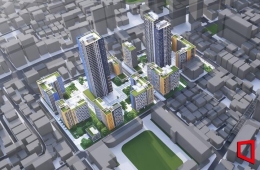
According to the urban renewal industry and the project’s committee on Nov. 14, the area around 772-1 Mok-dong was designated an urban public housing complex district in September, and an integrated design-and-construction tender is scheduled for the first half of next year. The project will redevelop aging villas and small apartments into a 4,209-unit apartment complex, with the total project cost estimated at around KRW 5 trillion. The site covers 190,317.7 square meters, and once development is complete, it is expected to form a large residential area connected to Mokdong New Town Complexes 1 through 4.
The head of a real estate brokerage in Mok 4-dong said, "There were many inquiries from people looking to buy villas after the district was designated in September, and buying interest remains steady. Residents here have high hopes for the development, so prices are rising as each step of the process moves forward."
A 58.14-square-meter unit (exclusive area; same below) at Taehyeong Green Villa within the project site was sold for KRW 800 million on Oct. 9. Prices have risen considerably, considering that a 50.7-square-meter unit sold for KRW 400 million in September last year and a 44.46-square-meter unit sold for KRW 487 million that November. A 54.24-square-meter unit at Dana Nestville also sold for KRW 800 million on Oct. 10, setting a record high. A nearby real estate agent said, "Villas that were in the KRW 200 million range before the urban complex project got underway are now worth KRW 700 million to KRW 800 million. These days, sellers are not willing to negotiate much on price."
With apartment prices in Seoul having risen sharply, a strategy of living in an aging villa while waiting to move into an apartment after redevelopment is also drawing renewed attention. A 64.98-square-meter unit in nearby Mokdong Complex 3 recently sold for KRW 2.38 billion. The calculation is that buyers could expect a profit of several hundred million won even after purchasing a villa for around KRW 700 million and later paying their share of the redevelopment costs. An official from the project committee said, "As we have moved through the process and met with homeowners, I was surprised to find more young couples than I expected."
The Urban Public Housing Complex Project provides benefits such as relaxed floor-area-ratio limits for aging, low-rise residential areas where private redevelopment is difficult, with public institutions leading the development. In 2021, some areas of Mok 4-dong were initially selected as candidate sites for a Moa Town project, but progress was delayed due to a lack of commercial viability. In 2022, the project area was expanded and the plan shifted to the Urban Public Housing Complex Project.
There are also hopes that the project will become more viable as the government steps up efforts to increase housing supply. In April, the Ministry of Land, Infrastructure and Transport revised the Enforcement Decree of the Special Act on Public Housing, raising the permitted floor-area-ratio limit for urban complex projects from 1.2 times to 1.4 times. The project in Mok 4-dong is currently proceeding on the basis of a 1.2-times limit. The project committee believes that applying the 1.4-times limit could add 400 to 600 units for general sale and reduce each household’s share of the project costs by around KRW 200 million.

Land, Infrastructure and Transport Minister Hong Jiseon speaks at a briefing on housing supply at new public housing sites and follow-up measures to the Aug. 13 package at the Government Complex Seoul in Jongno-gu, Seoul, on Oct. 29, 2026. Photo by Jo Yongjun.
View original imageHowever, concerns have emerged that conflict between the Ministry of Land, Infrastructure and Transport and the Seoul Metropolitan Government could disrupt the project. The ministry is responsible for designating urban complex project districts, while approval authority has been delegated to the Seoul Metropolitan Government. The two sides have coordinated project plans in advance through a pre-planning consultative body, but no meetings have been held since one scheduled for June was canceled by the city.
As a result, six districts, including Bulgwang Neighborhood Park and Yaksu Station, have been unable to proceed with subsequent steps. Mok 4-dong had originally planned to hold an integrated design-and-construction tender by the end of this year, but it has been pushed back by around three to four months, to the first half of next year. The Seoul Metropolitan Government says it has been unable to convene the consultative body because it needs to conduct additional reviews of the impact on residential conditions, including infrastructure, after the ministry unilaterally raised the permitted floor-area-ratio limit to 1.4 times.
Hot Picks Today
 "Two Spend 500,000 Won in a Flash, Yet Wait Two Hours?" ... 'Dreamland' Shunned by Kids and Foreign Tourists
- The Era of Getting 200 Million Won After 30 Years Is Over... A Japanese Bank's "Perpetual Department Head" Who Just Clocked In Cries Out
- Spain Hit by Its Worst Tragedy... Lee Kangin, Moreno and Real Madrid Join Soccer World in Mourning
- They Said, “Make It Your Home for Life” - Then Suddenly Kicked 200 Passengers Off... What Happened to the Around-the-World Cruise?
- "130 Rice Bowls Sold Out in a Day"... 'Unfiltered Face' Adds 8 Million Won to Night Market Sales: China's Bungeunwoo
A Seoul Metropolitan Government official said, "If raising the floor-area ratio to 1.4 times results in excessive density, the problem will go beyond a single project and place a significant burden on future generations. While the project may become more viable for residents in the short term, this could be detrimental to the value of the apartments in the future." An official from the project committee said, "Given the impact on sunlight access in nearby areas, including, we believe that applying a 1.3-times limit would be acceptable. Further delays in the process will inevitably increase the burden on residents."
© The Asia Business Daily. All rights reserved. Unauthorized AI training and use prohibited.